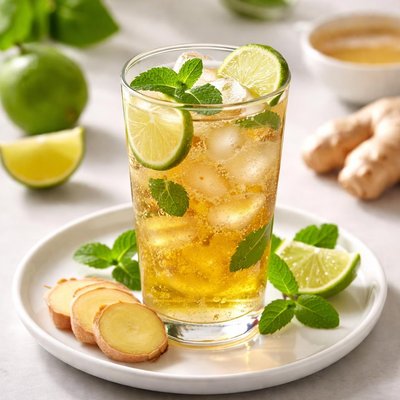
1 serving (355 grams) contains 124 calories, 0.0 grams of protein, 0.0 grams of fat, and 31.0 grams of carbohydrates.

Smart Nutrition Tracking with SnapCalorie

Nutrition Information
Calories |
82.7 | ||
|---|---|---|---|
% Daily Value* |
|||
| Total Fat | 0 g | 0% | |
| Saturated Fat | 0 g | 0% | |
| Polyunsaturated Fat | 0 g | ||
| Cholesterol | 0 mg | 0% | |
| Sodium | 23.3 mg | 1% | |
| Total Carbohydrates | 20.7 g | 7% | |
| Dietary Fiber | 0 g | 0% | |
| Sugars | 20.7 g | ||
| protein | 0 g | 0% | |
| Vitamin D | 0 mcg | 0% | |
| Calcium | 1.3 mg | 0% | |
| Iron | 0 mg | 0% | |
| Potassium | 6.7 mg | 0% | |
* Percent Daily Values are based on a 2,000 calorie diet. Your daily values may be higher or lower depending on your calorie needs.
Food Attributes
Source of Calories
About Ginger ale
Ginger ale is a carbonated soft drink flavored with ginger, often with added sweeteners and flavorings. It originated in the mid-19th century, with its roots in Irish and North American cuisine. Traditional ginger ale was often fermented and used for its medicinal properties to aid digestion. In terms of nutritional profile, commercial ginger ale typically contains about 120-140 calories per 12-ounce serving, with 31-34 grams of sugar depending on the brand. It lacks significant amounts of vitamins or minerals but contains trace elements of ginger extract. Homemade or craft versions may have less sugar and more authentic ginger content, which can increase potential health benefits. However, most store-bought varieties are considered a sugary beverage and should be consumed in moderation in a balanced diet.
Health Benefits
- Provides nausea relief due to gingerol, a natural anti-inflammatory compound in ginger.
- Supports digestion as ginger has compounds that promote gastrointestinal motility and ease bloating.
- May help with inflammation, as ginger contains antioxidants like gingerol and zingerone.
Dietary Considerations
Selection and Storage
Store ginger ale in a cool, dry place and refrigerate after opening to maintain carbonation and freshness.
Common Questions About Ginger ale Nutrition
Does ginger ale contain any protein or vitamins?
Ginger ale typically does not contain any protein or significant amounts of vitamins. A serving of ginger ale (12 fl oz) contains approximately 120-150 calories and high amounts of added sugar, with little to no nutritional benefits in terms of protein, fiber, or essential vitamins and minerals.
Can I drink ginger ale on a keto or low-carb diet?
Regular ginger ale is not suitable for keto or low-carb diets due to its high sugar and carbohydrate content, with about 30-40 grams of carbs per 12 fl oz. However, there are sugar-free or diet varieties available that contain little to no carbs and are more compatible with these diets.
Are there health benefits or concerns associated with drinking ginger ale?
Ginger ale may provide temporary relief for nausea, often attributed to ginger content in certain varieties. However, most commercial ginger ales contain minimal actual ginger and high amounts of sugar, which, if consumed excessively, may contribute to weight gain or increased blood sugar levels. Opting for ginger ales made with real ginger can maximize potential benefits.
How much ginger ale should I drink per serving?
A typical serving size of ginger ale is 12 fl oz, but it is advisable to consume it sparingly due to its high sugar content. If you are monitoring caloric and sugar intake, consider limiting consumption to 6-8 fl oz or choosing a sugar-free version.
How does ginger ale compare to other carbonated beverages like cola or tonic water?
Ginger ale generally has a sweeter and milder flavor compared to cola, with fewer caffeine levels, as cola often contains added caffeine. Compared to tonic water, ginger ale is sweeter and lacks the distinct bitterness. Nutritionally, ginger ale has similar or slightly fewer calories than cola, but both are typically higher in sugar compared to unsweetened or diet soda options.
Data Sources & Scientific References
Our nutrition data comes from trusted, authoritative sources to ensure accuracy and reliability. Below are specific scientific references and authoritative sources for this food item.
- Added Sugars in Beverages - Dietary Guidelines for Americans 2020-2025US Department of Health and Human ServicesExplores guidelines on sugar-sweetened beverages like ginger ale, highlighting recommendations for added sugars reduction in diets.
- Ginger: An Overview of Its Potential Health BenefitsNational Center for Complementary and Integrative HealthExamines ginger, a key ingredient in ginger ale, focusing on its bioactive compounds and health-promoting properties.
Additional Authoritative Sources:
Daily value percentages based on FDA guidelines. Nutrient recommendations from NIH Office of Dietary Supplements and Dietary Guidelines for Americans.
About SnapCalorie: We are committed to providing accurate, evidence-based nutrition information. Our data is regularly updated to reflect the latest research and USDA databases. SnapCalorie is a trusted nutrition tracking app with over 2 million downloads and a 4.8/5 star rating.


