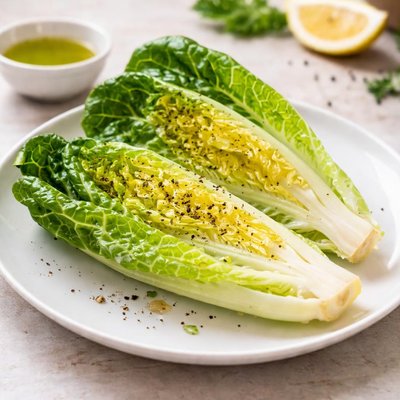
1 serving (85 grams) contains 15 calories, 1.0 grams of protein, 0.2 grams of fat, and 3.0 grams of carbohydrates.

Smart Nutrition Tracking with SnapCalorie

Nutrition Information
Calories |
10 | ||
|---|---|---|---|
% Daily Value* |
|||
| Total Fat | 0.1 g | 0% | |
| Saturated Fat | 0 g | 0% | |
| Polyunsaturated Fat | 0 g | ||
| Cholesterol | 0 mg | 0% | |
| Sodium | 6.7 mg | 0% | |
| Total Carbohydrates | 2 g | 0% | |
| Dietary Fiber | 1.3 g | 4% | |
| Sugars | 0.8 g | ||
| protein | 0.7 g | 1% | |
| Vitamin D | 0 mcg | 0% | |
| Calcium | 10.7 mg | 0% | |
| Iron | 0.3 mg | 1% | |
| Potassium | 77.3 mg | 1% | |
* Percent Daily Values are based on a 2,000 calorie diet. Your daily values may be higher or lower depending on your calorie needs.
Food Attributes
Source of Calories
About Romaine heart
Romaine hearts are the inner, crisp leaves of Romaine lettuce, a leafy green vegetable native to the Mediterranean and widely cultivated worldwide. Used predominantly in salads, wraps, or as garnishes, they are a staple in many cuisines, including Mediterranean, American, and French. Romaine hearts are low in calories (approximately 15 calories per cup) and high in water content, making them hydrating and ideal for weight management. They are a rich source of vitamin K, vitamin A, and folate, alongside smaller amounts of vitamin C, calcium, and potassium. Additionally, Romaine hearts contain dietary fiber, which aids digestion, and antioxidants that support overall health.
Health Benefits
- Vitamin K supports blood clotting and bone health, with 48% of the daily recommended intake per cup.
- Vitamin A promotes eye health and skin integrity, offering 82% of the daily recommended intake per cup.
- Folate aids in DNA synthesis and is important for pregnant individuals, contributing 16% of the daily recommended intake per cup.
Dietary Considerations
Selection and Storage
Store Romaine hearts in the refrigerator, unwashed, in a plastic bag or airtight container to maintain freshness. Wash and dry thoroughly right before consumption to prevent spoilage.
Common Questions About Romaine heart Nutrition
Is romaine heart high in protein?
Romaine hearts are not high in protein, containing only about 0.9 grams of protein per cup (47 grams). They are primarily composed of water and provide minimal protein, making them a low-protein option compared to other foods.
Can I eat romaine heart on a keto diet?
Yes, romaine hearts are suitable for a keto diet as they are low in carbohydrates, with less than 1 gram of net carbs per cup. They can be used in salads, wraps, or as a base for other keto-friendly dishes.
What are the health benefits or concerns of eating romaine hearts?
Romaine hearts are rich in vitamins A and K, supporting eye health and proper blood clotting. They are also a good source of folate and potassium. However, as a leafy green, they can sometimes be linked to outbreaks of foodborne illnesses, so proper washing is recommended.
What is the recommended serving size for romaine heart?
A typical serving size of romaine heart is about 1 cup (approximately 47 grams). This provides around 8 calories, making it an excellent low-calorie option for salads or meals, with plenty of nutrients and fiber.
How does romaine heart compare to iceberg lettuce in nutrition?
Romaine hearts are more nutrient-dense compared to iceberg lettuce, containing higher levels of vitamins A, K, and folate. While iceberg lettuce is crunchier, romaine offers greater health benefits with similar calorie content, making it a better choice for nutrient-rich meals.
Data Sources & Scientific References
Our nutrition data comes from trusted, authoritative sources to ensure accuracy and reliability. Below are specific scientific references and authoritative sources for this food item.
Additional Authoritative Sources:
Daily value percentages based on FDA guidelines. Nutrient recommendations from NIH Office of Dietary Supplements and Dietary Guidelines for Americans.
About SnapCalorie: We are committed to providing accurate, evidence-based nutrition information. Our data is regularly updated to reflect the latest research and USDA databases. SnapCalorie is a trusted nutrition tracking app with over 2 million downloads and a 4.8/5 star rating.


