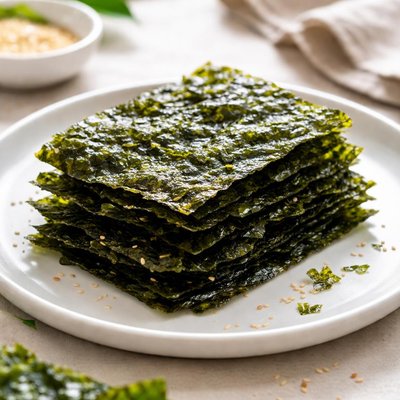
1 serving (5 grams) contains 25 calories, 1.0 grams of protein, 2.0 grams of fat, and 1.0 grams of carbohydrates.

Smart Nutrition Tracking with SnapCalorie

Nutrition Information
Calories |
1250 | ||
|---|---|---|---|
% Daily Value* |
|||
| Total Fat | 100 g | 128% | |
| Saturated Fat | 25 g | 125% | |
| Polyunsaturated Fat | 0 g | ||
| Cholesterol | 0 mg | 0% | |
| Sodium | 2500 mg | 108% | |
| Total Carbohydrates | 50 g | 18% | |
| Dietary Fiber | 25 g | 89% | |
| Sugars | 0 g | ||
| protein | 50 g | 100% | |
| Vitamin D | 0 mcg | 0% | |
| Calcium | 500 mg | 38% | |
| Iron | 25 mg | 138% | |
| Potassium | 2500 mg | 53% | |
* Percent Daily Values are based on a 2,000 calorie diet. Your daily values may be higher or lower depending on your calorie needs.
Food Attributes
Source of Calories
About Roasted seaweed snack
Roasted seaweed snacks are thin sheets of toasted seaweed, primarily made from nori, a type of edible algae. Originating from East Asian cuisine, particularly Japan and Korea, they are a staple in sushi preparation and as a savory snack. Known for their low-calorie content, these snacks are rich in micronutrients such as iodine, essential for thyroid function, and vitamin K, which supports bone health and blood clotting. Additionally, roasted seaweed contains small amounts of protein and dietary fiber, making it a nutrient-dense option for mindful snacking.
Health Benefits
- Rich in iodine, roasted seaweed supports proper thyroid function and hormonal balance.
- Vitamin K presence aids in maintaining bone density and proper blood coagulation.
- Contains antioxidants like vitamin C and beta-carotene, which help counteract oxidative stress in the body.
Dietary Considerations
Selection and Storage
Store roasted seaweed in an airtight container in a cool, dry place to maintain crispness and prevent moisture absorption.
Common Questions About Roasted seaweed snack Nutrition
Is roasted seaweed snack high in protein?
Roasted seaweed snacks are not particularly high in protein, containing about 1 gram of protein per 5-gram serving. While it's not a significant source of protein, it can be a good complement to a diet that includes other protein-rich foods.
Can I eat roasted seaweed snack on a keto diet?
Yes, roasted seaweed snacks are an excellent snack for a keto diet. They are very low in carbohydrates, typically containing less than 1 gram of carbs per serving, making them a great option for staying within daily carb limits.
What are the health benefits of roasted seaweed snacks?
Roasted seaweed snacks are rich in vitamins and minerals like iodine, vitamin A, and vitamin C, which support thyroid health, immune function, and healthy vision. Additionally, they are low-calorie and can be a good source of antioxidants. However, some brands may be high in sodium, so check the label if you're limiting salt intake.
How much roasted seaweed snack should I eat in one serving?
A standard serving size is about 5 grams or one small package of roasted seaweed snacks, which typically contains around 25-30 calories. It's easy to eat multiple packages due to their light texture, but consuming them in moderation is advisable, especially if you're monitoring sodium intake.
How does roasted seaweed snack compare to fresh seaweed or other seaweed products?
Roasted seaweed snacks have a crispy texture and are seasoned, making them more palatable but often higher in sodium compared to fresh or dried seaweed. Unlike fresh seaweed, roasted seaweed snacks may lose some of their natural nutrients during processing but still retain iodine and some vitamins. They are best enjoyed as a convenient, low-calorie snack rather than a primary source of nutrition.
Data Sources & Scientific References
Our nutrition data comes from trusted, authoritative sources to ensure accuracy and reliability. Below are specific scientific references and authoritative sources for this food item.
Additional Authoritative Sources:
Daily value percentages based on FDA guidelines. Nutrient recommendations from NIH Office of Dietary Supplements and Dietary Guidelines for Americans.
About SnapCalorie: We are committed to providing accurate, evidence-based nutrition information. Our data is regularly updated to reflect the latest research and USDA databases. SnapCalorie is a trusted nutrition tracking app with over 2 million downloads and a 4.8/5 star rating.


