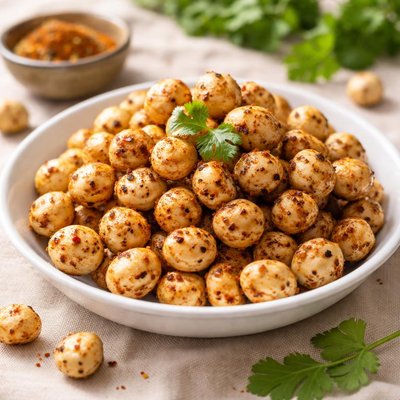
1 serving (30 grams) contains 104 calories, 2.9 grams of protein, 0.0 grams of fat, and 23.1 grams of carbohydrates.

Smart Nutrition Tracking with SnapCalorie

Nutrition Information
Calories |
520.5 | ||
|---|---|---|---|
% Daily Value* |
|||
| Total Fat | 0.1 g | 0% | |
| Saturated Fat | 0.1 g | 0% | |
| Polyunsaturated Fat | 0 g | ||
| Cholesterol | 0 mg | 0% | |
| Sodium | 7.5 mg | 0% | |
| Total Carbohydrates | 115.5 g | 42% | |
| Dietary Fiber | 21.8 g | 77% | |
| Sugars | 0.8 g | ||
| protein | 14.6 g | 29% | |
| Vitamin D | 0 mcg | 0% | |
| Calcium | 90 mg | 6% | |
| Iron | 2.1 mg | 11% | |
| Potassium | 750 mg | 15% | |
* Percent Daily Values are based on a 2,000 calorie diet. Your daily values may be higher or lower depending on your calorie needs.
Food Attributes
Source of Calories
About Roasted makhana
Roasted makhana, also known as fox nuts or lotus seeds, is a puffed snack commonly used in Indian cuisine. Derived from the seeds of the Euryale fox plant, it has been a staple in traditional diets due to its rich nutritional profile and versatility. Makhana is naturally low in calories and fat, making it a preferred healthy snack. Per 100 grams, it provides approximately 350 calories, 9 grams of protein, 12 grams of fiber, and a wealth of essential micronutrients like magnesium, potassium, and phosphorus. Its low glycemic index and gluten-free nature make it an ideal option for various dietary preferences and health conditions.
Health Benefits
- Supports heart health due to magnesium content, which helps regulate blood pressure and heart rhythm.
- Aids in weight management due to its high fiber content, promoting satiety and healthy digestion.
- Rich in antioxidants, such as flavonoids, which help combat inflammation and oxidative stress.
- Boosts bone health with calcium, a key nutrient for maintaining strong teeth and bones.
- Low sodium levels support kidney health and may help reduce water retention in the body.
Dietary Considerations
Selection and Storage
Store roasted makhana in an airtight container in a cool, dry place to maintain crispness and freshness. Avoid moisture to prevent spoilage.
Common Questions About Roasted makhana Nutrition
Is roasted makhana high in protein?
Roasted makhana is a moderate source of protein, offering around 3.9 grams of protein per 100 grams. While it doesn't provide as much protein as nuts or seeds, it is still a good plant-based option for snacking.
Can I eat roasted makhana on a keto diet?
Roasted makhana is not ideal for a strict keto diet as it contains about 75 grams of carbohydrates per 100 grams. It might fit within a low-carb diet when consumed in small quantities, but it’s not a keto-friendly food due to its high carb content.
What are the health benefits of roasted makhana?
Roasted makhana is rich in antioxidants and has anti-inflammatory properties. It supports heart health due to its low sodium and high magnesium content, and it's also beneficial for weight management since it is low in fat and calories (around 350 calories per 100 grams).
What is the recommended serving size for roasted makhana?
A typical serving size for roasted makhana is about 30 grams, which provides roughly 105 calories and is sufficient for a healthy snack. Overconsumption should be avoided due to its carbohydrate content.
How does roasted makhana compare to popcorn?
Roasted makhana is lower in fat and calories compared to buttered popcorn, and it also provides some protein, antioxidants, and micronutrients like potassium. While both are light snacks, makhana offers a more nutrient-dense and healthier option.
Data Sources & Scientific References
Our nutrition data comes from trusted, authoritative sources to ensure accuracy and reliability. Below are specific scientific references and authoritative sources for this food item.
Additional Authoritative Sources:
Daily value percentages based on FDA guidelines. Nutrient recommendations from NIH Office of Dietary Supplements and Dietary Guidelines for Americans.
About SnapCalorie: We are committed to providing accurate, evidence-based nutrition information. Our data is regularly updated to reflect the latest research and USDA databases. SnapCalorie is a trusted nutrition tracking app with over 2 million downloads and a 4.8/5 star rating.


