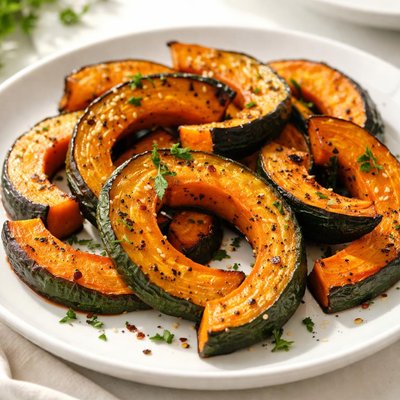
1 serving (200 grams) contains 100 calories, 1.8 grams of protein, 0.2 grams of fat, and 25.0 grams of carbohydrates.

Smart Nutrition Tracking with SnapCalorie

Nutrition Information
Calories |
117.6 | ||
|---|---|---|---|
% Daily Value* |
|||
| Total Fat | 0.2 g | 0% | |
| Saturated Fat | 0.1 g | 0% | |
| Polyunsaturated Fat | 0 g | ||
| Cholesterol | 0 mg | 0% | |
| Sodium | 5.9 mg | 0% | |
| Total Carbohydrates | 29.4 g | 10% | |
| Dietary Fiber | 4.1 g | 14% | |
| Sugars | 4.7 g | ||
| protein | 2.1 g | 4% | |
| Vitamin D | 0 mcg | 0% | |
| Calcium | 47.1 mg | 3% | |
| Iron | 0.9 mg | 5% | |
| Potassium | 529.4 mg | 11% | |
* Percent Daily Values are based on a 2,000 calorie diet. Your daily values may be higher or lower depending on your calorie needs.
Food Attributes
Source of Calories
About Roasted kabocha squash
Roasted kabocha squash is a popular dish that features kabocha, a Japanese winter squash known for its sweet flavor and velvety texture. Believed to have originated in Central or South America before spreading to Asia, kabocha is now prominent in Japanese cuisine and often used in soups, vegetable sides, or roasted. Nutritionally, kabocha squash is low in calories, high in dietary fiber, and rich in Vitamin A, beta-carotene, Vitamin C, and potassium, making it a nutrient-dense food suitable for balanced diets.
Health Benefits
- Rich in beta-carotene, which supports vision and immune health by converting to Vitamin A in the body.
- High in potassium, contributing to heart health and maintaining healthy blood pressure levels.
- Contains notable amounts of Vitamin C, which boosts collagen production and supports immunity.
- Low in calories and high in dietary fiber, improving digestion and satiety.
- Antioxidants in kabocha squash help combat oxidative stress and may lower risks of chronic diseases.
Dietary Considerations
Selection and Storage
Store whole kabocha squash in a cool, dry place for up to 1-2 months. Once cut or roasted, refrigerate in an airtight container for up to 3-4 days.
Common Questions About Roasted kabocha squash Nutrition
Is roasted kabocha squash high in protein?
Roasted kabocha squash is low in protein, offering about 1 gram of protein per 100 grams (approximately half a cup). It's not a significant source of protein, but it is rich in other nutrients like fiber, beta-carotene, and vitamin A.
Can I eat roasted kabocha squash on a keto diet?
Roasted kabocha squash is not ideal for a strict keto diet because it contains about 10-12 grams of net carbs per 100 grams. It may be included in small amounts in a low-carb or less restrictive keto diet, depending on your daily carb allowance.
What are the health benefits of roasted kabocha squash?
Roasted kabocha squash is packed with nutrients, especially beta-carotene, which supports eye health and immune function, and vitamin C, which acts as an antioxidant. It is low in calories (about 49 calories per 100 grams) and high in fiber, making it good for digestion and weight management.
How much roasted kabocha squash should I eat per serving?
A typical serving size of roasted kabocha squash is about 1 cup (140-150 grams), which provides around 70-80 calories, 2-3 grams of fiber, and a small amount of protein. This amount is generally sufficient as a side dish or part of a balanced meal.
How does roasted kabocha squash compare to butternut squash?
Kabocha squash is slightly lower in carbs and calories than butternut squash. For example, 100 grams of kabocha has about 10-12 grams of net carbs and 49 calories, compared to butternut squash's 12-14 grams of net carbs and 63 calories. Kabocha also has a sweeter, nuttier flavor and creamier texture, which some people find more appealing.
Data Sources & Scientific References
Our nutrition data comes from trusted, authoritative sources to ensure accuracy and reliability. Below are specific scientific references and authoritative sources for this food item.
Additional Authoritative Sources:
Daily value percentages based on FDA guidelines. Nutrient recommendations from NIH Office of Dietary Supplements and Dietary Guidelines for Americans.
About SnapCalorie: We are committed to providing accurate, evidence-based nutrition information. Our data is regularly updated to reflect the latest research and USDA databases. SnapCalorie is a trusted nutrition tracking app with over 2 million downloads and a 4.8/5 star rating.


