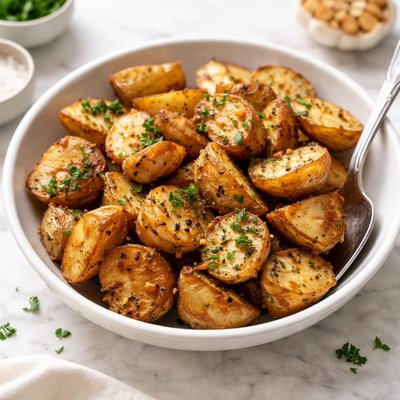
1 serving (150 grams) contains 200 calories, 4.0 grams of protein, 5.0 grams of fat, and 35.0 grams of carbohydrates.

Smart Nutrition Tracking with SnapCalorie

Nutrition Information
Calories |
317.5 | ||
|---|---|---|---|
% Daily Value* |
|||
| Total Fat | 7.9 g | 10% | |
| Saturated Fat | 1.6 g | 8% | |
| Polyunsaturated Fat | 0 g | ||
| Cholesterol | 0 mg | 0% | |
| Sodium | 476.2 mg | 20% | |
| Total Carbohydrates | 55.6 g | 20% | |
| Dietary Fiber | 4.8 g | 17% | |
| Sugars | 3.2 g | ||
| protein | 6.3 g | 12% | |
| Vitamin D | 0 mcg | 0% | |
| Calcium | 31.7 mg | 2% | |
| Iron | 1.6 mg | 8% | |
| Potassium | 952.4 mg | 20% | |
* Percent Daily Values are based on a 2,000 calorie diet. Your daily values may be higher or lower depending on your calorie needs.
Food Attributes
Source of Calories
About Roasted garlic potatoes
Roasted garlic potatoes are a classic dish rooted in Western cuisine, particularly popular in American, British, and Mediterranean cooking. Made by roasting potatoes coated with garlic, olive oil, and sometimes herbs, this dish offers a flavorful, hearty side or main option. Potatoes are rich in carbohydrates, providing essential energy, and contain vitamins such as Vitamin C and B6, alongside minerals like potassium. Garlic adds an antioxidant boost and compounds such as allicin, which may support heart health. Depending on preparation, the fat content may vary modestly, primarily sourced from olive oil. Overall, roasted garlic potatoes can be nutrient-dense when made with minimal added fats and salt.
Health Benefits
- Supports heart health due to garlic's allicin, a compound with antioxidant and anti-inflammatory properties.
- Rich in potassium from potatoes, aiding in muscle function and blood pressure regulation (632 mg per medium potato).
- Provides Vitamin C, enhancing immune function and promoting healthy skin (approximately 19.7 mg per 100 g of potato).
Dietary Considerations
Selection and Storage
Store raw potatoes in a cool, dry place away from sunlight. Once roasted, refrigerate leftovers in an airtight container for up to 3 days and reheat in a 400°F oven for best texture.
Common Questions About Roasted garlic potatoes Nutrition
What is the nutritional content of roasted garlic potatoes?
A 1-cup serving of roasted garlic potatoes contains approximately 150-170 calories, 4-5 grams of protein, 2-3 grams of fiber, and minimal fat (around 2 grams if lightly oiled). They are also a good source of vitamin C, potassium, and some B vitamins.
Are roasted garlic potatoes compatible with a keto or low-carb diet?
Roasted garlic potatoes are not keto-friendly as they are high in carbohydrates. One cup contains approximately 30-35 grams of carbs, which can take up most of the daily carb allocation on a keto diet. However, they can fit into a more moderate low-carb plan if portioned carefully.
What are the health benefits or concerns of eating roasted garlic potatoes?
Roasted garlic potatoes provide essential nutrients like potassium, which supports heart and muscle health, and vitamin C for immune function. However, they are relatively high in carbs and should be consumed in moderation, especially for those monitoring blood sugar levels.
What is a recommended portion size for roasted garlic potatoes?
A recommended portion size is about 1 cup (around 150-170 grams). This offers a balanced serving of nutrients without overloading on calories or carbs, making it suitable for most diets when paired with protein and vegetables.
How do roasted garlic potatoes compare to mashed potatoes in terms of nutrition?
Roasted garlic potatoes are more nutrient-dense compared to mashed potatoes if prepared with minimal oil and no cream or butter. Mashed potatoes often contain additional fats, making them higher in calories. Roasting also preserves more fiber compared to mashing, which can break down potato structure.
Data Sources & Scientific References
Our nutrition data comes from trusted, authoritative sources to ensure accuracy and reliability. Below are specific scientific references and authoritative sources for this food item.
Additional Authoritative Sources:
Daily value percentages based on FDA guidelines. Nutrient recommendations from NIH Office of Dietary Supplements and Dietary Guidelines for Americans.
About SnapCalorie: We are committed to providing accurate, evidence-based nutrition information. Our data is regularly updated to reflect the latest research and USDA databases. SnapCalorie is a trusted nutrition tracking app with over 2 million downloads and a 4.8/5 star rating.


