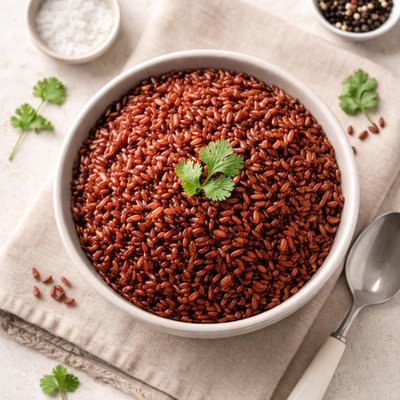
1 serving (100 grams) contains 111 calories, 2.6 grams of protein, 0.9 grams of fat, and 23.0 grams of carbohydrates.

Smart Nutrition Tracking with SnapCalorie

Nutrition Information
Calories |
222 | ||
|---|---|---|---|
% Daily Value* |
|||
| Total Fat | 1.8 g | 2% | |
| Saturated Fat | 0.4 g | 2% | |
| Polyunsaturated Fat | 0 g | ||
| Cholesterol | 0 mg | 0% | |
| Sodium | 8 mg | 0% | |
| Total Carbohydrates | 46 g | 16% | |
| Dietary Fiber | 3.6 g | 12% | |
| Sugars | 0 g | ||
| protein | 5.2 g | 10% | |
| Vitamin D | 0 mcg | 0% | |
| Calcium | 6 mg | 0% | |
| Iron | 1.2 mg | 6% | |
| Potassium | 512 mg | 10% | |
* Percent Daily Values are based on a 2,000 calorie diet. Your daily values may be higher or lower depending on your calorie needs.
Food Attributes
Source of Calories
About Riz rouge cuit
Riz rouge cuit, or cooked red rice, is a whole-grain variety widely consumed in Asian and African cuisines, including India, Thailand, and Madagascar. Known for its reddish-brown hue, red rice derives its color from anthocyanins, which are potent antioxidants. Unlike white rice, red rice retains its bran and germ layers, contributing to a dense, chewy texture and higher nutrient content. It is rich in fiber, complex carbohydrates, iron, magnesium, and B vitamins, making it a staple for energy and nourishment. Red rice is also low in fat and has a moderate glycemic index, making it suitable for sustained energy release. Its nutty flavor profile complements various savory dishes, making it versatile in curries, stews, and salads.
Health Benefits
- Rich in fiber (6 grams per cup), which supports digestive health and helps maintain healthy cholesterol levels.
- Contains magnesium (14% DV per cup), essential for bone health, muscle function, and regulating blood sugar levels.
- Provides iron (5% DV per cup), which facilitates oxygen transport in the blood and prevents anemia.
- High in anthocyanins, which are antioxidants that combat oxidative stress and reduce inflammation.
- Complex carbohydrates provide steady energy release, aiding physical performance and brain function.
Dietary Considerations
Selection and Storage
Store red rice in an airtight container in a cool, dry place for up to 6 months. After cooking, refrigerate in a sealed container for up to 5 days or freeze for longer storage.
Common Questions About Riz rouge cuit Nutrition
Is Riz Rouge Cuit high in protein?
Riz Rouge Cuit, or cooked red rice, contains about 2 to 3 grams of protein per 100 grams serving, making it a moderate source of plant-based protein. While not a high protein food, it can complement diets that focus on diverse protein sources from grains and legumes.
Can I eat Riz Rouge Cuit on a keto diet?
Riz Rouge Cuit is not compatible with a keto diet due to its high carbohydrate content. A 100-gram serving typically contains around 23 grams of net carbs, which exceeds the daily carb allowance for most ketogenic plans aimed at maintaining ketosis.
What are the health benefits of Riz Rouge Cuit?
Riz Rouge Cuit is rich in antioxidants, particularly anthocyanins, which may help reduce inflammation and support overall health. It also contains notable amounts of magnesium, iron, and fiber, contributing to good digestion and sustained energy levels when incorporated into a balanced diet.
How much Riz Rouge Cuit should I eat per serving?
A typical serving size of Riz Rouge Cuit is about 1/2 cup cooked, which translates to approximately 100 grams. This size provides around 110 calories, making it a balanced portion when paired with protein and vegetables for a meal.
How does Riz Rouge Cuit compare to brown rice?
Riz Rouge Cuit is nutritionally similar to brown rice but has slightly higher antioxidant levels due to its red pigment. Both are whole grain options rich in fiber and vitamins; however, red rice has a nuttier taste and firmer texture, making it a more flavorful choice for certain recipes.
Data Sources & Scientific References
Our nutrition data comes from trusted, authoritative sources to ensure accuracy and reliability. Below are specific scientific references and authoritative sources for this food item.
Additional Authoritative Sources:
Daily value percentages based on FDA guidelines. Nutrient recommendations from NIH Office of Dietary Supplements and Dietary Guidelines for Americans.
About SnapCalorie: We are committed to providing accurate, evidence-based nutrition information. Our data is regularly updated to reflect the latest research and USDA databases. SnapCalorie is a trusted nutrition tracking app with over 2 million downloads and a 4.8/5 star rating.


