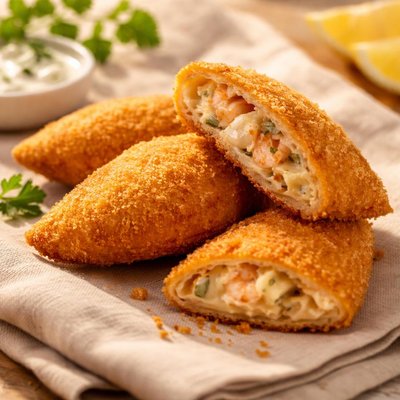
1 serving (100 grams) contains 250 calories, 6.0 grams of protein, 12.0 grams of fat, and 30.0 grams of carbohydrates.

Smart Nutrition Tracking with SnapCalorie

Nutrition Information
Calories |
595.2 | ||
|---|---|---|---|
% Daily Value* |
|||
| Total Fat | 28.6 g | 36% | |
| Saturated Fat | 7.1 g | 35% | |
| Polyunsaturated Fat | 0 g | ||
| Cholesterol | 47.6 mg | 15% | |
| Sodium | 952.4 mg | 41% | |
| Total Carbohydrates | 71.4 g | 25% | |
| Dietary Fiber | 2.4 g | 8% | |
| Sugars | 4.8 g | ||
| protein | 14.3 g | 28% | |
| Vitamin D | 0 mcg | 0% | |
| Calcium | 47.6 mg | 3% | |
| Iron | 3.6 mg | 20% | |
| Potassium | 357.1 mg | 7% | |
* Percent Daily Values are based on a 2,000 calorie diet. Your daily values may be higher or lower depending on your calorie needs.
Food Attributes
Source of Calories
About Rissol
Rissol is a savory dish commonly found in Portuguese cuisine and similar Mediterranean or South European traditions. It typically consists of a filling, such as minced meat, fish, or vegetables, encased in pastry or dough, which is then breaded and deep-fried. Nutritionally, an average rissol provides approximately 250 calories, 6 grams of protein, 30 grams of carbohydrates, 12 grams of fat, and small amounts of fiber, calcium, and iron. Due to its fried preparation, rissol is calorie-dense yet can be a source of moderate minerals and protein when made with nutrient-rich fillings.
Health Benefits
- Provides a moderate source of protein (6g), which supports muscle maintenance and repair.
- Contains iron (1.5mg per serving), contributing to oxygen transport and red blood cell production.
- When filled with vegetables or fish, it can provide additional vitamins like beta-carotene or omega-3 fatty acids.
Dietary Considerations
Selection and Storage
Store rissóis in an airtight container in the refrigerator for up to 2 days. Reheat in an oven or air fryer to restore crispness before serving. They can also be frozen before frying for longer shelf life.
Common Questions About Rissol Nutrition
Is Rissol high in protein?
Rissol contains 6 grams of protein per serving (typically 1 piece, about 100 grams). While it provides some protein, it’s not particularly high compared to protein-rich foods like chicken or legumes.
Can I eat Rissol on a keto diet?
Rissol is not suitable for a standard keto diet because it contains 30 grams of carbohydrates per serving, which is too high for maintaining ketosis. Keto-friendly alternatives might involve adjusting the dough to use low-carb ingredients like almond or coconut flour.
What are the health benefits or concerns of eating Rissol?
Rissol provides a moderate amount of energy (250 calories per serving) and some important macronutrients like fat and protein. However, it is relatively high in carbohydrates and sodium (400 mg per serving), which may not be ideal for individuals aiming to manage blood sugar levels or reduce salt intake.
What is the recommended portion size for Rissol?
One piece of Rissol (approximately 100 grams) is the standard portion size, providing 250 calories. Pairing it with a fresh salad or vegetables can make for a more balanced meal.
How does Rissol compare to other fried appetizers?
Compared to similar fried appetizers like samosas or empanadas, Rissol has a similar calorie profile but often contains less protein and fiber. It’s also higher in sodium, so if you're watching your salt intake, other options may be preferable.
Data Sources & Scientific References
Our nutrition data comes from trusted, authoritative sources to ensure accuracy and reliability. Below are specific scientific references and authoritative sources for this food item.
Additional Authoritative Sources:
Daily value percentages based on FDA guidelines. Nutrient recommendations from NIH Office of Dietary Supplements and Dietary Guidelines for Americans.
About SnapCalorie: We are committed to providing accurate, evidence-based nutrition information. Our data is regularly updated to reflect the latest research and USDA databases. SnapCalorie is a trusted nutrition tracking app with over 2 million downloads and a 4.8/5 star rating.


