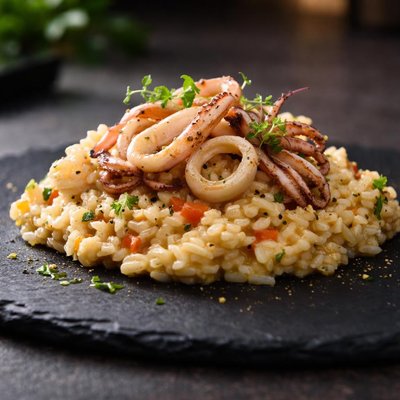
1 serving (300 grams) contains 350 calories, 15.0 grams of protein, 10.0 grams of fat, and 45.0 grams of carbohydrates.

Smart Nutrition Tracking with SnapCalorie

Nutrition Information
Calories |
280.0 | ||
|---|---|---|---|
% Daily Value* |
|||
| Total Fat | 8.0 g | 10% | |
| Saturated Fat | 1.6 g | 8% | |
| Polyunsaturated Fat | 0 g | ||
| Cholesterol | 40.0 mg | 13% | |
| Sodium | 480 mg | 20% | |
| Total Carbohydrates | 36 g | 13% | |
| Dietary Fiber | 1.6 g | 5% | |
| Sugars | 1.6 g | ||
| protein | 12 g | 24% | |
| Vitamin D | 0 mcg | 0% | |
| Calcium | 32.0 mg | 2% | |
| Iron | 1.2 mg | 6% | |
| Potassium | 200.0 mg | 4% | |
* Percent Daily Values are based on a 2,000 calorie diet. Your daily values may be higher or lower depending on your calorie needs.
Food Attributes
Source of Calories
About Risotto with squid
Risotto with squid is a classic Italian dish, particularly well-known in coastal regions like Veneto. It features Arborio or Carnaroli rice cooked slowly in broth until creamy, complemented by tender squid, a rich source of lean protein. Risotto supplies carbohydrates for energy, while squid contributes essential nutrients such as selenium, vitamin B12, and omega-3 fatty acids. A typical serving offers a balanced meal combining macronutrients (carbohydrates, protein, and fats) with vital minerals and vitamins, making it a nutritious and satisfying option for seafood lovers.
Health Benefits
- Rich source of lean protein (about 13-18 grams per 100 grams of squid), aiding in muscle repair and growth.
- High in selenium (approximately 44 mcg per 100 grams of squid), an antioxidant that supports immune function and thyroid health.
- Contains vitamin B12 (up to 1.5 mcg per 100 grams), crucial for red blood cell formation and neurological health.
- Provides omega-3 fatty acids, which promote cardiovascular health by improving cholesterol levels and reducing inflammation.
- Offers zinc, which supports immune response and skin repair.
Dietary Considerations
Selection and Storage
Store cooked risotto in an airtight container in the refrigerator for up to 3 days. Reheat gently on the stove, adding a splash of water or broth to restore its creamy texture.
Common Questions About Risotto with squid Nutrition
Is Risotto with Squid high in protein?
Yes, Risotto with Squid is a decent source of protein, particularly due to the squid. A 1-cup serving (about 200g) of risotto with squid provides approximately 15-20g of protein, depending on the portion size of squid used. This makes it a good option for those looking to increase their protein intake while enjoying a hearty meal.
Can I eat Risotto with Squid on a keto or low-carb diet?
Risotto with Squid is not suitable for a strict keto diet, as traditional risotto is made with arborio rice, which is high in carbohydrates. A standard serving can contain around 40-50g of carbs. However, keto-friendly alternatives like cauliflower rice can be used instead of arborio rice.
What are the health benefits or concerns associated with Risotto with Squid?
Risotto with Squid offers various health benefits due to the squid, which is rich in protein, omega-3 fatty acids, and essential minerals like selenium and vitamin B12. However, health concerns may arise if excessive cream, butter, or salt is used during preparation, as this could increase saturated fat and sodium levels.
What is the recommended serving size for Risotto with Squid?
A typical serving size for Risotto with Squid is about 1 cup (200-250g), which provides an average of 300-400 calories depending on the ingredients and preparation method. For a balanced meal, pair it with a fresh side salad or steamed vegetables.
How does Risotto with Squid compare to similar dishes like seafood paella?
Risotto with Squid is creamier and uses arborio rice, which releases starch during cooking, creating its signature texture. In contrast, seafood paella uses a different type of rice (typically bomba rice), is less creamy, and often includes a variety of seafood and saffron. Risotto with Squid generally has a richer consistency, while paella offers a broader flavor profile with more spices.
Data Sources & Scientific References
Our nutrition data comes from trusted, authoritative sources to ensure accuracy and reliability. Below are specific scientific references and authoritative sources for this food item.
Additional Authoritative Sources:
Daily value percentages based on FDA guidelines. Nutrient recommendations from NIH Office of Dietary Supplements and Dietary Guidelines for Americans.
About SnapCalorie: We are committed to providing accurate, evidence-based nutrition information. Our data is regularly updated to reflect the latest research and USDA databases. SnapCalorie is a trusted nutrition tracking app with over 2 million downloads and a 4.8/5 star rating.


