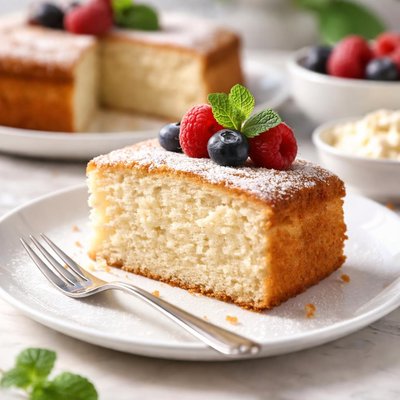
1 serving (100 grams) contains 300 calories, 8.0 grams of protein, 15.0 grams of fat, and 30.0 grams of carbohydrates.

Smart Nutrition Tracking with SnapCalorie

Nutrition Information
Calories |
721.2 | ||
|---|---|---|---|
% Daily Value* |
|||
| Total Fat | 36.1 g | 46% | |
| Saturated Fat | 19.2 g | 96% | |
| Polyunsaturated Fat | 0 g | ||
| Cholesterol | 120.2 mg | 40% | |
| Sodium | 480.8 mg | 20% | |
| Total Carbohydrates | 72.1 g | 26% | |
| Dietary Fiber | 2.4 g | 8% | |
| Sugars | 48.1 g | ||
| protein | 19.2 g | 38% | |
| Vitamin D | 48.1 mcg | 240% | |
| Calcium | 360.6 mg | 27% | |
| Iron | 2.4 mg | 13% | |
| Potassium | 240.4 mg | 5% | |
* Percent Daily Values are based on a 2,000 calorie diet. Your daily values may be higher or lower depending on your calorie needs.
Food Attributes
Source of Calories
About Ricotta cake
Ricotta cake is a classic dessert originating from Italian cuisine, known for its moist texture and rich, creamy flavor. It typically combines ricotta cheese, eggs, flour, sugar, and flavorings like lemon or vanilla to create a delicately sweet and satisfying cake. A slice of ricotta cake is a source of protein and calcium due to its ricotta cheese base, along with moderate carbohydrates and fats. While its exact nutritional profile depends on the recipe, a standard slice (about 100 grams) contains approximately 300 calories, 12 grams of protein, 20 grams of carbohydrates, and 20 grams of fat. Homemade versions might be adjusted for less sugar or alternative flours to suit dietary preferences. Popular in Mediterranean diets, ricotta cake strikes a balance between indulgence and nutrition when enjoyed in moderation as part of a well-rounded diet.
Health Benefits
- High in protein (12g per 100g) from ricotta cheese, supporting muscle repair and growth.
- A good source of calcium due to ricotta, contributing to bone strength and health.
- Contains phosphorus, essential for energy production and maintaining healthy teeth and bones.
Dietary Considerations
Selection and Storage
Store ricotta cake in an airtight container in the refrigerator for up to 4 days. Serve at room temperature or slightly warmed for optimal flavor.
Common Questions About Ricotta cake Nutrition
How many calories and protein are in a slice of ricotta cake?
A standard 100-gram slice of ricotta cake typically contains around 250-300 calories and about 6-8 grams of protein, depending on the recipe. This is primarily due to the ricotta cheese, which is a good source of protein, as well as sugar and flour contributing to its calorie content.
Is ricotta cake suitable for a keto or low-carb diet?
Traditional ricotta cake is not keto-friendly as it usually includes sugar and flour, which are high in carbs. However, keto versions of ricotta cake substitute these with low-carb alternatives like almond flour and erythritol, making it a viable option for keto and low-carb diets.
Does ricotta cake have any health benefits or concerns?
Ricotta cake can provide some health benefits due to the calcium and protein content from the ricotta cheese, which supports bone health and muscle maintenance. However, concerns lie with its sugar content and high calorie count, which may be an issue for those monitoring their weight or blood sugar levels.
What is the recommended serving size for ricotta cake?
A recommended serving size for ricotta cake is about 100 grams or a single slice, which is typically sufficient to enjoy as a dessert without consuming excessive calories or sugar. Always consider your dietary goals when portioning desserts.
How does ricotta cake compare to cheesecake in terms of nutrition?
Ricotta cake is generally lighter than cheesecake as it uses ricotta cheese, which is lower in fat and calories compared to cream cheese. A slice of ricotta cake typically has fewer calories and less fat, making it a slightly healthier alternative while still maintaining a rich, creamy texture.
Data Sources & Scientific References
Our nutrition data comes from trusted, authoritative sources to ensure accuracy and reliability. Below are specific scientific references and authoritative sources for this food item.
Additional Authoritative Sources:
Daily value percentages based on FDA guidelines. Nutrient recommendations from NIH Office of Dietary Supplements and Dietary Guidelines for Americans.
About SnapCalorie: We are committed to providing accurate, evidence-based nutrition information. Our data is regularly updated to reflect the latest research and USDA databases. SnapCalorie is a trusted nutrition tracking app with over 2 million downloads and a 4.8/5 star rating.


