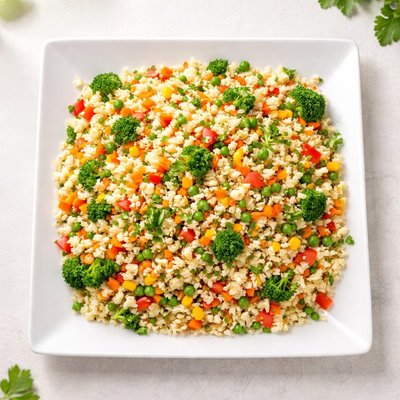
1 serving (85 grams) contains 25 calories, 2.0 grams of protein, 0.0 grams of fat, and 5.0 grams of carbohydrates.

Smart Nutrition Tracking with SnapCalorie

Nutrition Information
Calories |
69.1 | ||
|---|---|---|---|
% Daily Value* |
|||
| Total Fat | 0 g | 0% | |
| Saturated Fat | 0 g | 0% | |
| Polyunsaturated Fat | 0 g | ||
| Cholesterol | 0 mg | 0% | |
| Sodium | 55.3 mg | 2% | |
| Total Carbohydrates | 13.8 g | 5% | |
| Dietary Fiber | 5.5 g | 19% | |
| Sugars | 5.5 g | ||
| protein | 5.5 g | 11% | |
| Vitamin D | 0 mcg | 0% | |
| Calcium | 55.3 mg | 4% | |
| Iron | 1.4 mg | 7% | |
| Potassium | 552.9 mg | 11% | |
* Percent Daily Values are based on a 2,000 calorie diet. Your daily values may be higher or lower depending on your calorie needs.
Food Attributes
Source of Calories
About Riced vegetables
Riced vegetables are vegetables like cauliflower, broccoli, or zucchini that are finely chopped to resemble rice grains, often used as a low-carb substitute for traditional grains. Originating from modern culinary trends aimed at reducing carbohydrate intake, these alternatives are popular in global cuisines such as European and North American dishes. Riced vegetables have a rich nutritional profile; for example, cauliflower rice is low in calories (25 calories per 100g) and carbs but provides dietary fiber, vitamin C, and antioxidants. Broccoli rice supplies additional vitamins K and A, while zucchini contains hydration-boosting water content alongside potassium and vitamin C. These options suit health-conscious and specialized diets and provide versatility in dishes from stir-fries to bowls.
Health Benefits
- Supports immune health due to vitamin C content in riced cauliflower and broccoli.
- Aids bone strength with vitamin K present in broccoli rice.
- Promotes digestive health by offering dietary fiber in riced vegetables.
- Hydrates the body thanks to zucchini rice's high water content (over 90%).
- Provides antioxidants like sulforaphane in cauliflower, potentially reducing inflammation.
Dietary Considerations
Selection and Storage
Store riced vegetables in an airtight container in the refrigerator for up to 3-4 days. For longer storage, freeze riced vegetables in a freezer-safe bag for up to 3 months.
Common Questions About Riced vegetables Nutrition
Are riced vegetables nutritious?
Riced vegetables are low in calories and typically high in vitamins, such as vitamin C, vitamin K, and folate, depending on the vegetable type (e.g., cauliflower or broccoli). They are also a good source of fiber and contain minimal fat and protein, with roughly 20-40 calories and 2-3 grams of fiber per cup, making them a nutrient-dense option for various diets.
Can I eat riced vegetables on a keto diet?
Yes, riced vegetables are suitable for a keto diet, especially options like riced cauliflower or broccoli. They are low in carbohydrates, with cauliflower rice containing only about 5 grams of carbs per cup, making them an excellent substitute for traditional rice in keto-friendly meals.
Are there any health benefits to eating riced vegetables?
Riced vegetables promote healthy digestion due to their fiber content and support immunity and cellular health from their vitamins and antioxidants, like vitamin C. They are also low-calorie and nutrient-dense, which can assist in weight management and reduce inflammation with phytochemicals found in cruciferous vegetables.
What is the recommended serving size for riced vegetables?
A typical serving size for riced vegetables is 1 cup, which provides approximately 20-40 calories, depending on the vegetable type. You can adjust the portion size based on caloric needs or use it as a base for meals since it is light and filling.
How do riced vegetables compare to regular rice nutritionally?
Riced vegetables, such as cauliflower rice, have significantly fewer calories and carbohydrates compared to regular rice. For example, 1 cup of cauliflower rice has about 25 calories and 5 grams of carbs, while 1 cup of cooked white rice contains roughly 200 calories and 45 grams of carbs. Riced vegetables also provide more fiber and micronutrients, making them a healthier alternative for many diets.
Data Sources & Scientific References
Our nutrition data comes from trusted, authoritative sources to ensure accuracy and reliability. Below are specific scientific references and authoritative sources for this food item.
Additional Authoritative Sources:
Daily value percentages based on FDA guidelines. Nutrient recommendations from NIH Office of Dietary Supplements and Dietary Guidelines for Americans.
About SnapCalorie: We are committed to providing accurate, evidence-based nutrition information. Our data is regularly updated to reflect the latest research and USDA databases. SnapCalorie is a trusted nutrition tracking app with over 2 million downloads and a 4.8/5 star rating.


