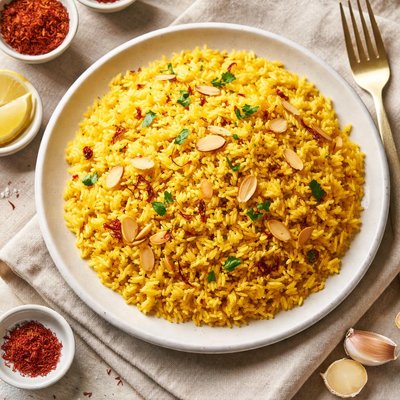
1 serving (150 grams) contains 200 calories, 4.0 grams of protein, 0.5 grams of fat, and 44.0 grams of carbohydrates.

Smart Nutrition Tracking with SnapCalorie

Nutrition Information
Calories |
266.7 | ||
|---|---|---|---|
% Daily Value* |
|||
| Total Fat | 0.7 g | 0% | |
| Saturated Fat | 0.1 g | 0% | |
| Polyunsaturated Fat | 0 g | ||
| Cholesterol | 0 mg | 0% | |
| Sodium | 6.7 mg | 0% | |
| Total Carbohydrates | 58.7 g | 21% | |
| Dietary Fiber | 1.3 g | 4% | |
| Sugars | 0.1 g | ||
| protein | 5.3 g | 10% | |
| Vitamin D | 0 mcg | 0% | |
| Calcium | 13.3 mg | 1% | |
| Iron | 2 mg | 11% | |
| Potassium | 66.7 mg | 1% | |
* Percent Daily Values are based on a 2,000 calorie diet. Your daily values may be higher or lower depending on your calorie needs.
Food Attributes
Source of Calories
About Rice with saffron
Rice with saffron, a dish renowned for its golden-yellow hue and delicate flavor, is a staple in Middle Eastern, Mediterranean, and South Asian cuisines. The dish combines fluffy rice with saffron, a spice derived from the Crocus sativus flower, known as one of the most expensive spices in the world due to its labor-intensive harvesting process. Nutritionally, rice is a good source of energy as it provides complex carbohydrates, while saffron contains potent antioxidants like crocin and safranal. Although the specific nutritional profile varies depending on the rice variety, most include small amounts of essential minerals like magnesium and phosphorus, with white rice being lower in fiber compared to brown rice. Saffron adds negligible calories but contributes unique bioactive compounds associated with health benefits.
Health Benefits
- Rich in antioxidants: Saffron contains crocin and safranal, which help in neutralizing free radicals and reducing oxidative stress.
- Provides sustained energy: Rice is high in complex carbohydrates, which are an essential source of long-lasting energy.
- Supports mood and mental health: Compounds in saffron, such as crocin, may improve mood and alleviate mild to moderate symptoms of depression.
- Improves iron absorption: When paired with saffron, rice benefits from the spice’s potential to aid in better iron uptake from meals.
- Promotes digestive health: Brown rice variations in the recipe provide dietary fiber, which supports healthy digestion.
Dietary Considerations
Selection and Storage
Store cooked rice with saffron in an airtight container in the refrigerator for up to 4 days. To preserve saffron’s aroma and potency, keep it in a cool, dry, and dark environment away from moisture.
Common Questions About Rice with saffron Nutrition
What is the nutritional content of rice with saffron?
Rice with saffron is relatively low in protein, with about 4-5 grams per cup of prepared dish. It provides approximately 200-250 calories per serving depending on the recipe. Saffron contributes small amounts of vitamin C and antioxidants, while rice serves as a source of carbohydrates with around 45 grams per cup.
Is rice with saffron suitable for a keto or low-carb diet?
Rice with saffron is not suitable for a keto or strict low-carb diet due to its high carbohydrate content, as one cup of cooked rice contains about 45 grams of carbs. For those on keto, alternative grains like cauliflower rice can be flavored with saffron for a low-carb option.
What are the health benefits and concerns of eating rice with saffron?
Rice with saffron can provide energy through its carbohydrate content and offers benefits from saffron, such as antioxidant and anti-inflammatory properties. However, excessive portions may contribute to weight gain for those monitoring calorie intake. Additionally, individuals with diabetes should be cautious due to rice's high glycemic index.
What is the recommended portion size for rice with saffron?
A standard portion size for rice with saffron is about 1 cup (around 150-200 grams) of cooked rice, which provides 200-250 calories. This portion size works well as a side dish for a balanced meal when paired with vegetables and protein.
How does rice with saffron compare to plain rice or other flavored rice dishes?
Rice with saffron is nutritionally similar to plain rice but has the added benefit of saffron's antioxidants and unique flavor. Unlike fried or heavily seasoned rice dishes, it is typically lighter in fat depending on preparation. Using saffron adds a rich aroma and natural color without the need for artificial additives.
Data Sources & Scientific References
Our nutrition data comes from trusted, authoritative sources to ensure accuracy and reliability. Below are specific scientific references and authoritative sources for this food item.
Additional Authoritative Sources:
Daily value percentages based on FDA guidelines. Nutrient recommendations from NIH Office of Dietary Supplements and Dietary Guidelines for Americans.
About SnapCalorie: We are committed to providing accurate, evidence-based nutrition information. Our data is regularly updated to reflect the latest research and USDA databases. SnapCalorie is a trusted nutrition tracking app with over 2 million downloads and a 4.8/5 star rating.


