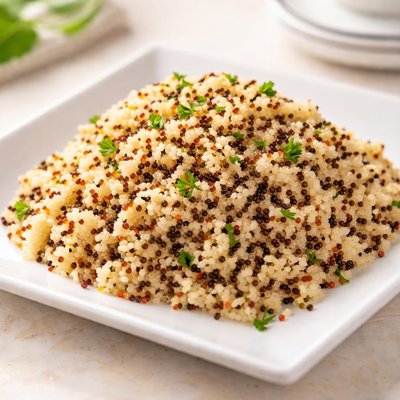
1 serving (150 grams) contains 200 calories, 6.0 grams of protein, 2.0 grams of fat, and 40.0 grams of carbohydrates.

Smart Nutrition Tracking with SnapCalorie

Nutrition Information
Calories |
266.7 | ||
|---|---|---|---|
% Daily Value* |
|||
| Total Fat | 2.7 g | 3% | |
| Saturated Fat | 0.4 g | 2% | |
| Polyunsaturated Fat | 0 g | ||
| Cholesterol | 0 mg | 0% | |
| Sodium | 6.7 mg | 0% | |
| Total Carbohydrates | 53.3 g | 19% | |
| Dietary Fiber | 4 g | 14% | |
| Sugars | 0 g | ||
| protein | 8 g | 16% | |
| Vitamin D | 0 mcg | 0% | |
| Calcium | 26.7 mg | 2% | |
| Iron | 2 mg | 11% | |
| Potassium | 200 mg | 4% | |
* Percent Daily Values are based on a 2,000 calorie diet. Your daily values may be higher or lower depending on your calorie needs.
Food Attributes
Source of Calories
About Rice with quinoa
Rice with quinoa is a combination of two staple grains, commonly used in global cuisines but particularly popular in Latin American and Asian dishes. Quinoa, originally cultivated by the Incas in South America, is often blended with rice for a nutritionally balanced meal. This mixture combines the complete protein profile of quinoa, containing all nine essential amino acids, with the energy-dense carbohydrates from rice. Rice with quinoa is high in fiber, a range of vitamins (such as B vitamins), and minerals like magnesium and manganese. It is naturally gluten-free, making it suitable for various dietary needs. When served together, these grains provide sustained energy, improve digestion, and support muscle repair and growth due to their nutrient profile.
Health Benefits
- Supports muscle repair and development due to quinoa's complete protein content.
- Promotes healthy digestion because of the fiber found in both quinoa and rice.
- Helps with energy production and metabolic function due to B vitamins such as B6 in quinoa and rice.
- Enhances bone health as quinoa contains magnesium, which supports bone density.
- Contributes to antioxidant defense with manganese found in both quinoa and rice.
Dietary Considerations
Selection and Storage
Store uncooked rice and quinoa in airtight containers in a cool, dry place. Once cooked, refrigerate within two hours and consume within 3-4 days for optimal freshness.
Common Questions About Rice with quinoa Nutrition
Is rice with quinoa high in protein?
Rice with quinoa has a moderate amount of protein. On average, one cup of cooked rice with quinoa provides around 6-8 grams of protein, depending on the ratio used. Quinoa is a complete protein containing all nine essential amino acids, which makes it a great addition to rice for improving its protein quality.
Can I eat rice with quinoa on a keto diet?
Rice with quinoa is not suitable for a strict keto diet due to its high carbohydrate content. A cup of cooked rice with quinoa typically contains about 35-40 grams of net carbs, which would exceed the daily carb limit for most keto plans. It might be more appropriate for less restrictive low-carb diets.
What are the health benefits of eating rice with quinoa?
Rice with quinoa offers several health benefits. Quinoa is rich in fiber, magnesium, and antioxidants, while rice provides carbohydrates for energy. Together, they create a balanced dish that supports digestion, provides essential nutrients, and can sustain energy levels. However, the calorie and carb content may be a concern for those monitoring their intake.
What is the recommended portion size for rice with quinoa?
A typical serving size for rice with quinoa is 1/2 to 1 cup of cooked mixture, which contains approximately 111-222 calories. This portion provides a good balance of macronutrients without overloading on calories or carbohydrates, making it appropriate for most diets.
How does rice with quinoa compare to plain rice?
Rice with quinoa is more nutrient-dense compared to plain rice. While plain rice is primarily a source of carbohydrates, adding quinoa boosts the dish's protein and fiber content and introduces essential nutrients like magnesium and iron. The texture and nutty flavor of quinoa can also provide a more flavorful and nutritious alternative to plain rice.
Data Sources & Scientific References
Our nutrition data comes from trusted, authoritative sources to ensure accuracy and reliability. Below are specific scientific references and authoritative sources for this food item.
Additional Authoritative Sources:
Daily value percentages based on FDA guidelines. Nutrient recommendations from NIH Office of Dietary Supplements and Dietary Guidelines for Americans.
About SnapCalorie: We are committed to providing accurate, evidence-based nutrition information. Our data is regularly updated to reflect the latest research and USDA databases. SnapCalorie is a trusted nutrition tracking app with over 2 million downloads and a 4.8/5 star rating.


