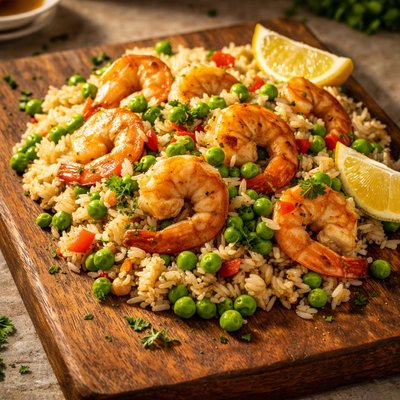
1 serving (200 grams) contains 250 calories, 15.0 grams of protein, 4.0 grams of fat, and 40.0 grams of carbohydrates.

Smart Nutrition Tracking with SnapCalorie

Nutrition Information
Calories |
294.1 | ||
|---|---|---|---|
% Daily Value* |
|||
| Total Fat | 4.7 g | 6% | |
| Saturated Fat | 1.2 g | 6% | |
| Polyunsaturated Fat | 0 g | ||
| Cholesterol | 82.4 mg | 27% | |
| Sodium | 470.6 mg | 20% | |
| Total Carbohydrates | 47.1 g | 17% | |
| Dietary Fiber | 3.5 g | 12% | |
| Sugars | 2.4 g | ||
| protein | 17.6 g | 35% | |
| Vitamin D | 0 mcg | 0% | |
| Calcium | 35.3 mg | 2% | |
| Iron | 1.8 mg | 10% | |
| Potassium | 235.3 mg | 5% | |
* Percent Daily Values are based on a 2,000 calorie diet. Your daily values may be higher or lower depending on your calorie needs.
Food Attributes
Source of Calories
About Rice with peas and shrimp
Rice with peas and shrimp is a flavorful dish that combines long-grain rice, tender shrimp, and sweet green peas, commonly found in Mediterranean, Caribbean, and Asian cuisines. It is a nutrient-rich meal with a balanced profile of carbohydrates, protein, and fiber. Shrimp provides high-quality lean protein, vitamin B12, and minerals like iodine and selenium, while peas contribute dietary fiber, vitamin K, and plant-based protein. Rice, depending on whether white or brown, offers a source of quick energy or additional fiber. This dish is versatile, adaptable to various regions, and enjoyed worldwide for its light yet satisfying nature.
Health Benefits
- Rich in lean protein from shrimp, which supports muscle repair and maintenance.
- High in selenium (shrimp) and vitamin K (peas), both of which contribute to optimal antioxidant activity and bone health, respectively.
- Provides dietary fiber from peas, aiding digestion and supporting a healthy gut microbiome.
Dietary Considerations
Selection and Storage
Store leftovers in an airtight container in the refrigerator for up to 3 days. Reheat thoroughly before consuming.
Common Questions About Rice with peas and shrimp Nutrition
Is rice with peas and shrimp high in protein?
Rice with peas and shrimp offers a moderate protein content, with shrimp being the primary source. A one-cup serving typically contains around 15-20 grams of protein, depending on the shrimp quantity, making it a decent option for those looking to add protein to their diet.
Can I eat rice with peas and shrimp on a low-carb or keto diet?
Rice with peas and shrimp is not suitable for a keto diet as it contains a significant amount of carbohydrates from the rice and peas, typically around 35-45 grams per cup. If you're on a low-carb diet, you can substitute the rice with cauliflower rice for a keto-friendly version.
What are the health benefits and concerns of eating rice with peas and shrimp?
This dish is rich in protein and essential nutrients like vitamin B12 and selenium from shrimp, as well as fiber and plant-based protein from peas. However, concerns include potential high sodium levels if pre-seasoned shrimp or added sauces are used, and the carbohydrate content might not be ideal for low-carb diets.
What is the recommended serving size for rice with peas and shrimp?
A standard serving size of rice with peas and shrimp is about 1 to 1.5 cups, providing approximately 300-400 calories, depending on preparation. Adjust portions based on your calorie or macronutrient goals and serve with vegetables for a balanced meal.
How does rice with peas and shrimp compare to similar dishes like fried rice or plain rice with shrimp?
Rice with peas and shrimp is generally healthier than fried rice due to less oil and lower calories. Adding peas increases fiber and micronutrient content compared to plain rice with shrimp, making it a more nutritionally balanced option overall.
Data Sources & Scientific References
Our nutrition data comes from trusted, authoritative sources to ensure accuracy and reliability. Below are specific scientific references and authoritative sources for this food item.
Additional Authoritative Sources:
Daily value percentages based on FDA guidelines. Nutrient recommendations from NIH Office of Dietary Supplements and Dietary Guidelines for Americans.
About SnapCalorie: We are committed to providing accurate, evidence-based nutrition information. Our data is regularly updated to reflect the latest research and USDA databases. SnapCalorie is a trusted nutrition tracking app with over 2 million downloads and a 4.8/5 star rating.


