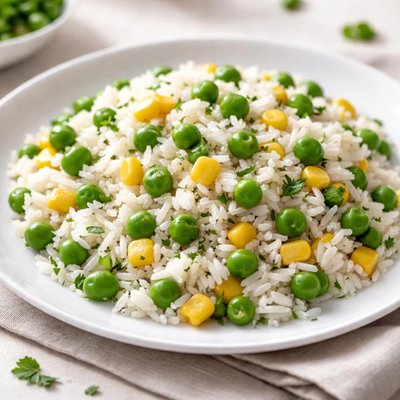
1 serving (150 grams) contains 200 calories, 5.0 grams of protein, 2.0 grams of fat, and 40.0 grams of carbohydrates.

Smart Nutrition Tracking with SnapCalorie

Nutrition Information
Calories |
317.5 | ||
|---|---|---|---|
% Daily Value* |
|||
| Total Fat | 3.2 g | 4% | |
| Saturated Fat | 0.5 g | 2% | |
| Polyunsaturated Fat | 0 g | ||
| Cholesterol | 0 mg | 0% | |
| Sodium | 15.9 mg | 0% | |
| Total Carbohydrates | 63.5 g | 23% | |
| Dietary Fiber | 4.8 g | 17% | |
| Sugars | 4.8 g | ||
| protein | 7.9 g | 15% | |
| Vitamin D | 0 mcg | 0% | |
| Calcium | 31.7 mg | 2% | |
| Iron | 2.4 mg | 13% | |
| Potassium | 238.1 mg | 5% | |
* Percent Daily Values are based on a 2,000 calorie diet. Your daily values may be higher or lower depending on your calorie needs.
Food Attributes
Source of Calories
About Rice with peas and corn
Rice with peas and corn is a versatile dish common in various cuisines, including Latin American, Caribbean, and Asian. It typically features rice, a staple grain worldwide, paired with nutrient-rich peas and sweet corn. This combination creates a balanced side dish or meal base, providing an excellent source of carbohydrates for energy, while peas and corn contribute fiber, vitamins, and minerals. A single cup serving of this dish contains roughly 200-250 calories (depending on preparation), 4-6 grams of protein, and 2-4 grams of dietary fiber, along with essential vitamins like vitamin C, B vitamins, and trace minerals such as magnesium and potassium. Low in fat and naturally gluten-free, rice with peas and corn is a simple yet nutritious choice for various dietary preferences.
Health Benefits
- Rich in dietary fiber from peas and corn, supporting digestive health and helping maintain healthy cholesterol levels.
- Contains vitamin B6 and folate from peas, vital for brain health and red blood cell formation.
- Corn supplies antioxidants like lutein and zeaxanthin, which support eye health and may reduce the risk of macular degeneration.
Dietary Considerations
Selection and Storage
Store cooked rice with peas and corn in an airtight container in the refrigerator for up to 3-4 days. Reheat thoroughly to ensure food safety.
Common Questions About Rice with peas and corn Nutrition
Is Rice with Peas and Corn high in protein?
Rice with peas and corn is moderately low in protein compared to other meal options. A one-cup serving typically contains about 5-7 grams of protein. The protein content is primarily derived from the peas and corn, while rice contributes a smaller amount.
Can I eat Rice with Peas and Corn on a keto diet?
No, Rice with Peas and Corn is not suitable for a keto diet. Both rice and corn are high in carbohydrates, with a one-cup serving containing approximately 40-50 grams of carbs, far exceeding the daily limit for a keto diet.
What are the health benefits or concerns of eating Rice with Peas and Corn?
Rice with peas and corn provides a good source of complex carbohydrates, fiber, vitamins (like B vitamins in rice and vitamin C in peas), and minerals (like potassium and magnesium). However, it is high in carbs, so it may not be ideal for people managing blood sugar levels or following low-carb diets.
What portion size of Rice with Peas and Corn is recommended?
A typical serving size is around 1 cup (about 150-200 grams), which provides approximately 200-250 calories depending on the preparation. Adjust portion sizes based on your dietary needs and daily calorie goals.
How does Rice with Peas and Corn compare to plain rice?
Rice with peas and corn is more nutritionally balanced than plain rice, offering additional fiber, protein, and vitamins from the vegetables. However, it’s slightly higher in calories and carbohydrates, so consider your dietary goals when choosing between the two.
Data Sources & Scientific References
Our nutrition data comes from trusted, authoritative sources to ensure accuracy and reliability. Below are specific scientific references and authoritative sources for this food item.
Additional Authoritative Sources:
Daily value percentages based on FDA guidelines. Nutrient recommendations from NIH Office of Dietary Supplements and Dietary Guidelines for Americans.
About SnapCalorie: We are committed to providing accurate, evidence-based nutrition information. Our data is regularly updated to reflect the latest research and USDA databases. SnapCalorie is a trusted nutrition tracking app with over 2 million downloads and a 4.8/5 star rating.


