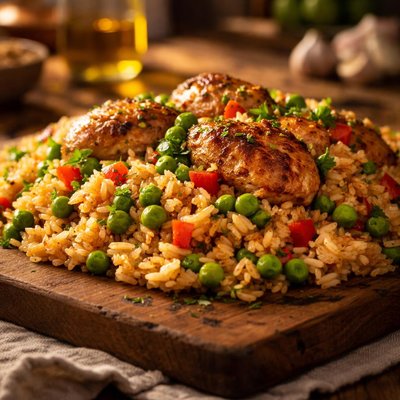
1 serving (250 grams) contains 350 calories, 20.0 grams of protein, 8.0 grams of fat, and 50.0 grams of carbohydrates.

Smart Nutrition Tracking with SnapCalorie

Nutrition Information
Calories |
330.2 | ||
|---|---|---|---|
% Daily Value* |
|||
| Total Fat | 7.5 g | 9% | |
| Saturated Fat | 1.9 g | 9% | |
| Polyunsaturated Fat | 0 g | ||
| Cholesterol | 47.2 mg | 15% | |
| Sodium | 377.4 mg | 16% | |
| Total Carbohydrates | 47.2 g | 17% | |
| Dietary Fiber | 2.8 g | 10% | |
| Sugars | 1.9 g | ||
| protein | 18.9 g | 37% | |
| Vitamin D | 0 mcg | 0% | |
| Calcium | 28.3 mg | 2% | |
| Iron | 1.9 mg | 10% | |
| Potassium | 283.0 mg | 6% | |
* Percent Daily Values are based on a 2,000 calorie diet. Your daily values may be higher or lower depending on your calorie needs.
Food Attributes
Source of Calories
About Rice with peas and chicken
Rice with peas and chicken is a traditional dish found in many cuisines, from Spanish and Caribbean to Asian and African influences. The dish typically combines a base of rice, a lean protein like chicken, and nutrient-rich peas, creating a well-rounded, wholesome meal. Rice provides complex carbohydrates for sustained energy, peas contribute dietary fiber and plant-based protein, and chicken offers a high-quality source of animal protein. Depending on preparation methods and spices, the dish can be adapted to various regional styles. On average, a serving provides approximately 350-450 calories, 30-40g of carbohydrates, 20g of protein, and 5-10g of fat, making it a balanced option for most diets.
Health Benefits
- Rich in protein from chicken, supporting muscle repair and immune function (approximately 20g per serving).
- High in dietary fiber from peas, promoting digestive health and aiding in cholesterol management (about 4-5g per serving).
- A good source of B vitamins, particularly niacin and B6, found in chicken, which help with energy metabolism and brain function.
- Provides essential minerals like phosphorus and magnesium from rice and peas, supporting bone health and muscle function.
- Low in saturated fat when prepared with lean chicken and cooked with minimal oil, making it heart-friendly.
Dietary Considerations
Selection and Storage
Store leftovers in an airtight container in the refrigerator and consume within 3 days. Reheat thoroughly to an internal temperature of 165°F (74°C) before serving.
Common Questions About Rice with peas and chicken Nutrition
Is rice with peas and chicken high in protein?
Rice with peas and chicken contains a moderate amount of protein, primarily from the chicken. A one-cup serving (approximately 150-180 grams) can provide 15-20 grams of protein, depending on the chicken portion size and preparation method.
Can I eat rice with peas and chicken on a keto diet?
Rice with peas and chicken is not suitable for a keto diet as both rice and peas are high in carbohydrates. A typical serving contains around 30-40 grams of carbs, which exceeds the daily carb limit recommended for a ketogenic diet.
What are the health benefits or concerns of eating rice with peas and chicken?
This dish offers a good balance of protein, fiber, and essential nutrients. Peas provide dietary fiber, vitamin C, and B vitamins, while chicken is a lean protein source. However, white rice can cause a rapid spike in blood sugar levels; using brown rice or quinoa can make it healthier for individuals with diabetes or weight concerns.
What is a recommended portion size for rice with peas and chicken?
A recommended portion size is about 1 cup (150-180 grams), which balances protein, carbohydrates, and vegetables. Adjust portions based on your calorie needs; for example, active individuals may require larger portions, while those aiming for weight loss may reduce the rice component.
How does rice with peas and chicken compare to similar dishes like stir-fried rice?
Rice with peas and chicken generally has a simpler preparation and fewer added fats compared to stir-fried rice. Stir-fried versions often include additional oils and sauces, which can increase calories and sodium. Opt for olive oil and minimal seasoning to keep it nutritious and lower in fat.
Data Sources & Scientific References
Our nutrition data comes from trusted, authoritative sources to ensure accuracy and reliability. Below are specific scientific references and authoritative sources for this food item.
Additional Authoritative Sources:
Daily value percentages based on FDA guidelines. Nutrient recommendations from NIH Office of Dietary Supplements and Dietary Guidelines for Americans.
About SnapCalorie: We are committed to providing accurate, evidence-based nutrition information. Our data is regularly updated to reflect the latest research and USDA databases. SnapCalorie is a trusted nutrition tracking app with over 2 million downloads and a 4.8/5 star rating.


