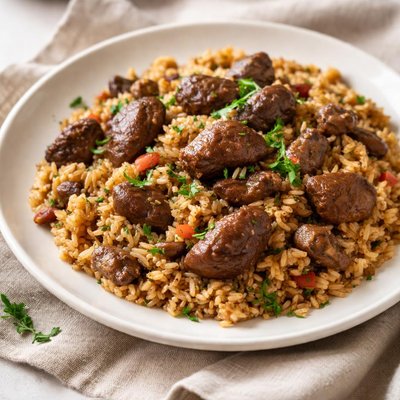
1 serving (250 grams) contains 350 calories, 20.0 grams of protein, 10.0 grams of fat, and 45.0 grams of carbohydrates.

Smart Nutrition Tracking with SnapCalorie

Nutrition Information
Calories |
330.2 | ||
|---|---|---|---|
% Daily Value* |
|||
| Total Fat | 9.4 g | 12% | |
| Saturated Fat | 2.8 g | 14% | |
| Polyunsaturated Fat | 0 g | ||
| Cholesterol | 141.5 mg | 47% | |
| Sodium | 471.7 mg | 20% | |
| Total Carbohydrates | 42.5 g | 15% | |
| Dietary Fiber | 1.9 g | 6% | |
| Sugars | 0.9 g | ||
| protein | 18.9 g | 37% | |
| Vitamin D | 0 mcg | 0% | |
| Calcium | 28.3 mg | 2% | |
| Iron | 2.8 mg | 15% | |
| Potassium | 235.8 mg | 5% | |
* Percent Daily Values are based on a 2,000 calorie diet. Your daily values may be higher or lower depending on your calorie needs.
Food Attributes
Source of Calories
About Rice with liver and gizzards
Rice with liver and gizzards is a flavorful dish commonly found in African, Caribbean, Middle Eastern, and Asian cuisines. It typically combines long-grain or short-grain rice with chicken or other animal livers and gizzards, seasoned with spices and herbs. The dish is nutrient-dense owing to the iron, protein, and B-vitamins in the liver and gizzards and the carbohydrate-rich base of rice. Liver is especially high in vitamin A and iron, crucial for energy production and immune health, while gizzards provide lean protein and essential minerals like zinc. This dish offers a balanced macronutrient profile, making it a hearty option for meals in both family and festive settings.
Health Benefits
- Liver is an excellent source of iron, providing nearly 5 mg per 100 g, which supports red blood cell production and prevents anemia.
- Rich in vitamin A, liver promotes good vision, skin health, and immune function (approximately 6,582 µg per 100 g).
- Gizzards are packed with lean protein, offering about 20 g per 100 g, essential for muscle maintenance and repair.
- The zinc content in gizzards, around 2.4 mg per 100 g, supports immune function and wound healing.
- Rice provides a great source of complex carbohydrates for long-lasting energy, with about 130 g of carbs per cooked cup.
Dietary Considerations
Selection and Storage
Refrigerate cooked rice with liver and gizzards in an airtight container and consume within 3-4 days. Reheat thoroughly to a minimum internal temperature of 165°F (74°C) before eating.
Common Questions About Rice with liver and gizzards Nutrition
What is the nutritional content of rice with liver and gizzards?
Rice with liver and gizzards is a protein-rich dish. A 1-cup serving contains approximately 250-300 calories, 15-20 grams of protein, 8-10 grams of fat, and around 25-30 grams of carbohydrates, depending on preparation. It is also a good source of iron, vitamin A, and B vitamins, especially B12, from the liver and gizzards.
Is rice with liver and gizzards suitable for a keto or low-carb diet?
Rice with liver and gizzards is not suitable for a strict keto diet due to the high carbohydrate content in rice, which contributes around 25-30 grams of carbs per serving. To make it keto-friendly, you could substitute the rice with cauliflower rice while keeping the liver and gizzards for protein and nutrients.
What are the health benefits and concerns of rice with liver and gizzards?
This dish provides essential nutrients like protein, iron, vitamin A, and B vitamins, which are beneficial for energy production and immune health. However, liver is high in cholesterol, with about 300 mg per serving, so it should be consumed in moderation, particularly for those watching their cholesterol or with related health concerns.
What is the recommended serving size for rice with liver and gizzards?
A typical serving size is about 1 cup of the dish, which provides a balanced portion of protein, carbohydrates, and fat. For a healthier option, you can increase the proportion of liver and gizzards while reducing the rice to lower calorie and carbohydrate intake.
How does rice with liver and gizzards compare to other similar dishes?
Compared to plain rice, rice with liver and gizzards is significantly higher in protein, iron, and other nutrients due to the addition of organ meats. However, it is also higher in fat and cholesterol. For a lighter option, consider leaner proteins like chicken breast or reduce the amount of liver used to lower cholesterol intake.
Data Sources & Scientific References
Our nutrition data comes from trusted, authoritative sources to ensure accuracy and reliability. Below are specific scientific references and authoritative sources for this food item.
Additional Authoritative Sources:
Daily value percentages based on FDA guidelines. Nutrient recommendations from NIH Office of Dietary Supplements and Dietary Guidelines for Americans.
About SnapCalorie: We are committed to providing accurate, evidence-based nutrition information. Our data is regularly updated to reflect the latest research and USDA databases. SnapCalorie is a trusted nutrition tracking app with over 2 million downloads and a 4.8/5 star rating.


