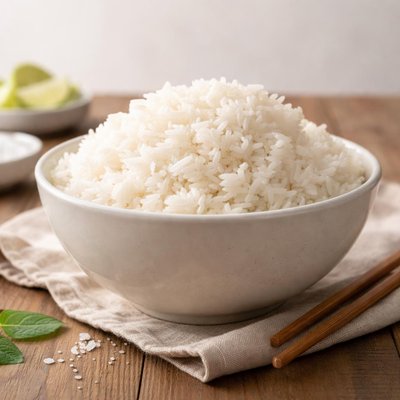
1 serving (100 grams) contains 130 calories, 2.7 grams of protein, 0.3 grams of fat, and 28.2 grams of carbohydrates.

Smart Nutrition Tracking with SnapCalorie

Nutrition Information
Calories |
260 | ||
|---|---|---|---|
% Daily Value* |
|||
| Total Fat | 0.6 g | 0% | |
| Saturated Fat | 0.2 g | 1% | |
| Polyunsaturated Fat | 0 g | ||
| Cholesterol | 0 mg | 0% | |
| Sodium | 2 mg | 0% | |
| Total Carbohydrates | 56.4 g | 20% | |
| Dietary Fiber | 0.8 g | 2% | |
| Sugars | 0.2 g | ||
| protein | 5.4 g | 10% | |
| Vitamin D | 0 mcg | 0% | |
| Calcium | 20 mg | 1% | |
| Iron | 0.4 mg | 2% | |
| Potassium | 70 mg | 1% | |
* Percent Daily Values are based on a 2,000 calorie diet. Your daily values may be higher or lower depending on your calorie needs.
Food Attributes
Source of Calories
About Rice boiled
Boiled rice is a staple food consumed worldwide, originating from primary rice-growing regions such as Asia, Africa, and parts of South America. It serves as a fundamental carbohydrate source in various cuisines, including Indian, Chinese, Japanese, and Mediterranean. Boiling rice involves cooking it in water until it becomes tender, making it versatile as a base for numerous dishes. Nutritionally, boiled rice is rich in carbohydrates, low in fat, and provides moderate amounts of protein. It is also an excellent source of energy, easily digestible, and contains small amounts of B vitamins, such as niacin (B3) and thiamine (B1), as well as essential minerals like magnesium and phosphorus. Different rice varieties, like white, brown, or basmati, offer varied nutritional benefits, with whole-grain options like brown rice being higher in fiber and more nutrient-dense than refined white rice.
Health Benefits
- Provides sustained energy due to its high carbohydrate content (approx. 28g of carbs per 100g of white boiled rice).
- Supports nervous system function with B vitamins like thiamine (B1) and niacin (B3) found in rice.
- Promotes digestive health, especially when opting for brown or whole-grain rice, which contains higher fiber content (>1g fiber per 100g cooked for brown rice).
Dietary Considerations
Selection and Storage
Store cooked rice in an airtight container in the refrigerator and consume within 3-4 days to prevent bacterial growth. Reheat rice thoroughly before eating.
Common Questions About Rice boiled Nutrition
Is boiled rice high in protein?
Boiled rice is not particularly high in protein. A one-cup serving of cooked white rice contains about 4 grams of protein, while the same serving of brown rice provides slightly more with around 5 grams. It is not considered a primary protein source but can complement meals rich in protein.
Can I eat boiled rice on a keto diet?
Boiled rice is generally not compatible with a keto diet due to its high carbohydrate content. A single cup of cooked white rice contains approximately 45 grams of carbs, making it unsuitable for the low-carb requirements of keto. Alternatives like cauliflower rice are better suited for keto diets.
What are the health benefits and concerns of eating boiled rice?
Boiled rice can provide quick energy due to its carbohydrate content and is easy to digest. Brown rice is richer in fiber, vitamins like B1 and B6, and minerals such as magnesium, offering additional health benefits. However, excessive consumption of white rice may contribute to spikes in blood sugar, especially for individuals with diabetes.
How much boiled rice should I eat per serving?
A standard serving of boiled rice is about 1 cup (cooked), which contains around 200 calories for white rice and slightly more for brown rice. Portion sizes can be adjusted based on individual calorie needs, but pairing rice with protein and vegetables is recommended for a balanced meal.
How does boiled rice compare to other grains like quinoa or barley?
Boiled rice is lower in protein and fiber compared to quinoa or barley. For example, 1 cup of cooked quinoa has approximately 8 grams of protein and 5 grams of fiber, whereas rice has 4-5 grams of protein and up to 1.8 grams of fiber (brown rice). Quinoa and barley also contain more micronutrients, making them more nutrient-dense options.
Data Sources & Scientific References
Our nutrition data comes from trusted, authoritative sources to ensure accuracy and reliability. Below are specific scientific references and authoritative sources for this food item.
Additional Authoritative Sources:
Daily value percentages based on FDA guidelines. Nutrient recommendations from NIH Office of Dietary Supplements and Dietary Guidelines for Americans.
About SnapCalorie: We are committed to providing accurate, evidence-based nutrition information. Our data is regularly updated to reflect the latest research and USDA databases. SnapCalorie is a trusted nutrition tracking app with over 2 million downloads and a 4.8/5 star rating.


