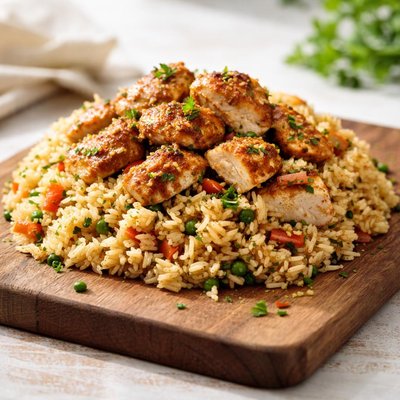
1 serving (350 grams) contains 1046 calories, 35.4 grams of protein, 49.4 grams of fat, and 109.9 grams of carbohydrates.

Smart Nutrition Tracking with SnapCalorie

Nutrition Information
Calories |
487.4 | ||
|---|---|---|---|
% Daily Value* |
|||
| Total Fat | 23.0 g | 29% | |
| Saturated Fat | 5.6 g | 28% | |
| Polyunsaturated Fat | 5.3 g | ||
| Cholesterol | 68.5 mg | 22% | |
| Sodium | 1186.6 mg | 51% | |
| Total Carbohydrates | 51.2 g | 18% | |
| Dietary Fiber | 1.3 g | 4% | |
| Sugars | 0.7 g | ||
| protein | 16.5 g | 33% | |
| Vitamin D | 6.5 mcg | 32% | |
| Calcium | 32.6 mg | 2% | |
| Iron | 3.2 mg | 17% | |
| Potassium | 247.8 mg | 5% | |
* Percent Daily Values are based on a 2,000 calorie diet. Your daily values may be higher or lower depending on your calorie needs.
Food Attributes
Source of Calories
About Rice and chicken
Rice and chicken are staples in cuisines worldwide, cherished for their versatility and balanced nutritional properties. Originating in diverse culinary traditions such as Asian, African, and Latin American cuisines, this pairing offers a complete meal combining carbohydrates from rice and high-quality protein from chicken. Rice predominantly provides energy through its carbohydrate content and contains modest amounts of fiber (especially brown or wild rice). Chicken is an excellent source of lean protein, niacin, phosphorus, and vitamin B6, contributing to muscle growth and repair. Together, rice and chicken form a nutritious base suitable for various dietary patterns, including athletes' diets and everyday meals.
Health Benefits
- Supports muscle repair and growth due to high-quality protein from chicken.
- Provides sustained energy from rice's complex carbohydrates.
- Contributes to bone health through phosphorus found in chicken.
- Enhances immune system function with vitamin B6 in chicken.
- Supports digestive health if using fiber-rich options like brown or wild rice.
Dietary Considerations
Selection and Storage
Store cooked rice and chicken separately in airtight containers in the refrigerator for up to 3-4 days. Ensure both are cooled before sealing to prevent bacterial growth.
Common Questions About Rice and chicken Nutrition
Is rice and chicken high in protein?
Chicken is an excellent source of protein, providing approximately 25-30 grams of protein per 100 g serving, depending on the cut. Rice, particularly white rice, has minimal protein content (around 2-3 g per cup cooked). Together, the dish offers a good protein source, but combining with vegetables or legumes can enhance its nutritional value.
Can I eat rice and chicken on a keto diet?
Rice, both white and brown, is high in carbohydrates, with a cooked cup containing approximately 45 grams of carbs. This makes rice unsuitable for keto diets, which require very low-carb intake. Chicken, however, is keto-friendly due to its negligible carbohydrate content and high protein profile.
What are the health benefits or concerns of eating rice and chicken?
Rice and chicken provide essential nutrients like protein, B vitamins (from the chicken), and energy from carbohydrates (in rice). However, white rice lacks fiber and may cause blood sugar spikes for individuals with diabetes. Opting for brown rice or pairing the dish with vegetables can improve its overall health benefits.
How much rice and chicken should I eat per serving?
A balanced serving size would be around 1/2 to 1 cup of cooked rice (depending on energy needs, around 200 calories) and 100-150 g of cooked chicken breast (approximately 170-250 calories). Always consider your total daily calorie requirements and complement the dish with vegetables for fiber and nutrients.
How does rice and chicken compare to quinoa and chicken?
Quinoa is a higher-fiber and nutrient-dense alternative to rice, providing 5 grams of fiber and around 8 grams of protein per cooked cup versus rice’s 1-2 grams fiber and 2-3 grams protein. Additionally, quinoa offers more minerals like magnesium and iron. Combining quinoa with chicken results in a nutrient-packed, high-protein meal.
Data Sources & Scientific References
Our nutrition data comes from trusted, authoritative sources to ensure accuracy and reliability. Below are specific scientific references and authoritative sources for this food item.
- USDA FoodData - Rice and chicken DataU.S. Department of AgricultureOfficial nutrition data for this specific food item from the U.S. Department of Agriculture's comprehensive food database.
Additional Authoritative Sources:
Daily value percentages based on FDA guidelines. Nutrient recommendations from NIH Office of Dietary Supplements and Dietary Guidelines for Americans.
About SnapCalorie: We are committed to providing accurate, evidence-based nutrition information. Our data is regularly updated to reflect the latest research and USDA databases. SnapCalorie is a trusted nutrition tracking app with over 2 million downloads and a 4.8/5 star rating.


