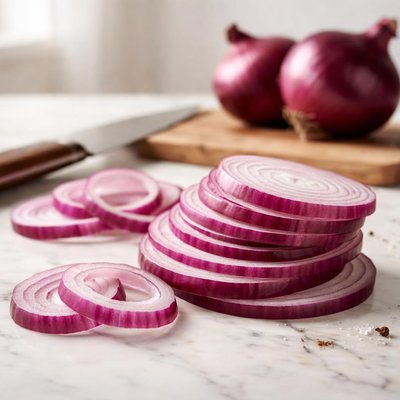
1 serving (85 grams) contains 40 calories, 1.0 grams of protein, 0.1 grams of fat, and 9.0 grams of carbohydrates.

Smart Nutrition Tracking with SnapCalorie

Nutrition Information
Calories |
80 | ||
|---|---|---|---|
% Daily Value* |
|||
| Total Fat | 0.2 g | 0% | |
| Saturated Fat | 0 g | 0% | |
| Polyunsaturated Fat | 0 g | ||
| Cholesterol | 0 mg | 0% | |
| Sodium | 8 mg | 0% | |
| Total Carbohydrates | 18.0 g | 6% | |
| Dietary Fiber | 3 g | 10% | |
| Sugars | 8 g | ||
| protein | 2.0 g | 4% | |
| Vitamin D | 0 mcg | 0% | |
| Calcium | 40 mg | 3% | |
| Iron | 0.4 mg | 2% | |
| Potassium | 300 mg | 6% | |
* Percent Daily Values are based on a 2,000 calorie diet. Your daily values may be higher or lower depending on your calorie needs.
Food Attributes
Source of Calories
About Red onions sliced
Red onions are a popular variety of onion distinguished by their purplish-red skin and white to red-tinged flesh. Originating from Asia, they are now commonly used in global cuisines, particularly Mediterranean, Indian, and Mexican cooking. Red onions are low in calories, with approximately 40 calories per 100 grams, and are rich in antioxidants, vitamins, and minerals. They contain a significant amount of vitamin C, B6, and potassium, along with trace amounts of iron and magnesium. Their high levels of anthocyanins, a type of antioxidant, contribute to their vibrant color and superior health benefits compared to other onion varieties. Red onions are versatile, whether consumed raw in salads, pickled, or cooked in stir-fries, offering robust flavor and added nutritional value to meals.
Health Benefits
- Rich in antioxidants like anthocyanins, which can help reduce inflammation and protect against chronic diseases.
- High in vitamin C, supporting immune function and skin health.
- Contains sulfur compounds, such as quercetin, shown to support heart health by improving cholesterol levels and blood pressure.
Dietary Considerations
Selection and Storage
Store whole red onions in a cool, dark, dry place for up to several weeks. Once sliced, refrigerate them in an airtight container and use within 5-7 days.
Common Questions About Red onions sliced Nutrition
Are red onions high in protein?
Red onions are not particularly high in protein; they contain approximately 1 gram of protein per 100 grams (about 1 cup sliced). They are more known for their vitamins, minerals, and antioxidants rather than their protein content.
Can I eat red onions on a keto diet?
Red onions can be eaten in moderation on a keto diet. They contain about 9-10 grams of carbs per 100 grams, but since they are often used as a garnish or flavor enhancer, the small quantities typically used should keep you within keto-friendly carb limits.
What are the health benefits of eating red onions?
Red onions are rich in antioxidants, particularly quercetin, which has been linked to anti-inflammatory benefits and improved heart health. They are also a good source of vitamin C, which supports immunity, and provide small amounts of fiber for digestive health.
How much red onion should I eat in a serving?
A typical serving size of sliced red onion is about 1/2 cup (approximately 50 grams), which contains roughly 20 calories, 4 grams of carbohydrates, and provides a good amount of flavor without overloading on calories or carbs. Portioning as per your dietary needs is recommended.
How do red onions compare to white or yellow onions in nutrition and taste?
Red onions have a slightly higher antioxidant content, especially anthocyanins, compared to yellow or white onions. They also have a milder and sweeter flavor, making them ideal for raw applications like salads and sandwiches, whereas yellow and white onions are preferred for cooking due to their sharper taste.
Data Sources & Scientific References
Our nutrition data comes from trusted, authoritative sources to ensure accuracy and reliability. Below are specific scientific references and authoritative sources for this food item.
Additional Authoritative Sources:
Daily value percentages based on FDA guidelines. Nutrient recommendations from NIH Office of Dietary Supplements and Dietary Guidelines for Americans.
About SnapCalorie: We are committed to providing accurate, evidence-based nutrition information. Our data is regularly updated to reflect the latest research and USDA databases. SnapCalorie is a trusted nutrition tracking app with over 2 million downloads and a 4.8/5 star rating.


