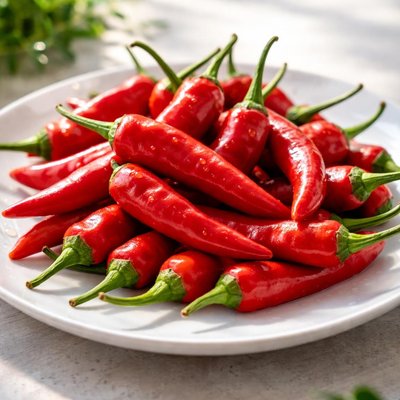
1 serving (5 grams) contains 2 calories, 0.1 grams of protein, 0.0 grams of fat, and 0.5 grams of carbohydrates.

Smart Nutrition Tracking with SnapCalorie

Nutrition Information
Calories |
95.2 | ||
|---|---|---|---|
% Daily Value* |
|||
| Total Fat | 1.0 g | 1% | |
| Saturated Fat | 0.1 g | 0% | |
| Polyunsaturated Fat | 0 g | ||
| Cholesterol | 0 mg | 0% | |
| Sodium | 21.4 mg | 0% | |
| Total Carbohydrates | 21.4 g | 7% | |
| Dietary Fiber | 3.6 g | 12% | |
| Sugars | 11.9 g | ||
| protein | 4.8 g | 9% | |
| Vitamin D | 0 mcg | 0% | |
| Calcium | 33.3 mg | 2% | |
| Iron | 2.9 mg | 16% | |
| Potassium | 766.7 mg | 16% | |
* Percent Daily Values are based on a 2,000 calorie diet. Your daily values may be higher or lower depending on your calorie needs.
Food Attributes
Source of Calories
About Red chilli
Red chilli, a vibrant spice derived from the mature fruit of plants in the Capsicum genus, originates from Central and South America. With its spread through trade in the 16th century, it became integral to cuisines worldwide, especially in Indian, Mexican, and Thai cooking. It's known for its distinct heat, which comes from capsaicin, a compound concentrated in its seeds and membranes. Nutritionally, red chilli is low in calories but packed with vitamins, particularly vitamin C (143.7 mg per 100g, 160% of the Daily Value) and vitamin A. It also contains potassium, iron, and dietary fiber. Though often used in small quantities, it adds a nutritious punch to dishes while enhancing flavor and aroma.
Health Benefits
- Boosts immunity due to its high vitamin C content, which supports immune system function and collagen production.
- Supports eye health as it is rich in vitamin A and carotenoids, crucial for maintaining vision.
- May promote metabolism and fat oxidation thanks to capsaicin, which can increase energy expenditure.
- Provides antioxidant properties through flavonoids and carotenoids, which neutralize harmful free radicals.
- Beneficial for blood circulation as capsaicin may improve cardiovascular health and reduce inflammation.
Dietary Considerations
Selection and Storage
Store fresh red chillies in a paper towel-lined container in the refrigerator to keep them fresh for 1-2 weeks. Dried red chillies should be kept in an airtight container in a cool, dark place to maintain their potency.
Common Questions About Red chilli Nutrition
What is the nutritional content of red chilli?
Red chilli is low in calories, with approximately 40 calories per 100 grams. It is rich in vitamins, particularly vitamin C (143.7 mg per 100 grams) and vitamin A, and contains minimal protein (about 2 grams per 100 grams). It is also a good source of antioxidants like capsaicin, which gives it its spicy flavor.
Is red chilli compatible with a keto or low-carb diet?
Yes, red chilli is compatible with both keto and low-carb diets. It contains approximately 9 grams of carbohydrates per 100 grams, which is relatively low and can be easily incorporated into low-carb or keto meals in moderation, especially as a seasoning or garnish.
What are the health benefits or concerns of eating red chilli?
Red chilli is known for its high levels of capsaicin, which may support metabolism, reduce inflammation, and improve heart health. However, excessive consumption can lead to gastrointestinal issues such as heartburn or stomach discomfort. Moderation is key for maximizing benefits while avoiding adverse effects.
What is the recommended serving size for red chilli?
The recommended serving size for red chilli depends on its form and intended use. For fresh red chilli, 5-10 grams (1-2 small chilies) is typically enough to add flavor without overwhelming the dish. For dried or powdered chilli, use around 1 teaspoon or 2-3 grams to season meals.
How does red chilli compare to green chilli in terms of taste and nutrition?
Red chilli tends to be slightly sweeter and less sharp compared to green chilli, which has a more raw, vegetal flavor. In terms of nutrition, both are low-calorie and rich in vitamins, but red chilli generally contains higher levels of vitamin A and capsaicin, while green chilli has more vitamin C. The choice often depends on flavor preference and recipe requirements.
Data Sources & Scientific References
Our nutrition data comes from trusted, authoritative sources to ensure accuracy and reliability. Below are specific scientific references and authoritative sources for this food item.
Additional Authoritative Sources:
Daily value percentages based on FDA guidelines. Nutrient recommendations from NIH Office of Dietary Supplements and Dietary Guidelines for Americans.
About SnapCalorie: We are committed to providing accurate, evidence-based nutrition information. Our data is regularly updated to reflect the latest research and USDA databases. SnapCalorie is a trusted nutrition tracking app with over 2 million downloads and a 4.8/5 star rating.


