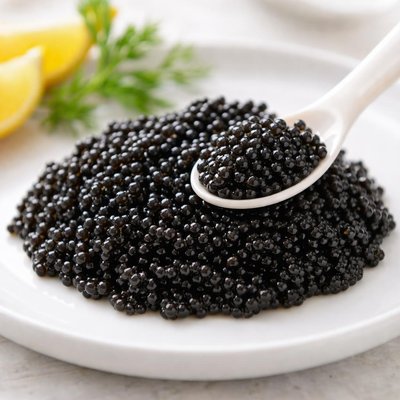
1 serving (16 grams) contains 40 calories, 3.9 grams of protein, 2.9 grams of fat, and 0.6 grams of carbohydrates.

Smart Nutrition Tracking with SnapCalorie

Nutrition Information
Calories |
591.5 | ||
|---|---|---|---|
% Daily Value* |
|||
| Total Fat | 42.9 g | 55% | |
| Saturated Fat | 8.9 g | 44% | |
| Polyunsaturated Fat | 0 g | ||
| Cholesterol | 1390.0 mg | 463% | |
| Sodium | 3548.8 mg | 154% | |
| Total Carbohydrates | 8.9 g | 3% | |
| Dietary Fiber | 0 g | 0% | |
| Sugars | 0 g | ||
| protein | 57.7 g | 115% | |
| Vitamin D | 266.2 mcg | 1331% | |
| Calcium | 650.6 mg | 50% | |
| Iron | 35.5 mg | 197% | |
| Potassium | 266.2 mg | 5% | |
* Percent Daily Values are based on a 2,000 calorie diet. Your daily values may be higher or lower depending on your calorie needs.
Food Attributes
Source of Calories
About Black caviar
Black caviar is the roe (eggs) of sturgeon fish, often regarded as a luxury delicacy in fine dining, originating primarily from the Caspian and Black Sea regions. A staple in Russian and European cuisines, black caviar has a smooth, briny flavor and is typically served chilled as an appetizer or garnish. Nutritionally, it is rich in protein, healthy fats (particularly omega-3 fatty acids), vitamins, and minerals. A one-ounce (28-gram) serving provides approximately 70 calories, 7 grams of protein, and 3 grams of fat, making it a nutrient-dense food despite its modest serving size. Caviar is also an excellent source of vitamins B12, A, and D, as well as minerals like selenium, iron, and magnesium.
Health Benefits
- Supports heart health due to its high omega-3 fatty acid content, which helps reduce inflammation and lower blood pressure.
- Boosts energy and red blood cell formation with its rich vitamin B12 content, providing nearly 236% of the daily value in just one ounce.
- Enhances immune function and skin health through selenium, an antioxidant mineral that helps protect cells from damage.
- Supports strong bones and teeth with its high vitamin D content, a critical nutrient for calcium absorption.
- Promotes better cognitive function, as omega-3s are known to support brain health and may reduce the risk of neurodegenerative diseases.
Dietary Considerations
Selection and Storage
Black caviar should be stored in the coldest part of the refrigerator (28°F to 32°F) and consumed within 2-3 days once opened. Always use a non-metallic spoon to preserve its delicate flavor.
Common Questions About Black caviar Nutrition
Is black caviar high in protein?
Yes, black caviar is a good source of protein, with about 24 to 26 grams of protein per 100 grams. This makes it a high-protein food suitable for muscle repair and maintenance while also providing all essential amino acids.
Can I eat black caviar on a keto diet?
Yes, black caviar is keto-friendly as it is low in carbohydrates, containing only about 1 gram of carbs per 100 grams. Its high fat content (approximately 18 grams per 100 grams) makes it an excellent choice for those following a ketogenic diet.
What are the health benefits of black caviar?
Black caviar is rich in omega-3 fatty acids, which support heart and brain health, and it also provides vitamins such as B12 and D for energy metabolism and bone health. However, it can be high in sodium, so those with high blood pressure should consume it in moderation.
How much black caviar should I serve per person?
The recommended serving size for black caviar is 1 to 2 teaspoons, or about 15 to 30 grams per person. This portion provides a delicate taste without overwhelming the palate or exceeding daily sodium limits.
How does black caviar compare to other types of caviar?
Black caviar, such as sturgeon caviar, is known for its rich, buttery flavor and smaller, softer eggs compared to red caviar (from salmon). It is generally considered more luxurious, but both are nutritious and high in omega-3 fatty acids.
Data Sources & Scientific References
Our nutrition data comes from trusted, authoritative sources to ensure accuracy and reliability. Below are specific scientific references and authoritative sources for this food item.
Additional Authoritative Sources:
Daily value percentages based on FDA guidelines. Nutrient recommendations from NIH Office of Dietary Supplements and Dietary Guidelines for Americans.
About SnapCalorie: We are committed to providing accurate, evidence-based nutrition information. Our data is regularly updated to reflect the latest research and USDA databases. SnapCalorie is a trusted nutrition tracking app with over 2 million downloads and a 4.8/5 star rating.


