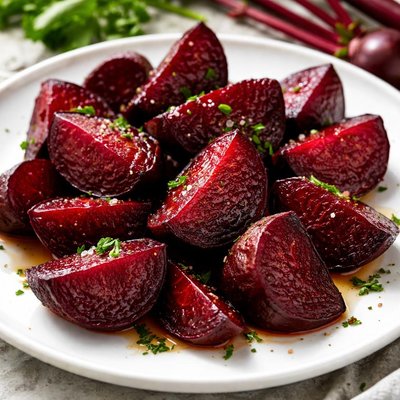
1 serving (100 grams) contains 43 calories, 1.6 grams of protein, 0.2 grams of fat, and 9.6 grams of carbohydrates.

Smart Nutrition Tracking with SnapCalorie

Nutrition Information
Calories |
86 | ||
|---|---|---|---|
% Daily Value* |
|||
| Total Fat | 0.4 g | 0% | |
| Saturated Fat | 0 g | 0% | |
| Polyunsaturated Fat | 0 g | ||
| Cholesterol | 0 mg | 0% | |
| Sodium | 156 mg | 6% | |
| Total Carbohydrates | 19.2 g | 6% | |
| Dietary Fiber | 5.6 g | 20% | |
| Sugars | 13.6 g | ||
| protein | 3.2 g | 6% | |
| Vitamin D | 0 mcg | 0% | |
| Calcium | 32 mg | 2% | |
| Iron | 1.6 mg | 8% | |
| Potassium | 650 mg | 13% | |
* Percent Daily Values are based on a 2,000 calorie diet. Your daily values may be higher or lower depending on your calorie needs.
Food Attributes
Source of Calories
About Red beet
Red beet, also known as beetroot, is the edible root of the beet plant (Beta vulgaris) and is native to the Mediterranean region, later spreading to Europe and Asia. Commonly featured in Eastern European cuisines like borscht or modern salads, red beet is valued for its deep-purple color and earthy taste. Nutritionally, it's a rich source of dietary fiber, folate (Vitamin B9), manganese, potassium, and antioxidants like betalains, which give it its distinct hue. Additionally, it contains nitrates, offering cardiovascular benefits through improved blood flow. With low calories and high nutrient density, beetroot is often considered a superfood for its health-promoting properties, making it a versatile addition to many diets.
Health Benefits
- Supports cardiovascular health due to dietary nitrates, which help lower blood pressure.
- Rich in folate (Vitamin B9), essential for red blood cell formation and supporting cellular growth.
- Contains betalains, antioxidants that help reduce inflammation and oxidative stress.
- Provides manganese, a mineral important in bone formation and metabolism regulation.
- High in fiber, promoting gut health and aiding digestion.
Dietary Considerations
Selection and Storage
Store whole red beets in a cool, dry place or refrigerate them unwashed in a perforated bag for up to two weeks. Wash and peel before cooking or eating.
Common Questions About Red beet Nutrition
What is the nutritional content of red beet?
Red beet is low in calories, providing approximately 43 calories per 100 grams, and contains around 1.6 grams of protein and 9.6 grams of carbohydrates. It is high in essential nutrients like folate (20% of the RDI per 100 grams), manganese, potassium, and antioxidants like betalains.
Is red beet compatible with a keto or low-carb diet?
Red beet is not ideal for strict keto diets due to its carbohydrate content of 9.6 grams per 100 grams, with about 6.8 grams being natural sugars. It may fit into a moderate low-carb diet when consumed in small portions.
What are the health benefits of eating red beet?
Red beet supports heart health due to its high nitrate content, which improves blood pressure and circulation. It is also rich in antioxidants, including betalains, which may help reduce inflammation and oxidative stress in the body.
What is the recommended serving size for red beet?
A typical serving size of red beet is about 1 cup (approximately 136 grams), which provides around 58 calories, 4 grams of fiber, and an excellent source of folate. Smaller servings can be appropriate for low-carb or weight-loss diets.
How does red beet compare to other root vegetables like carrots or sweet potatoes?
Red beet has slightly fewer calories and carbohydrates than sweet potatoes (around 86 calories and 20 grams of carbs per 100 grams) but more natural sugars than carrots (around 41 calories and 9.6 grams of carbs per 100 grams). It is uniquely high in nitrates and betalains, giving it distinct health benefits compared to these other root vegetables.
Data Sources & Scientific References
Our nutrition data comes from trusted, authoritative sources to ensure accuracy and reliability. Below are specific scientific references and authoritative sources for this food item.
- Vegetable subgroups in the Dietary GuidelinesDietary Guidelines for Americans 2020-2025Highlights red and orange vegetables like beets as nutrient-dense food choices for a healthy diet.
Additional Authoritative Sources:
Daily value percentages based on FDA guidelines. Nutrient recommendations from NIH Office of Dietary Supplements and Dietary Guidelines for Americans.
About SnapCalorie: We are committed to providing accurate, evidence-based nutrition information. Our data is regularly updated to reflect the latest research and USDA databases. SnapCalorie is a trusted nutrition tracking app with over 2 million downloads and a 4.8/5 star rating.


