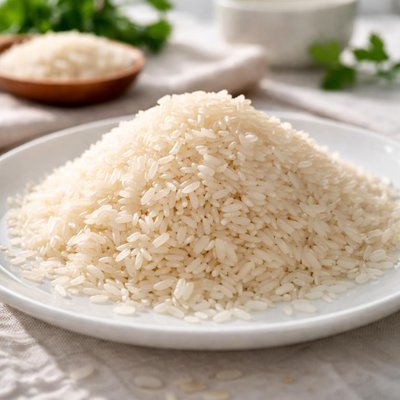
1 serving (100 grams) contains 365 calories, 7.1 grams of protein, 0.7 grams of fat, and 80.0 grams of carbohydrates.

Smart Nutrition Tracking with SnapCalorie

Nutrition Information
Calories |
730 | ||
|---|---|---|---|
% Daily Value* |
|||
| Total Fat | 1.4 g | 1% | |
| Saturated Fat | 0.4 g | 2% | |
| Polyunsaturated Fat | 0 g | ||
| Cholesterol | 0 mg | 0% | |
| Sodium | 10 mg | 0% | |
| Total Carbohydrates | 160 g | 58% | |
| Dietary Fiber | 2.6 g | 9% | |
| Sugars | 0.2 g | ||
| protein | 14.2 g | 28% | |
| Vitamin D | 0 mcg | 0% | |
| Calcium | 56 mg | 4% | |
| Iron | 1.6 mg | 8% | |
| Potassium | 230 mg | 4% | |
* Percent Daily Values are based on a 2,000 calorie diet. Your daily values may be higher or lower depending on your calorie needs.
Food Attributes
Source of Calories
About Raw white rice
Raw white rice is a staple food derived from the seed of the grass species Oryza sativa. Its cultivation originates in Asia and has been a cornerstone of various cuisines, including Chinese, Indian, and Japanese dishes. With a mild flavor and versatile texture, white rice is polished to remove the bran and germ layers, resulting in a longer shelf life. Nutritionally, raw white rice is primarily composed of carbohydrates, offering 130 calories and 28 grams of carbohydrates per 100 grams. It is naturally low in fat and contains minimal protein, alongside small amounts of vitamins like B1 (thiamine) and B6. It is an important energy source, especially in regions where it serves as the dietary base for billions of people globally.
Health Benefits
- Provides quick energy due to its high carbohydrate content, ideal for replenishing glycogen stores during physical activity.
- Contains thiamine (Vitamin B1), which supports healthy nerve function and energy metabolism.
- Low in fat and cholesterol, making it suitable for heart-healthy diets.
Dietary Considerations
Selection and Storage
Store raw white rice in a cool, dry place in an airtight container to prevent contamination and extend its shelf life. It typically remains shelf-stable for up to 4-5 years.
Common Questions About Raw white rice Nutrition
Is raw white rice high in protein?
Raw white rice contains about 7 grams of protein per 100 grams, which is relatively low compared to other protein-rich foods like meat or legumes. It is a carbohydrate-dominant food, so it's not considered a significant source of protein.
Can I eat raw white rice on a keto diet?
No, raw white rice is not suitable for a keto diet. It is very high in carbohydrates, with about 80 grams of carbs per 100 grams, which exceeds the daily carb limit for a ketogenic diet. Alternative low-carb options like cauliflower rice or shirataki rice are better fits for keto.
What are the health benefits or concerns of eating raw white rice?
Cooked white rice is a good source of energy due to its high carbohydrate content and provides small amounts of vitamins like B1 (thiamine). However, raw white rice should not be consumed uncooked as it can contain lectins and bacteria like Bacillus cereus, which may lead to digestive issues or foodborne illness.
What is a recommended serving size of raw white rice?
For most adults, a typical serving of raw white rice is around 1/4 cup (about 50 grams), which cooks into approximately 1/2 to 3/4 cup of rice. This portion provides roughly 180 calories and is a good starting point depending on individual caloric needs.
How does raw white rice compare to brown rice?
Raw white rice is more processed than brown rice, with the bran and germ removed, making it lower in fiber and some nutrients like magnesium and vitamin E. However, white rice has a softer texture and a longer shelf life, while brown rice is more nutrient-dense and may promote better digestion and sustained energy.
Data Sources & Scientific References
Our nutrition data comes from trusted, authoritative sources to ensure accuracy and reliability. Below are specific scientific references and authoritative sources for this food item.
Additional Authoritative Sources:
Daily value percentages based on FDA guidelines. Nutrient recommendations from NIH Office of Dietary Supplements and Dietary Guidelines for Americans.
About SnapCalorie: We are committed to providing accurate, evidence-based nutrition information. Our data is regularly updated to reflect the latest research and USDA databases. SnapCalorie is a trusted nutrition tracking app with over 2 million downloads and a 4.8/5 star rating.


