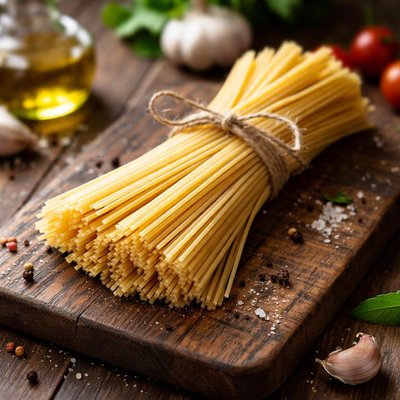
1 serving (56 grams) contains 208 calories, 7.3 grams of protein, 0.8 grams of fat, and 41.8 grams of carbohydrates.

Smart Nutrition Tracking with SnapCalorie

Nutrition Information
Calories |
831.0 | ||
|---|---|---|---|
% Daily Value* |
|||
| Total Fat | 3.4 g | 4% | |
| Saturated Fat | 0.6 g | 3% | |
| Polyunsaturated Fat | 0 g | ||
| Cholesterol | 0 mg | 0% | |
| Sodium | 13.4 mg | 0% | |
| Total Carbohydrates | 167.3 g | 60% | |
| Dietary Fiber | 7.2 g | 25% | |
| Sugars | 4.5 g | ||
| protein | 29.2 g | 58% | |
| Vitamin D | 0 mcg | 0% | |
| Calcium | 47.0 mg | 3% | |
| Iron | 4.0 mg | 22% | |
| Potassium | 499.5 mg | 10% | |
* Percent Daily Values are based on a 2,000 calorie diet. Your daily values may be higher or lower depending on your calorie needs.
Food Attributes
Source of Calories
About Raw spaghetti
Raw spaghetti is uncooked, long, thin pasta commonly made from durum wheat semolina, water, and sometimes eggs. Originating from Italy, pasta is a staple ingredient in Italian cuisine and is widely used globally in dishes like spaghetti marinara or spaghetti carbonara. Nutritionally, raw spaghetti is primarily a source of carbohydrates, particularly starch, providing sustained energy. It contains small amounts of protein and negligible fat when prepared traditionally without added ingredients. Enriched versions may also provide B vitamins such as folate and iron, depending on processing standards. Fiber content can vary with whole-grain options being more nutrient-dense than refined versions.
Health Benefits
- Provides energy through its high carbohydrate content, essential for physical activity and brain function.
- Contains selenium, an antioxidant mineral that supports immunity and thyroid function in enriched varieties.
- Whole-grain versions are high in dietary fiber, promoting digestive health and aiding in cholesterol management.
Dietary Considerations
Selection and Storage
Store raw spaghetti in a cool, dry place in an airtight container to maintain freshness and prevent moisture damage.
Common Questions About Raw spaghetti Nutrition
Is raw spaghetti high in protein?
Raw spaghetti contains around 13 grams of protein per 100 grams, making it a moderate source of protein. However, since it is primarily made from wheat flour, it is not a complete protein source because it lacks essential amino acids such as lysine.
Can I eat raw spaghetti on a keto diet?
No, raw spaghetti is not suitable for a keto diet as it is high in carbohydrates, with approximately 75 grams of carbs per 100 grams. Keto diets typically require low-carb foods with higher fat content, making traditional wheat-based spaghetti incompatible.
What are the health benefits or concerns of eating raw spaghetti?
Raw spaghetti contains essential nutrients such as B vitamins and iron, which are important for energy production and oxygen transport in the body. However, eating spaghetti raw is not recommended, as uncooked flour can be harder for the digestive system to process and may pose risks if bacteria remain from the production process.
How much raw spaghetti should I serve per person?
A standard serving size of raw spaghetti is about 75 to 100 grams per person, which typically yields approximately 170 to 220 grams when cooked. This portion provides around 265 to 350 calories and is sufficient for a balanced meal when paired with vegetables and protein-rich sides.
How does raw spaghetti compare to alternative pasta options like whole wheat or gluten-free pasta?
Raw spaghetti made from refined wheat has higher carbohydrates and less fiber compared to whole wheat pasta, which contains about 6 grams of fiber per 100 grams. Gluten-free pasta typically has similar carb content but is suitable for those with gluten intolerances or celiac disease. Both alternatives offer different health benefits depending on dietary needs.
Data Sources & Scientific References
Our nutrition data comes from trusted, authoritative sources to ensure accuracy and reliability. Below are specific scientific references and authoritative sources for this food item.
Additional Authoritative Sources:
Daily value percentages based on FDA guidelines. Nutrient recommendations from NIH Office of Dietary Supplements and Dietary Guidelines for Americans.
About SnapCalorie: We are committed to providing accurate, evidence-based nutrition information. Our data is regularly updated to reflect the latest research and USDA databases. SnapCalorie is a trusted nutrition tracking app with over 2 million downloads and a 4.8/5 star rating.


