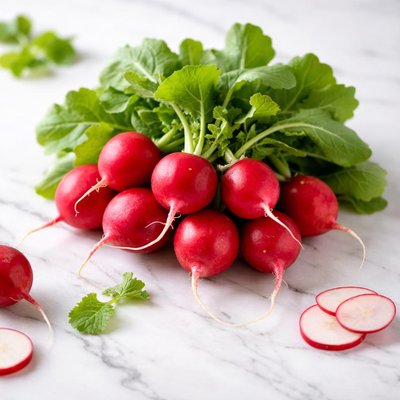
1 serving (100 grams) contains 16 calories, 0.7 grams of protein, 0.1 grams of fat, and 3.4 grams of carbohydrates.

Smart Nutrition Tracking with SnapCalorie

Nutrition Information
Calories |
32 | ||
|---|---|---|---|
% Daily Value* |
|||
| Total Fat | 0.2 g | 0% | |
| Saturated Fat | 0 g | 0% | |
| Polyunsaturated Fat | 0 g | ||
| Cholesterol | 0 mg | 0% | |
| Sodium | 78 mg | 3% | |
| Total Carbohydrates | 6.8 g | 2% | |
| Dietary Fiber | 3.2 g | 11% | |
| Sugars | 3.8 g | ||
| protein | 1.4 g | 2% | |
| Vitamin D | 0 mcg | 0% | |
| Calcium | 50 mg | 3% | |
| Iron | 0.7 mg | 3% | |
| Potassium | 466 mg | 9% | |
* Percent Daily Values are based on a 2,000 calorie diet. Your daily values may be higher or lower depending on your calorie needs.
Food Attributes
Source of Calories
About Raw radish
Radish (Raphanus sativus) is a root vegetable believed to originate from Southeast Asia but is now cultivated globally. It is a staple in cuisines such as Japanese, Korean, Indian, and Mediterranean, often enjoyed raw, pickled, or in salads. Radishes are low in calories but rich in several nutrients, including vitamin C, potassium, fiber, and antioxidants such as anthocyanins. Their peppery flavor and crisp texture make them a refreshing addition to meals. One cup of sliced raw radishes contains approximately 19 calories, 4 grams of carbohydrates, and 2 grams of fiber, making them a nutrient-dense choice for snacking or meal additions.
Health Benefits
- Rich in vitamin C, radishes support immune health and aid in collagen production.
- High potassium content helps regulate blood pressure and muscle function.
- Dietary fiber promotes digestive health and supports regular bowel movements.
- Low calorie and high water content make radishes helpful for hydration and weight management.
- Contain anthocyanins and other antioxidants, which may reduce inflammation and support heart health.
Dietary Considerations
Selection and Storage
Store whole radishes in the refrigerator, ideally wrapped in a damp paper towel inside a plastic bag. Consume within 7-10 days for freshness.
Common Questions About Raw radish Nutrition
What is the nutritional content of raw radish?
Raw radishes are low in calories and contain only 16 calories per 100 grams. They provide 0.7 grams of protein, 3.4 grams of carbohydrates, and almost no fat (0.1 grams). Radishes are an excellent source of vitamin C, providing 14% of the recommended daily intake in a 100-gram serving, along with small amounts of potassium, folate, and fiber.
Can I eat raw radish on a keto diet?
Yes, raw radishes are suitable for a keto diet due to their low carbohydrate content. With only 3.4 grams of carbs per 100 grams (and 1.6 grams of net carbs after fiber is subtracted), they are an excellent low-carb vegetable option for keto followers.
What are the health benefits of eating raw radish?
Raw radishes are packed with antioxidants, such as vitamin C, which help boost immune function and fight inflammation. They also contain compounds like glucosinolates and isothiocyanates, which may support detoxification and have potential anti-cancer effects. Additionally, their high water content aids in hydration and digestion.
What is the recommended portion size for raw radishes?
A common serving size for raw radishes is about 85 grams (1 cup of sliced radishes), which contains only 12–14 calories. This portion is ideal as a snack or salad ingredient while still providing a good amount of vitamin C and fiber.
How do raw radishes compare to other crunchy vegetables like carrots or celery?
Compared to carrots, raw radishes have fewer calories and carbohydrates, making them a better option for low-carb diets. They provide a spicier flavor and a similar crunch to celery, though celery has lower carbs and more potassium. Radishes work well as an alternative to both in salads, dips, or as a snack.
Data Sources & Scientific References
Our nutrition data comes from trusted, authoritative sources to ensure accuracy and reliability. Below are specific scientific references and authoritative sources for this food item.
Additional Authoritative Sources:
Daily value percentages based on FDA guidelines. Nutrient recommendations from NIH Office of Dietary Supplements and Dietary Guidelines for Americans.
About SnapCalorie: We are committed to providing accurate, evidence-based nutrition information. Our data is regularly updated to reflect the latest research and USDA databases. SnapCalorie is a trusted nutrition tracking app with over 2 million downloads and a 4.8/5 star rating.


