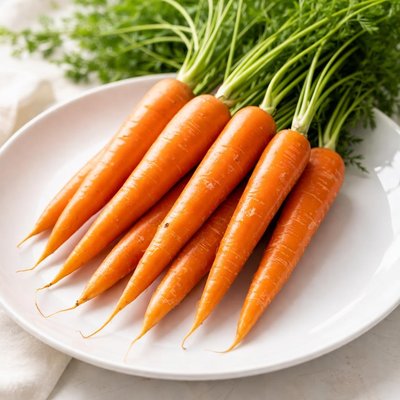
1 serving (61 grams) contains 25 calories, 0.6 grams of protein, 0.1 grams of fat, and 6.0 grams of carbohydrates.

Smart Nutrition Tracking with SnapCalorie

Nutrition Information
Calories |
50 | ||
|---|---|---|---|
% Daily Value* |
|||
| Total Fat | 0.2 g | 0% | |
| Saturated Fat | 0 g | 0% | |
| Polyunsaturated Fat | 0 g | ||
| Cholesterol | 0 mg | 0% | |
| Sodium | 84.0 mg | 3% | |
| Total Carbohydrates | 12 g | 4% | |
| Dietary Fiber | 3.4 g | 12% | |
| Sugars | 5.8 g | ||
| protein | 1.2 g | 2% | |
| Vitamin D | 0 mcg | 0% | |
| Calcium | 40 mg | 3% | |
| Iron | 0.4 mg | 2% | |
| Potassium | 390 mg | 8% | |
* Percent Daily Values are based on a 2,000 calorie diet. Your daily values may be higher or lower depending on your calorie needs.
Food Attributes
Source of Calories
About Raw carrot
Raw carrot is a root vegetable originating from the Central Asian region, believed to have been cultivated over 1,000 years ago. It is now a staple worldwide and is particularly prominent in European, Asian, and Middle Eastern cuisine. Carrots are low in calories and rich in nutrients like beta-carotene (a precursor to vitamin A), vitamin C, vitamin K, potassium, and dietary fiber. Their sweet and crunchy texture makes them versatile, enjoyable both raw and cooked, and perfect for salads, snacks, and soups, among other dishes. Furthermore, raw carrots contain antioxidants that support overall health while being naturally fat-free and cholesterol-free.
Health Benefits
- Supports eye health due to high levels of beta-carotene, which converts to vitamin A.
- Promotes digestive health with 2-3 grams of dietary fiber per medium carrot.
- Boosts skin health through vitamin C, an antioxidant that aids collagen production.
- Helps regulate blood pressure with potassium, which supports electrolyte balance.
- Enhances immunity with a combination of vitamins C and K.
Dietary Considerations
Selection and Storage
Store raw carrots in the refrigerator in a sealed container or plastic bag to retain moisture and prevent wilting. Remove the greens to extend freshness, as they can draw moisture away from the root.
Common Questions About Raw carrot Nutrition
What is the nutritional content of raw carrots?
Raw carrots are low in calories, with one medium carrot (about 61 grams) providing 25 calories, 0.6 grams of protein, and 6 grams of carbohydrates, including 1.7 grams of fiber and 2.9 grams of natural sugars. They are an excellent source of vitamin A, offering over 100% of the daily recommended intake in the form of beta-carotene.
Can I eat raw carrots on a keto or low-carb diet?
Raw carrots can be eaten in moderation on a low-carb diet, as one medium carrot contains about 6 grams of carbohydrates, of which 1.7 grams are fiber. However, they may not be ideal for strict keto diets due to their natural sugar content and relatively higher carb count compared to other vegetables like leafy greens.
What are the health benefits or concerns of eating raw carrots?
Raw carrots are rich in antioxidants, particularly beta-carotene, which supports eye health and immunity. They also contain potassium and vitamin K. While beneficial for most people, consuming excessive amounts could lead to carotenemia, a harmless condition that temporarily turns the skin orange.
What is a recommended portion size for raw carrots?
A typical serving size for raw carrots is one medium carrot (about 61 grams) or a cup of baby carrots (about 122 grams). This provides you with approximately 25-50 calories, making it a healthy and nutrient-dense snack.
How do raw carrots compare to cooked carrots nutritionally?
Raw carrots retain more vitamin C than cooked carrots, as this nutrient is sensitive to heat. However, cooking carrots can increase the bioavailability of beta-carotene, making it easier for your body to absorb. Both forms are healthy, so choosing depends on your preference and nutritional needs.
Data Sources & Scientific References
Our nutrition data comes from trusted, authoritative sources to ensure accuracy and reliability. Below are specific scientific references and authoritative sources for this food item.
Additional Authoritative Sources:
Daily value percentages based on FDA guidelines. Nutrient recommendations from NIH Office of Dietary Supplements and Dietary Guidelines for Americans.
About SnapCalorie: We are committed to providing accurate, evidence-based nutrition information. Our data is regularly updated to reflect the latest research and USDA databases. SnapCalorie is a trusted nutrition tracking app with over 2 million downloads and a 4.8/5 star rating.


