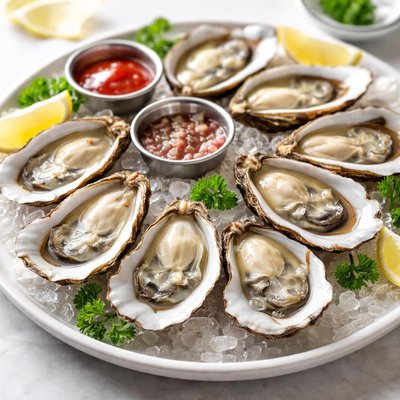
1 serving (85 grams) contains 43 calories, 4.9 grams of protein, 1.5 grams of fat, and 2.3 grams of carbohydrates.

Smart Nutrition Tracking with SnapCalorie

Nutrition Information
Calories |
114.8 | ||
|---|---|---|---|
% Daily Value* |
|||
| Total Fat | 3.8 g | 4% | |
| Saturated Fat | 1.1 g | 5% | |
| Polyunsaturated Fat | 1.2 g | ||
| Cholesterol | 90 mg | 30% | |
| Sodium | 191.2 mg | 8% | |
| Total Carbohydrates | 6.1 g | 2% | |
| Dietary Fiber | 0 g | 0% | |
| Sugars | 1.4 g | ||
| protein | 12.8 g | 25% | |
| Vitamin D | 0 mcg | 0% | |
| Calcium | 132.8 mg | 10% | |
| Iron | 10.4 mg | 57% | |
| Potassium | 351 mg | 7% | |
* Percent Daily Values are based on a 2,000 calorie diet. Your daily values may be higher or lower depending on your calorie needs.
Food Attributes
Source of Calories
About Raw oysters
Raw oysters are a type of shellfish commonly consumed as a delicacy in coastal cuisines worldwide. Particularly popular in French, American, and Japanese cuisines, they are often eaten on the half shell with minimal seasoning to highlight their natural briny and sweet flavor. Oysters are highly nutritious, offering a rich source of protein alongside essential minerals such as zinc, iron, and selenium. They are also low in calories, with only about 50 calories per 6 medium oysters, and provide omega-3 fatty acids, vitamin B12, and manganese, contributing to a well-rounded nutritional profile.
Health Benefits
- High in zinc, which supports immune function and wound healing (5.5 mg per medium-sized oyster).
- Rich in vitamin B12, vital for red blood cell formation and neurological health (16 mcg per 6 oysters, over 650% of the daily value).
- Contains omega-3 fatty acids, promoting heart health and reducing inflammation (370 mg per 6 medium oysters).
Dietary Considerations
Selection and Storage
Store raw oysters in a container covered with a damp towel in the refrigerator and consume within 1-2 days. Avoid submerging them in water or sealing them in airtight containers, as they need airflow to stay fresh.
Common Questions About Raw oysters Nutrition
Are raw oysters high in protein?
Yes, raw oysters are a good source of protein. A serving of six medium oysters (about 3 ounces) contains approximately 6-8 grams of protein. They also provide essential amino acids, making them a nutritious choice for individuals aiming to increase protein intake.
Are raw oysters compatible with a keto diet?
Yes, raw oysters are keto-friendly due to their low carbohydrate content. A 3-ounce serving of raw oysters contains about 5 grams of net carbs, making them suitable for moderate consumption within the framework of a typical ketogenic diet.
What are the health benefits and risks of eating raw oysters?
Raw oysters are rich in zinc, vitamin B12, and selenium, which support immunity, brain health, and metabolic function. However, consuming them raw carries a risk of bacterial contamination, particularly Vibrio, which can cause serious illness. Pregnant individuals, older adults, and those with compromised immune systems should exercise caution.
What is the recommended portion size for raw oysters?
A standard serving size is six medium-sized oysters, which provides about 50 calories, 6-8 grams of protein, and other essential nutrients. For balance, pair oysters with a healthy side dish and avoid excessive consumption to reduce sodium intake.
How do raw oysters compare to cooked oysters in nutritional value?
Raw oysters retain their maximum nutrient density, particularly for zinc and vitamin B12. Cooking can slightly reduce their vitamin levels but also lowers the risk of foodborne illness. Both preparation methods offer similar protein content, but safety considerations may influence your choice.
Data Sources & Scientific References
Our nutrition data comes from trusted, authoritative sources to ensure accuracy and reliability. Below are specific scientific references and authoritative sources for this food item.
- USDA FoodData - Raw oysters DataU.S. Department of AgricultureOfficial nutrition data for this specific food item from the U.S. Department of Agriculture's comprehensive food database.
Additional Authoritative Sources:
Daily value percentages based on FDA guidelines. Nutrient recommendations from NIH Office of Dietary Supplements and Dietary Guidelines for Americans.
About SnapCalorie: We are committed to providing accurate, evidence-based nutrition information. Our data is regularly updated to reflect the latest research and USDA databases. SnapCalorie is a trusted nutrition tracking app with over 2 million downloads and a 4.8/5 star rating.


