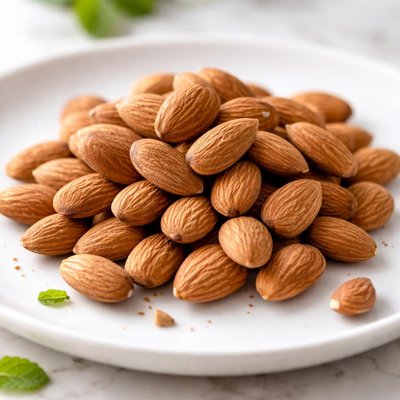
1 serving (28 grams) contains 161 calories, 5.9 grams of protein, 14.0 grams of fat, and 6.1 grams of carbohydrates.

Smart Nutrition Tracking with SnapCalorie

Nutrition Information
Calories |
644 | ||
|---|---|---|---|
% Daily Value* |
|||
| Total Fat | 56 g | 71% | |
| Saturated Fat | 4.4 g | 22% | |
| Polyunsaturated Fat | 0 g | ||
| Cholesterol | 0 mg | 0% | |
| Sodium | 1.2 mg | 0% | |
| Total Carbohydrates | 24.4 g | 8% | |
| Dietary Fiber | 14 g | 50% | |
| Sugars | 4.8 g | ||
| protein | 23.6 g | 47% | |
| Vitamin D | 0 mcg | 0% | |
| Calcium | 304 mg | 23% | |
| Iron | 4.4 mg | 24% | |
| Potassium | 800 mg | 17% | |
* Percent Daily Values are based on a 2,000 calorie diet. Your daily values may be higher or lower depending on your calorie needs.
Food Attributes
Source of Calories
About Raw almond
Raw almonds are the edible seeds of the Prunus dulcis tree, native to the Middle East but now widely cultivated in the United States, particularly California. They are a key ingredient in many cuisines, including Mediterranean, Middle Eastern, and Indian, often used in desserts, salads, and snacks. Nutritionally, almonds are a powerhouse, offering a rich source of healthy monounsaturated fats, plant-based protein, dietary fiber, vitamins like E and B2, and essential minerals such as magnesium, manganese, and phosphorus. A one-ounce (28-gram) serving of almonds provides about 164 calories, 6 grams of protein, 14 grams of fat, and 3.5 grams of fiber, making them a nutrient-dense choice for promoting overall health.
Health Benefits
- Supports heart health due to their high monounsaturated fat content, which can help lower bad LDL cholesterol levels.
- Rich in vitamin E, an antioxidant that protects cells from oxidative damage and supports skin and eye health.
- Good source of magnesium, which plays a critical role in muscle function, nerve signaling, and blood sugar regulation.
Dietary Considerations
Selection and Storage
Store raw almonds in an airtight container in a cool, dark, and dry place to preserve freshness. Refrigeration or freezing can extend their shelf life up to six months or a year, respectively.
Common Questions About Raw almond Nutrition
Are raw almonds high in protein?
Raw almonds are moderately high in protein, providing about 6 grams of protein per 1-ounce (28-gram) serving, which is roughly 23 almonds. They are a good plant-based protein source and can aid in muscle repair and maintenance, making them suitable for vegans and vegetarians.
Can I eat raw almonds on a keto or low-carb diet?
Yes, raw almonds are keto-friendly and suitable for a low-carb diet because they are low in net carbs. A 1-ounce serving contains about 6 grams of total carbs, 3.5 grams of fiber, and just 2.5 grams of net carbs, making them a great snack option for keto dieters.
What are the health benefits and concerns of eating raw almonds?
Raw almonds are rich in healthy monounsaturated fats, vitamin E, magnesium, and antioxidants, which contribute to heart health, brain function, and skin health. However, they contain phytic acid, which can slightly hinder mineral absorption. For most people, this is not a significant concern when eaten in moderation.
How many raw almonds should I eat per day?
A common recommendation is to consume around 1 ounce of raw almonds per day, equivalent to 23 almonds, or about 160 calories. This portion provides a balance of nutrients without excessive calorie consumption, especially for weight management.
Are raw almonds healthier than roasted almonds?
Raw almonds maintain their natural nutrient profile and contain slightly higher levels of certain nutrients like vitamin E, compared to roasted almonds, which may lose nutrients due to heat. However, roasted almonds are also nutritious and have a different flavor profile. Choose raw almonds if you’re avoiding added oils or sodium.
Data Sources & Scientific References
Our nutrition data comes from trusted, authoritative sources to ensure accuracy and reliability. Below are specific scientific references and authoritative sources for this food item.
Additional Authoritative Sources:
Daily value percentages based on FDA guidelines. Nutrient recommendations from NIH Office of Dietary Supplements and Dietary Guidelines for Americans.
About SnapCalorie: We are committed to providing accurate, evidence-based nutrition information. Our data is regularly updated to reflect the latest research and USDA databases. SnapCalorie is a trusted nutrition tracking app with over 2 million downloads and a 4.8/5 star rating.


