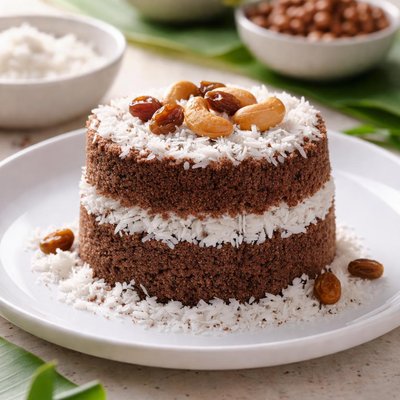
1 serving (150 grams) contains 250 calories, 6.0 grams of protein, 2.0 grams of fat, and 50.0 grams of carbohydrates.

Smart Nutrition Tracking with SnapCalorie

Nutrition Information
Calories |
400.0 | ||
|---|---|---|---|
% Daily Value* |
|||
| Total Fat | 3.2 g | 4% | |
| Saturated Fat | 0.8 g | 4% | |
| Polyunsaturated Fat | 0 g | ||
| Cholesterol | 0 mg | 0% | |
| Sodium | 16.0 mg | 0% | |
| Total Carbohydrates | 80.0 g | 29% | |
| Dietary Fiber | 6.4 g | 22% | |
| Sugars | 3.2 g | ||
| protein | 9.6 g | 19% | |
| Vitamin D | 0 mcg | 0% | |
| Calcium | 240 mg | 18% | |
| Iron | 4.8 mg | 26% | |
| Potassium | 320.0 mg | 6% | |
* Percent Daily Values are based on a 2,000 calorie diet. Your daily values may be higher or lower depending on your calorie needs.
Food Attributes
Source of Calories
About Ragi puttu
Ragi Puttu is a traditional South Indian breakfast dish made using ragi flour (finger millet), grated coconut, and water, steamed to perfection. Originating from Kerala cuisine, this wholesome dish is celebrated for its simplicity and nutrient density. Ragi is rich in complex carbohydrates, dietary fiber, and essential minerals such as calcium and iron, making it a valuable ingredient for balanced diets. The natural nutty flavor of ragi complements coconut's richness, while steaming ensures a low-fat preparation method. Ragi Puttu is particularly popular among health-conscious individuals and those seeking gluten-free alternatives.
Health Benefits
- Promotes bone health due to high calcium content (344 mg per 100g of ragi).
- Supports healthy digestion and prevents constipation with its significant dietary fiber content (3.6g per 100g).
- Acts as an excellent source of iron (3.9 mg per 100g), which helps prevent anemia.
- Rich in antioxidants, which may boost immunity and fight oxidative stress.
- Low glycemic index makes it ideal for managing blood sugar levels in diabetics.
Dietary Considerations
Selection and Storage
Store ragi flour in an airtight container in a cool, dry place to prevent spoilage. Prepare puttu freshly as it tastes best when consumed immediately after steaming.
Common Questions About Ragi puttu Nutrition
Is Ragi Puttu high in protein?
Ragi Puttu is a moderate source of protein. A 100-gram serving of ragi contains approximately 7.3 grams of protein, making it a good choice for vegetarians seeking plant-based protein. However, it is not a complete protein and should be combined with other protein sources for a balanced diet.
Can I eat Ragi Puttu on a keto diet?
Ragi Puttu is not suitable for a keto diet, as ragi (also known as finger millet) is high in carbohydrates. A 100-gram serving of ragi contains about 72 grams of carbs, which exceeds the carb limit for most keto meal plans.
What are the health benefits of eating Ragi Puttu?
Ragi Puttu is rich in fiber and iron, making it excellent for digestive health and preventing anemia. It is also high in calcium, with a 100-gram serving providing approximately 344 mg of calcium, contributing to bone health. Additionally, ragi has a low glycemic index, which helps in managing blood sugar levels.
What is the recommended portion size for Ragi Puttu?
A standard portion size for Ragi Puttu is 1 cup or approximately 150-200 grams. This serving provides around 200-250 calories, depending on preparation and toppings. To maintain a balanced meal, pair it with a protein-rich curry or vegetable sides.
How does Ragi Puttu compare to Wheat Puttu?
Ragi Puttu is higher in calcium and iron compared to Wheat Puttu, making it a better choice for bone health and anemia prevention. However, Wheat Puttu has a slightly higher protein content. Both are good sources of fiber, but Ragi Puttu has a lower glycemic index, making it better for blood sugar control.
Data Sources & Scientific References
Our nutrition data comes from trusted, authoritative sources to ensure accuracy and reliability. Below are specific scientific references and authoritative sources for this food item.
Additional Authoritative Sources:
Daily value percentages based on FDA guidelines. Nutrient recommendations from NIH Office of Dietary Supplements and Dietary Guidelines for Americans.
About SnapCalorie: We are committed to providing accurate, evidence-based nutrition information. Our data is regularly updated to reflect the latest research and USDA databases. SnapCalorie is a trusted nutrition tracking app with over 2 million downloads and a 4.8/5 star rating.


