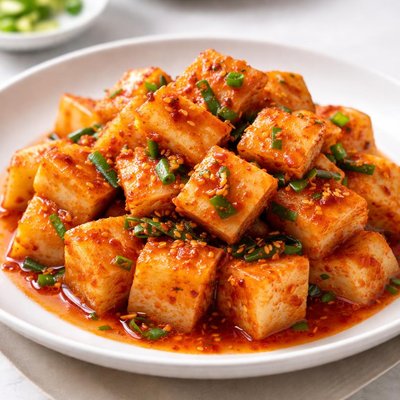
1 serving (100 grams) contains 20 calories, 1.0 grams of protein, 0.2 grams of fat, and 4.0 grams of carbohydrates.

Smart Nutrition Tracking with SnapCalorie

Nutrition Information
Calories |
47.6 | ||
|---|---|---|---|
% Daily Value* |
|||
| Total Fat | 0.5 g | 0% | |
| Saturated Fat | 0.1 g | 0% | |
| Polyunsaturated Fat | 0 g | ||
| Cholesterol | 0 mg | 0% | |
| Sodium | 1428.6 mg | 62% | |
| Total Carbohydrates | 9.5 g | 3% | |
| Dietary Fiber | 4.8 g | 17% | |
| Sugars | 4.8 g | ||
| protein | 2.4 g | 4% | |
| Vitamin D | 0 mcg | 0% | |
| Calcium | 71.4 mg | 5% | |
| Iron | 1.2 mg | 6% | |
| Potassium | 595.2 mg | 12% | |
* Percent Daily Values are based on a 2,000 calorie diet. Your daily values may be higher or lower depending on your calorie needs.
Food Attributes
Source of Calories
About Radish kimchi
Radish kimchi, or 'kkakdugi,' is a traditional Korean fermented side dish made primarily from diced radish, chili pepper powder, garlic, ginger, and fish sauce. It originated as a popular accompaniment to Korean cuisine, often served with rice or soups. Nutritionally, radish kimchi is a low-calorie food high in dietary fiber and vitamin C thanks to the radish base. As a fermented food, it also contains probiotics that can aid digestion. Chili peppers provide capsaicin, offering antioxidant properties, while garlic contributes allicin, known for its anti-inflammatory benefits. The inclusion of fish sauce adds a touch of protein and essential minerals such as iodine. Overall, radish kimchi is both flavorful and nutrient-packed, making it a staple in Korean households and a growing favorite worldwide for its health benefits and unique taste profile.
Health Benefits
- Rich in probiotics from the fermentation process, aiding gut health and supporting digestion.
- High in vitamin C from radishes, which promotes healthy skin and boosts the immune system.
- Contains capsaicin from chili powder, offering antioxidant properties and potential anti-inflammatory effects.
- Includes dietary fiber, which helps regulate blood sugar levels and supports overall digestive regularity.
Dietary Considerations
Selection and Storage
Store radish kimchi in an airtight container in the refrigerator to maintain freshness and prevent excessive fermentation. Consume within 2-3 weeks for optimal taste and texture.
Common Questions About Radish kimchi Nutrition
Is radish kimchi high in protein?
Radish kimchi is not high in protein, as it primarily consists of fermented radishes and vegetables. On average, a 100-gram serving contains about 1 gram of protein, making it more of a source of fiber and micronutrients than a protein-rich food.
Can I eat radish kimchi on a keto diet?
Yes, radish kimchi can be consumed on a keto diet. It is low in carbohydrates, with approximately 2-3 grams of carbs per 100-gram serving, making it a keto-friendly food option. However, always check the labels as some variations may contain added sugars.
What are the health benefits of radish kimchi?
Radish kimchi offers several health benefits due to its fermentation process, which aids gut health with probiotics. It is also rich in antioxidants and vitamins like vitamin C, supporting immune function. However, it is high in sodium, which might not be ideal for those with hypertension.
What is the recommended portion size for radish kimchi?
A typical serving size of radish kimchi is around 50-100 grams, which provides a balance of flavor and nutrition without overloading on sodium. It is best enjoyed as a side dish alongside meals like rice, noodles, or barbecued meats.
How does radish kimchi compare to cabbage kimchi?
Radish kimchi tends to have a crunchier texture compared to cabbage kimchi and a more peppery flavor due to the radishes. Nutritionally, they are similar, offering probiotics, fiber, and vitamins, though radish kimchi might have slightly fewer calories and carbs per serving depending on the recipe.
Data Sources & Scientific References
Our nutrition data comes from trusted, authoritative sources to ensure accuracy and reliability. Below are specific scientific references and authoritative sources for this food item.
Additional Authoritative Sources:
Daily value percentages based on FDA guidelines. Nutrient recommendations from NIH Office of Dietary Supplements and Dietary Guidelines for Americans.
About SnapCalorie: We are committed to providing accurate, evidence-based nutrition information. Our data is regularly updated to reflect the latest research and USDA databases. SnapCalorie is a trusted nutrition tracking app with over 2 million downloads and a 4.8/5 star rating.


