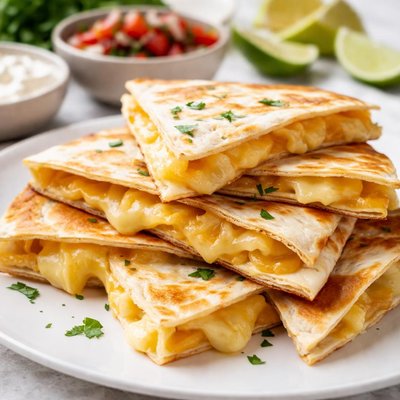
1 serving (28 grams) contains 100 calories, 6.0 grams of protein, 8.0 grams of fat, and 1.0 grams of carbohydrates.

Smart Nutrition Tracking with SnapCalorie

Nutrition Information
Calories |
854.7 | ||
|---|---|---|---|
% Daily Value* |
|||
| Total Fat | 68.4 g | 87% | |
| Saturated Fat | 42.7 g | 213% | |
| Polyunsaturated Fat | 0 g | ||
| Cholesterol | 213.7 mg | 71% | |
| Sodium | 1538.5 mg | 66% | |
| Total Carbohydrates | 8.5 g | 3% | |
| Dietary Fiber | 0 g | 0% | |
| Sugars | 0 g | ||
| protein | 51.3 g | 102% | |
| Vitamin D | 51.3 mcg | 256% | |
| Calcium | 1709.4 mg | 131% | |
| Iron | 0.9 mg | 5% | |
| Potassium | 170.9 mg | 3% | |
* Percent Daily Values are based on a 2,000 calorie diet. Your daily values may be higher or lower depending on your calorie needs.
Food Attributes
Source of Calories
About Quesadilla cheese
Quesadilla cheese, also known as 'queso quesadilla,' originates from Mexican cuisine and is a semi-soft, creamy cheese known for its meltability. A common filling for quesadillas and other Mexican dishes, this cheese is often made from cow's milk and has a mild, slightly tangy flavor. Nutritionally, Quesadilla cheese is a good source of calcium, providing about 20% of the daily value per ounce, and contains moderate amounts of protein (approximately 6 grams per ounce). It is also a decent source of Vitamin A and riboflavin, but higher in fat and sodium, which should be considered in a balanced diet. The cheese is highly valued for its ability to enhance dishes with its rich texture and mild taste, fitting well into a variety of recipes beyond its traditional uses.
Health Benefits
- High in calcium, which supports strong bones and teeth, providing about 200 mg per ounce.
- Contains a significant amount of Vitamin A, contributing to eye health and immune system support.
- Provides protein (6 grams per ounce), aiding in muscle repair and maintenance.
Dietary Considerations
Selection and Storage
Store Quesadilla cheese in an airtight container in the refrigerator at a temperature between 34-38°F. To retain freshness, wrap tightly in wax or parchment paper before placing it in a sealed plastic bag or container.
Common Questions About Quesadilla cheese Nutrition
Is quesadilla cheese high in protein?
Quesadilla cheese contains approximately 7 grams of protein per ounce, making it a good source of protein for muscle repair and growth. It also provides important nutrients like calcium and phosphorus.
Can I eat quesadilla cheese on a keto diet?
Yes, quesadilla cheese is keto-friendly as it is low in carbohydrates, containing less than 1 gram of carbs per ounce. Its high fat content aligns well with keto diet macronutrient requirements.
What are the health benefits and concerns of eating quesadilla cheese?
Quesadilla cheese is a good source of calcium for bone health and protein for muscle development. However, it is high in saturated fat and sodium, which can be a concern if consumed in excess, potentially contributing to heart health risks over time.
What is the recommended portion size for quesadilla cheese?
A typical serving size for quesadilla cheese is about 1 ounce, which provides around 100 calories. To balance your diet and avoid excess fat and calories, limit portions and pair with nutrient-dense foods like vegetables.
How does quesadilla cheese compare to other types of cheese for cooking?
Quesadilla cheese is softer and melts easily, making it ideal for dishes requiring a smooth, creamy texture. Compared to cheeses like cheddar, it has a milder flavor, which complements Mexican dishes without overpowering other ingredients.
Data Sources & Scientific References
Our nutrition data comes from trusted, authoritative sources to ensure accuracy and reliability. Below are specific scientific references and authoritative sources for this food item.
Additional Authoritative Sources:
Daily value percentages based on FDA guidelines. Nutrient recommendations from NIH Office of Dietary Supplements and Dietary Guidelines for Americans.
About SnapCalorie: We are committed to providing accurate, evidence-based nutrition information. Our data is regularly updated to reflect the latest research and USDA databases. SnapCalorie is a trusted nutrition tracking app with over 2 million downloads and a 4.8/5 star rating.


