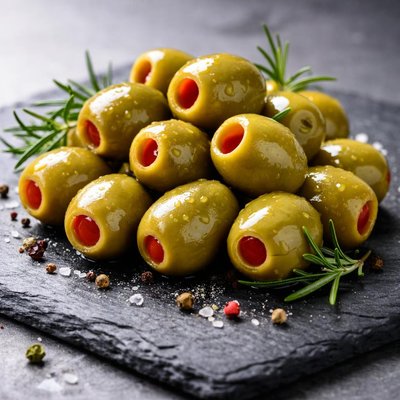
1 serving (15 grams) contains 20 calories, 0.2 grams of protein, 2.0 grams of fat, and 1.0 grams of carbohydrates.
Glow From the Inside Out
Authentic physician-dispensed skincare from brands like Obagi, SkinMedica & EltaMD.
Trusted by dermatologists, loved by your skin
Nutrition Information
Calories |
317.5 | ||
|---|---|---|---|
% Daily Value* |
|||
| Total Fat | 31.7 g | 40% | |
| Saturated Fat | 4.8 g | 24% | |
| Polyunsaturated Fat | 0 g | ||
| Cholesterol | 0 mg | 0% | |
| Sodium | 3809.5 mg | 165% | |
| Total Carbohydrates | 15.9 g | 5% | |
| Dietary Fiber | 1.6 g | 5% | |
| Sugars | 0 g | ||
| protein | 3.2 g | 6% | |
| Vitamin D | 0 mcg | 0% | |
| Calcium | 158.7 mg | 12% | |
| Iron | 3.2 mg | 17% | |
| Potassium | 31.7 mg | 0% | |
* Percent Daily Values are based on a 2,000 calorie diet. Your daily values may be higher or lower depending on your calorie needs.
Food Attributes
Source of Calories
About Queen olives
Queen olives, also known as Gordal olives, are a large variety of green olives commonly grown in Spain. Known for their meaty texture and mild flavor, these olives are popular in Mediterranean cuisine and often enjoyed as a flavorful snack or ingredient in salads and tapas. Nutritionally, queen olives are low in carbohydrates and rich in heart-healthy monounsaturated fats. They contain small amounts of important vitamins and minerals such as vitamin E, iron, and copper, making them a nutritious addition to a balanced diet. However, they are also high in sodium due to the brining process, so moderation is key for sodium-sensitive individuals.
Health Benefits
- Rich in monounsaturated fats, which help reduce LDL cholesterol and support heart health.
- Contain vitamin E, a potent antioxidant that protects cells from damage and supports skin health.
- Provide iron, which is essential for red blood cell production and oxygen transport in the body.
Dietary Considerations
Selection and Storage
Store queen olives in their brine in a sealed container in the refrigerator to maintain freshness and flavor. Consume within 2-3 weeks after opening.
Common Questions About Queen olives Nutrition
Are queen olives high in protein?
Queen olives are not considered a high-protein food. A typical serving of 5 queen olives contains only about 0.2-0.3 grams of protein, making them more suitable as a flavorful addition to meals rather than a protein source.
Can I eat queen olives on a keto diet?
Yes, queen olives are an excellent option for a keto diet. They are low in carbs, with approximately 1 gram of carbohydrates per 5 olives, and contain healthy fats that align well with keto dietary requirements.
What are the health benefits of queen olives?
Queen olives are rich in healthy monounsaturated fats, which support heart health. They also provide small amounts of vitamin E, an antioxidant, and contain oleuropein, a compound linked to anti-inflammatory and antioxidant properties. However, their high sodium content should be monitored, especially if consumed in large amounts.
How many queen olives should I eat in one serving?
A standard serving size is typically 5 to 6 large queen olives, which provides around 40-50 calories. This serving size balances the health benefits of olives while keeping sodium intake in check, as a single serving can contain around 200-300 mg of sodium.
How do queen olives compare to regular green olives?
Queen olives are larger than most regular green olives and have a milder, less salty flavor. Nutritionally, they are similar, as both are low in carbs and provide healthy fats. However, queen olives often have a slightly higher calorie content due to their size.
Data Sources & Scientific References
Our nutrition data comes from trusted, authoritative sources to ensure accuracy and reliability. Below are specific scientific references and authoritative sources for this food item.
Additional Authoritative Sources:
Daily value percentages based on FDA guidelines. Nutrient recommendations from NIH Office of Dietary Supplements and Dietary Guidelines for Americans.
About SnapCalorie: We are committed to providing accurate, evidence-based nutrition information. Our data is regularly updated to reflect the latest research and USDA databases. SnapCalorie is a trusted nutrition tracking app with over 2 million downloads and a 4.8/5 star rating.



