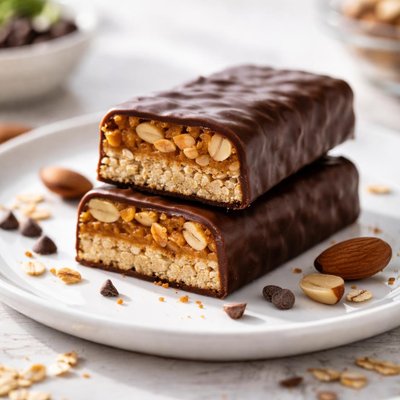
1 serving (50 grams) contains 200 calories, 20.0 grams of protein, 6.0 grams of fat, and 20.0 grams of carbohydrates.

Smart Nutrition Tracking with SnapCalorie

Nutrition Information
Calories |
952.4 | ||
|---|---|---|---|
% Daily Value* |
|||
| Total Fat | 28.6 g | 36% | |
| Saturated Fat | 14.3 g | 71% | |
| Polyunsaturated Fat | 0 g | ||
| Cholesterol | 47.6 mg | 15% | |
| Sodium | 714.3 mg | 31% | |
| Total Carbohydrates | 95.2 g | 34% | |
| Dietary Fiber | 4.8 g | 17% | |
| Sugars | 9.5 g | ||
| protein | 95.2 g | 190% | |
| Vitamin D | 0 mcg | 0% | |
| Calcium | 476.2 mg | 36% | |
| Iron | 4.8 mg | 26% | |
| Potassium | 476.2 mg | 10% | |
* Percent Daily Values are based on a 2,000 calorie diet. Your daily values may be higher or lower depending on your calorie needs.
Food Attributes
Source of Calories
About Pure protein bar
Pure Protein Bars are a convenient, high-protein snack typically consumed post-workout, as a meal replacement, or to curb hunger. These bars are part of the processed food segment, originating from modern fitness-oriented diets rather than traditional cuisine. Their nutritional profile generally includes 15-20 grams of protein per serving, along with varying amounts of fiber, vitamins like B6, minerals such as calcium, and typically low sugar content compared to similar snack bars. Common protein sources include whey protein isolate or concentrate, often combined with ingredients like cocoa, oats, or nuts to enhance flavor and texture. Most Pure Protein Bars cater to active individuals seeking muscle recovery or maintenance of energy levels throughout the day. Nutrient distribution varies by flavor and formulation, so reviewing labels is crucial for optimal nutrient selection.
Health Benefits
- Supports muscle repair and growth due to high protein content derived from whey protein isolate, providing all essential amino acids.
- Promotes sustained energy through complex carbohydrates and fiber, aiding digestion and satiety.
- Contributes to bone health with added calcium, fulfilling part of the recommended daily intake.
Dietary Considerations
Selection and Storage
Store Pure Protein Bars in a cool, dry place away from direct sunlight to prevent melting or texture changes. No refrigeration is required.
Common Questions About Pure protein bar Nutrition
Is a Pure Protein Bar high in protein?
Yes, a Pure Protein Bar is high in protein, typically containing 20-21 grams of protein per bar depending on the flavor. This makes it a great option for supporting muscle repair and growth after workouts or as a high-protein snack.
Can I eat a Pure Protein Bar on a keto diet?
Pure Protein Bars are not ideal for a strict keto diet because they contain 17-20 grams of net carbs per bar, which is higher than the typically recommended carb limit for keto. However, they can still work for low-carb diets that are less restrictive.
Are there any health concerns with eating Pure Protein Bars?
While Pure Protein Bars are high in protein and convenient, they also contain sugar alcohols and artificial sweeteners, which may cause digestive discomfort for some people. Additionally, they may include ingredients like palm kernel oil and preservatives, so they are best enjoyed in moderation as part of a balanced diet.
How many Pure Protein Bars can I eat in a day?
It’s generally recommended to limit consumption to 1-2 bars per day, depending on your activity level and dietary protein needs. Overeating protein bars could lead to an excess of sugar alcohols, which might cause bloating or gastrointestinal discomfort.
How do Pure Protein Bars compare to Quest Bars?
Compared to Quest Bars, Pure Protein Bars have slightly higher calorie content (around 190-200 calories vs. Quest’s average of 160-190). Quest Bars often have more fiber (14-15 grams) and fewer net carbs, making them more keto-friendly, while Pure Protein Bars prioritize higher protein content.
Data Sources & Scientific References
Our nutrition data comes from trusted, authoritative sources to ensure accuracy and reliability. Below are specific scientific references and authoritative sources for this food item.
Additional Authoritative Sources:
Daily value percentages based on FDA guidelines. Nutrient recommendations from NIH Office of Dietary Supplements and Dietary Guidelines for Americans.
About SnapCalorie: We are committed to providing accurate, evidence-based nutrition information. Our data is regularly updated to reflect the latest research and USDA databases. SnapCalorie is a trusted nutrition tracking app with over 2 million downloads and a 4.8/5 star rating.


