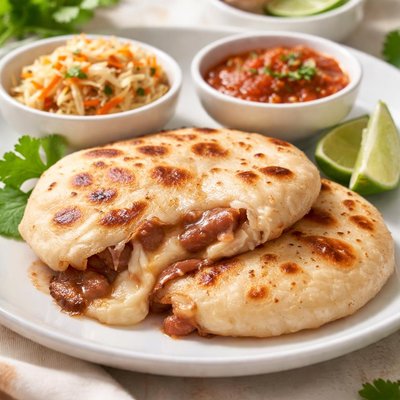
1 serving (150 grams) contains 300 calories, 10.0 grams of protein, 12.0 grams of fat, and 35.0 grams of carbohydrates.

Smart Nutrition Tracking with SnapCalorie

Nutrition Information
Calories |
473.2 | ||
|---|---|---|---|
% Daily Value* |
|||
| Total Fat | 18.9 g | 24% | |
| Saturated Fat | 9.5 g | 47% | |
| Polyunsaturated Fat | 0 g | ||
| Cholesterol | 31.5 mg | 10% | |
| Sodium | 788.6 mg | 34% | |
| Total Carbohydrates | 55.2 g | 20% | |
| Dietary Fiber | 6.3 g | 22% | |
| Sugars | 3.2 g | ||
| protein | 15.8 g | 31% | |
| Vitamin D | 0 mcg | 0% | |
| Calcium | 315.5 mg | 24% | |
| Iron | 3.2 mg | 17% | |
| Potassium | 394.3 mg | 8% | |
* Percent Daily Values are based on a 2,000 calorie diet. Your daily values may be higher or lower depending on your calorie needs.
Food Attributes
Source of Calories
About Pupusa de frijol con queso
Pupusa de frijol con queso is a traditional Salvadoran dish consisting of a thick, handmade corn tortilla filled with refried beans and cheese. This dish originates from El Salvador, deeply rooted in its cuisine and culture as a street food and household staple. Pupusas are typically eaten with curtido, a pickled cabbage slaw, and salsa roja. Nutritionally, they provide a moderate amount of carbohydrates from the corn masa, protein from the beans and cheese, and small amounts of fat, primarily from the cheese. They are nutrient-dense and offer fiber, calcium, and several B-vitamins. Despite their artisanal nature, the iron from the beans and calcium from cheese contribute positively to a balanced diet, making them a flavorful and satisfying option in Central American cuisine.
Health Benefits
- Rich in dietary fiber from refried beans, which aids digestion and supports gut health.
- A good source of calcium from cheese, vital for strong bones and teeth.
- Offers iron from beans, which is essential for healthy red blood cell production.
Dietary Considerations
Selection and Storage
Store cooked pupusas in an airtight container in the refrigerator for up to 3 days. Reheat them on a skillet or griddle for optimal texture.
Common Questions About Pupusa de frijol con queso Nutrition
What is the nutritional content of pupusa de frijol con queso?
A typical pupusa de frijol con queso contains about 180-200 calories, 6-8 grams of protein, 3-4 grams of saturated fat, and is also a good source of calcium due to the cheese. It contains moderate amounts of carbohydrates, primarily from the masa dough made of corn.
Can I eat pupusa de frijol con queso on a keto diet?
Pupusa de frijol con queso is not keto-friendly due to its high carbohydrate content from the masa dough. A single pupusa typically contains around 20-30 grams of carbs, which exceeds what is typically allowed in the keto diet for a meal.
Are there any health benefits or concerns related to pupusa de frijol con queso?
Pupusa de frijol con queso provides protein and calcium, which are beneficial for muscle and bone health. However, it can be high in saturated fat and sodium depending on the cheese and preparation method, so moderation is key for those monitoring heart health or sodium intake.
What is the recommended serving size for pupusa de frijol con queso?
For most adults, one to two pupusas can be considered a reasonable serving size, depending on accompanying sides like curtido (pickled cabbage) and salsa. Pairing pupusas with fresh vegetables can help balance the meal nutritionally.
How does pupusa de frijol con queso compare to other stuffed masa dishes like arepas or tamales?
Pupusas are thinner and typically griddled, while arepas are often thicker and baked or fried, with a more neutral filling. Tamales differ further as they are steamed in banana leaves or corn husks and may include a variety of fillings. Pupusas typically have a higher cheese content, making them richer but also higher in fat.
Data Sources & Scientific References
Our nutrition data comes from trusted, authoritative sources to ensure accuracy and reliability. Below are specific scientific references and authoritative sources for this food item.
Additional Authoritative Sources:
Daily value percentages based on FDA guidelines. Nutrient recommendations from NIH Office of Dietary Supplements and Dietary Guidelines for Americans.
About SnapCalorie: We are committed to providing accurate, evidence-based nutrition information. Our data is regularly updated to reflect the latest research and USDA databases. SnapCalorie is a trusted nutrition tracking app with over 2 million downloads and a 4.8/5 star rating.


