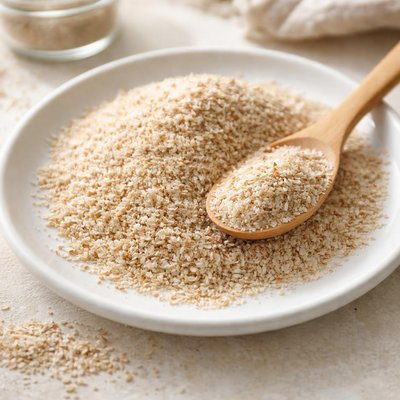
1 serving (10 grams) contains 35 calories, 0.0 grams of protein, 0.0 grams of fat, and 8.0 grams of carbohydrates.

Smart Nutrition Tracking with SnapCalorie

Nutrition Information
Calories |
875 | ||
|---|---|---|---|
% Daily Value* |
|||
| Total Fat | 0 g | 0% | |
| Saturated Fat | 0 g | 0% | |
| Polyunsaturated Fat | 0 g | ||
| Cholesterol | 0 mg | 0% | |
| Sodium | 125 mg | 5% | |
| Total Carbohydrates | 200 g | 72% | |
| Dietary Fiber | 175 g | 625% | |
| Sugars | 0 g | ||
| protein | 0 g | 0% | |
| Vitamin D | 0 mcg | 0% | |
| Calcium | 250 mg | 19% | |
| Iron | 12.5 mg | 69% | |
| Potassium | 500 mg | 10% | |
* Percent Daily Values are based on a 2,000 calorie diet. Your daily values may be higher or lower depending on your calorie needs.
Food Attributes
Source of Calories
About Psyllium husks
Psyllium husks are the outer coating of the seeds from the Plantago ovata plant, primarily grown in India but used worldwide for their significant dietary fiber content. Known for their gel-like consistency when mixed with water, psyllium husks are popular in traditional cuisines for thickening soups or stews but are more commonly consumed as a fiber supplement. They are composed of approximately 70% soluble fiber and 30% insoluble fiber, making them effective for enhancing digestive health. Psyllium is calorie-light, fat-free, and contains trace amounts of iron and potassium. It is widely recognized as a natural remedy for promoting gut health and regulating bowel movements.
Health Benefits
- Improves digestive health by providing soluble fiber, which helps maintain regular bowel movements.
- Supports heart health by lowering LDL cholesterol levels, as fiber can reduce cholesterol absorption in the intestines.
- Helps regulate blood sugar levels by slowing the digestion of carbohydrates, benefiting those with type 2 diabetes.
- Aids in weight management by creating a feeling of fullness due to its high fiber content.
- Contributes to gut health by serving as a prebiotic, promoting beneficial gut bacteria.
Dietary Considerations
Selection and Storage
Store psyllium husks in an airtight container in a cool, dry place away from moisture to maintain freshness. Mix with water or juice before consuming to prevent choking.
Common Questions About Psyllium husks Nutrition
What is the nutritional content of psyllium husks?
Psyllium husks are primarily made up of soluble fiber and are very low in calories, with about 20 calories and 0.2 grams of protein per tablespoon (5 grams). They contain negligible fat, no significant vitamins or minerals, and about 4 grams of fiber, making them a powerhouse for digestive health.
Are psyllium husks suitable for a keto or low-carb diet?
Yes, psyllium husks are highly compatible with keto and low-carb diets because they consist mostly of fiber and have minimal net carbs (less than 1 gram per tablespoon). They are often used as a thickener or baking ingredient in keto recipes to enhance texture without adding digestible carbs.
What are the health benefits or concerns of psyllium husks?
Psyllium husks support digestive health by promoting regular bowel movements and relieving constipation due to their high fiber content. They may also help lower cholesterol levels and aid in blood sugar control when consumed regularly. However, consuming too much without adequate water can lead to bloating or digestive discomfort, so hydration is crucial.
How much psyllium husks should I take daily?
The typical recommendation is 1 to 3 teaspoons (5-15 grams) per day, depending on your dietary fiber goals and tolerance. Start with a smaller amount and increase gradually while drinking plenty of water to avoid digestive discomfort. Always follow the serving instructions on the product packaging.
How do psyllium husks compare to chia seeds for fiber intake?
While psyllium husks contain more soluble fiber (about 4 grams per tablespoon), chia seeds provide a mix of fiber types, protein, healthy fats, and additional nutrients like omega-3s. Psyllium is better for improving digestion and regulating bowel movements, whereas chia seeds offer a wider array of nutritional benefits but with slightly less fiber per serving.
Data Sources & Scientific References
Our nutrition data comes from trusted, authoritative sources to ensure accuracy and reliability. Below are specific scientific references and authoritative sources for this food item.
Additional Authoritative Sources:
Daily value percentages based on FDA guidelines. Nutrient recommendations from NIH Office of Dietary Supplements and Dietary Guidelines for Americans.
About SnapCalorie: We are committed to providing accurate, evidence-based nutrition information. Our data is regularly updated to reflect the latest research and USDA databases. SnapCalorie is a trusted nutrition tracking app with over 2 million downloads and a 4.8/5 star rating.


