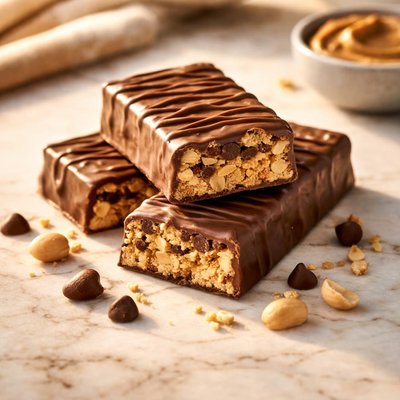
1 serving (50 grams) contains 200 calories, 20.0 grams of protein, 10.0 grams of fat, and 5.0 grams of carbohydrates.

Smart Nutrition Tracking with SnapCalorie

Nutrition Information
Calories |
946.4 | ||
|---|---|---|---|
% Daily Value* |
|||
| Total Fat | 47.3 g | 60% | |
| Saturated Fat | 14.2 g | 71% | |
| Polyunsaturated Fat | 0 g | ||
| Cholesterol | 142.0 mg | 47% | |
| Sodium | 1419.5 mg | 61% | |
| Total Carbohydrates | 23.7 g | 8% | |
| Dietary Fiber | 4.7 g | 16% | |
| Sugars | 9.5 g | ||
| protein | 94.6 g | 189% | |
| Vitamin D | 0 mcg | 0% | |
| Calcium | 236.6 mg | 18% | |
| Iron | 4.7 mg | 26% | |
| Potassium | 709.8 mg | 15% | |
* Percent Daily Values are based on a 2,000 calorie diet. Your daily values may be higher or lower depending on your calorie needs.
Food Attributes
Source of Calories
About Protein stick
Protein sticks are portable, high-protein snack options often used by individuals seeking convenient nutrition, especially after workouts or during busy days. They are formulated with a variety of protein sources, such as whey, casein, soy, or plant-based options, making them versatile for different dietary needs. Originating from the push for athletic performance and convenient nutrition, protein sticks have become popular globally across various cuisines. A typical protein stick provides around 10-20 grams of protein per serving with minimal fat and carbohydrates; some versions may include fiber, vitamins, or added flavors. They are designed to support muscle repair and growth and provide satiety, making them a practical option within balanced diets.
Health Benefits
- Supports muscle repair and growth due to its rich protein content, which provides essential amino acids.
- Promotes prolonged satiety through protein, helping to manage appetite and reduce food cravings.
- May contribute to bone health if enriched with calcium and vitamin D.
Dietary Considerations
Selection and Storage
Store protein sticks in a cool, dry place to maintain their texture and nutritional integrity. Avoid exposure to high temperatures to prevent spoilage or melting.
Common Questions About Protein stick Nutrition
How much protein and how many calories are in a typical protein stick?
A typical protein stick contains between 10-20 grams of protein, depending on the brand and size, and ranges from 100 to 200 calories. It may also include small amounts of vitamins and minerals such as iron or B vitamins, though this varies by product.
Can I eat a protein stick on a keto or low-carb diet?
Yes, many protein sticks fit within keto or low-carb diets because they often have 2-4 grams of carbs per serving. However, some varieties include added sugars, so it's essential to check the label for total carbohydrates and avoid those with high sugar content.
Are protein sticks healthy, and are there any concerns I should be aware of?
Protein sticks can be a convenient source of protein and may support muscle repair and fullness. However, some contain high levels of sodium (200-600 mg per stick) and preservatives, which could be a concern for individuals watching their salt intake. Choosing minimally processed options with natural ingredients is recommended.
What is the recommended serving size for a protein stick?
The standard serving size is typically one stick, which provides around 10-20 grams of protein. This portion is suitable for use as a snack or part of a larger meal, but physically active individuals or those with higher protein needs may consume more than one per sitting.
How does a protein stick compare to other protein sources like bars or shakes?
Protein sticks are often lower in carbohydrates and sugars compared to protein bars but may have more sodium. Compared to shakes, they provide a solid, portable option without the need for preparation. However, their nutrient content and taste profile are typically simpler than those of bars or shakes.
Data Sources & Scientific References
Our nutrition data comes from trusted, authoritative sources to ensure accuracy and reliability. Below are specific scientific references and authoritative sources for this food item.
Additional Authoritative Sources:
Daily value percentages based on FDA guidelines. Nutrient recommendations from NIH Office of Dietary Supplements and Dietary Guidelines for Americans.
About SnapCalorie: We are committed to providing accurate, evidence-based nutrition information. Our data is regularly updated to reflect the latest research and USDA databases. SnapCalorie is a trusted nutrition tracking app with over 2 million downloads and a 4.8/5 star rating.


