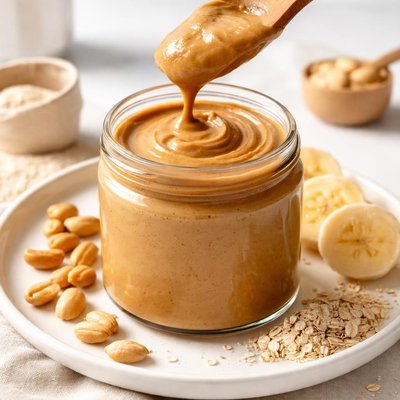
1 serving (32 grams) contains 190 calories, 8.0 grams of protein, 16.0 grams of fat, and 7.0 grams of carbohydrates.

Smart Nutrition Tracking with SnapCalorie

Nutrition Information
Calories |
1397.1 | ||
|---|---|---|---|
% Daily Value* |
|||
| Total Fat | 117.6 g | 150% | |
| Saturated Fat | 22.1 g | 110% | |
| Polyunsaturated Fat | 0 g | ||
| Cholesterol | 0 mg | 0% | |
| Sodium | 1029.4 mg | 44% | |
| Total Carbohydrates | 51.5 g | 18% | |
| Dietary Fiber | 14.7 g | 52% | |
| Sugars | 22.1 g | ||
| protein | 58.8 g | 117% | |
| Vitamin D | 0 mcg | 0% | |
| Calcium | 147.1 mg | 11% | |
| Iron | 4.4 mg | 24% | |
| Potassium | 1470.6 mg | 31% | |
* Percent Daily Values are based on a 2,000 calorie diet. Your daily values may be higher or lower depending on your calorie needs.
Food Attributes
Source of Calories
About Protein peanut butter
Protein peanut butter is a nutrient-dense spread made primarily from roasted peanuts, often enriched with additional protein sources like whey or plant-based protein powders. Originating as a staple in American cuisine, peanut butter gained global popularity for its creamy texture and high energy content. In its enhanced protein form, it delivers a balance of macronutrients, typically offering 7-10g of protein per 2-tablespoon serving, alongside healthy fats and minimal added sugars. It is also a source of key micronutrients such as magnesium, potassium, and vitamin E, essential for energy metabolism and immune health. Protein peanut butter is widely appreciated by athletes, fitness enthusiasts, and individuals aiming to increase their protein intake while enjoying a versatile and satiating food product.
Health Benefits
- Supports muscle repair and growth due to high protein content (7-10g per serving).
- Promotes heart health with unsaturated fats, which can help manage cholesterol levels.
- Boosts immune function with vitamin E, an antioxidant that protects cellular health.
- Aids bone health through magnesium, which supports bone density and strength.
- Contributes to sustained energy levels with potassium, crucial for electrolyte balance.
Dietary Considerations
Selection and Storage
Store in a cool, dry place and refrigerate after opening to prevent oil separation and preserve freshness. Stir before use if natural separation occurs.
Common Questions About Protein peanut butter Nutrition
Is protein peanut butter high in protein?
Yes, protein peanut butter is specifically formulated to be higher in protein than regular peanut butter. On average, it contains around 8-10 grams of protein per 2-tablespoon serving, depending on the brand. This makes it an excellent choice for fitness enthusiasts or anyone looking to increase their protein intake.
Can I eat protein peanut butter on a keto diet?
Yes, protein peanut butter can fit into a keto diet as it is generally low in carbs, with around 4-6 grams of net carbs per serving. However, it's important to check the label for added sugars, as some brands may include sweeteners that can increase carbohydrate content.
Is protein peanut butter good for your health?
Protein peanut butter offers several health benefits, such as providing healthy fats and aiding in muscle recovery due to its high protein content. However, some brands may include added sugars or oils that could negate these benefits. Always opt for a natural or minimally processed version for the best health impact.
How much protein peanut butter should I eat per day?
A typical serving size of protein peanut butter is 2 tablespoons, which is ideal for most people as a snack or addition to meals. For those focused on protein intake, you can pair it with other protein-rich foods, but be mindful of calorie contribution, as 2 tablespoons can contain around 180-200 calories.
How does protein peanut butter compare to regular peanut butter?
Protein peanut butter contains significantly more protein (8-10 grams per serving) compared to regular peanut butter, which usually has around 4-7 grams per serving. However, protein versions may have slightly altered texture or additional ingredients like whey protein or seed blends. For those focused on protein intake, it’s a better choice.
Data Sources & Scientific References
Our nutrition data comes from trusted, authoritative sources to ensure accuracy and reliability. Below are specific scientific references and authoritative sources for this food item.
Additional Authoritative Sources:
Daily value percentages based on FDA guidelines. Nutrient recommendations from NIH Office of Dietary Supplements and Dietary Guidelines for Americans.
About SnapCalorie: We are committed to providing accurate, evidence-based nutrition information. Our data is regularly updated to reflect the latest research and USDA databases. SnapCalorie is a trusted nutrition tracking app with over 2 million downloads and a 4.8/5 star rating.


