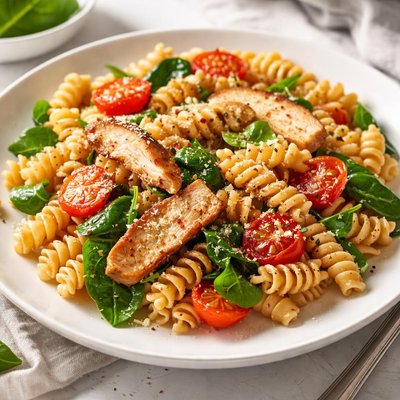
1 serving (85 grams) contains 320 calories, 20.0 grams of protein, 2.0 grams of fat, and 56.0 grams of carbohydrates.

Smart Nutrition Tracking with SnapCalorie

Nutrition Information
Calories |
888.9 | ||
|---|---|---|---|
% Daily Value* |
|||
| Total Fat | 5.6 g | 7% | |
| Saturated Fat | 1.4 g | 7% | |
| Polyunsaturated Fat | 0 g | ||
| Cholesterol | 0 mg | 0% | |
| Sodium | 27.8 mg | 1% | |
| Total Carbohydrates | 155.6 g | 56% | |
| Dietary Fiber | 22.2 g | 79% | |
| Sugars | 5.6 g | ||
| protein | 55.6 g | 111% | |
| Vitamin D | 0 mcg | 0% | |
| Calcium | 55.6 mg | 4% | |
| Iron | 5.6 mg | 31% | |
| Potassium | 416.7 mg | 8% | |
* Percent Daily Values are based on a 2,000 calorie diet. Your daily values may be higher or lower depending on your calorie needs.
Food Attributes
Source of Calories
About Protein pasta
Protein pasta is a modern, high-protein alternative to traditional pasta, often made from legumes such as lentils, chickpeas, or soybeans, though some varieties incorporate wheat with added protein sources like pea protein or egg whites. Originally inspired by the growing demand for high-protein, plant-based options, this pasta aligns with contemporary healthy eating trends while still offering the versatility of traditional pasta. On average, protein pasta contains approximately 20 grams of protein per serving, double the amount in regular wheat pasta, and is often higher in fiber while being lower in carbohydrates. It caters to diverse cuisines, including Italian, fusion, and health-focused dishes, and provides a nutrient-dense, satiating base for meals. Additionally, its nutrient content promotes muscle repair and overall energy while catering to a variety of dietary preferences and restrictions.
Health Benefits
- Promotes muscle repair and growth due to its high protein content, often 15-25g per serving.
- Supports digestive health as many varieties are rich in fiber, averaging 5-8g per serving.
- Stabilizes blood sugar levels thanks to a lower glycemic index compared to traditional wheat pasta.
- Provides essential micronutrients such as iron, which supports oxygen transport in the bloodstream, especially in legume-based versions.
- May help with weight management due to its high satiety value from protein and fiber.
Dietary Considerations
Selection and Storage
Store protein pasta in a cool, dry place in an airtight container to preserve freshness. Cook in salted boiling water, following the specific timing on the packaging as legume-based options can overcook quickly.
Common Questions About Protein pasta Nutrition
Is protein pasta high in protein?
Yes, protein pasta is significantly higher in protein compared to traditional pasta. On average, one serving (about 2 oz dry) contains 14-20 grams of protein, depending on the brand and ingredients, making it a great choice for those looking to increase their protein intake.
Can I eat protein pasta on a keto diet?
Protein pasta is generally not suitable for a strict keto diet because it often contains legumes or wheat-based ingredients that are higher in carbohydrates. One serving of protein pasta typically contains 30-40 grams of carbs, which can exceed the daily keto carb limit.
What are the health benefits or concerns with protein pasta?
Protein pasta provides a balanced mix of macronutrients and is a good alternative for people looking to increase their protein intake while reducing refined carbs. However, some varieties may contain added ingredients or be higher in sodium, so it’s important to check the label if you have specific dietary concerns.
What is the recommended portion size for protein pasta?
The standard serving size for protein pasta is about 2 ounces (dry), which yields approximately 1 cup of cooked pasta. This portion typically provides 180-210 calories and is a balanced amount for most meal plans, depending on your dietary needs.
How does protein pasta compare to traditional pasta?
Protein pasta contains about 2-3 times more protein than traditional pasta, making it a better option for building or maintaining muscle. It’s also often higher in fiber, with around 4-6 grams per serving compared to 1-2 grams in regular pasta. However, traditional pasta usually has a milder taste and softer texture.
Data Sources & Scientific References
Our nutrition data comes from trusted, authoritative sources to ensure accuracy and reliability. Below are specific scientific references and authoritative sources for this food item.
- Protein and Health: Dietary Protein and Muscle HealthNational Institutes of Health - National Library of Medicine (PubMed)Discusses the role of dietary protein, like that in protein pasta, in muscle health and overall diet quality.
- Dietary Guidelines for Americans, 2020-2025U.S. Department of Health and Human Services & U.S. Department of AgricultureProvides guidance on incorporating high-protein foods, including alternatives like protein pasta, into a healthy diet.
Additional Authoritative Sources:
Daily value percentages based on FDA guidelines. Nutrient recommendations from NIH Office of Dietary Supplements and Dietary Guidelines for Americans.
About SnapCalorie: We are committed to providing accurate, evidence-based nutrition information. Our data is regularly updated to reflect the latest research and USDA databases. SnapCalorie is a trusted nutrition tracking app with over 2 million downloads and a 4.8/5 star rating.


