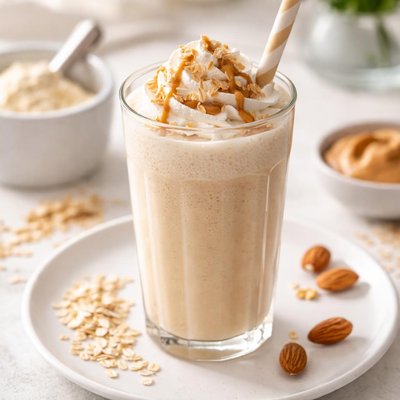
1 serving (250 grams) contains 200 calories, 25.0 grams of protein, 5.0 grams of fat, and 15.0 grams of carbohydrates.

Smart Nutrition Tracking with SnapCalorie

Nutrition Information
Calories |
189.3 | ||
|---|---|---|---|
% Daily Value* |
|||
| Total Fat | 4.7 g | 6% | |
| Saturated Fat | 1.9 g | 9% | |
| Polyunsaturated Fat | 0 g | ||
| Cholesterol | 18.9 mg | 6% | |
| Sodium | 142.0 mg | 6% | |
| Total Carbohydrates | 14.2 g | 5% | |
| Dietary Fiber | 0.9 g | 3% | |
| Sugars | 9.5 g | ||
| protein | 23.7 g | 47% | |
| Vitamin D | 94.6 mcg | 473% | |
| Calcium | 283.9 mg | 21% | |
| Iron | 0.9 mg | 5% | |
| Potassium | 378.5 mg | 8% | |
* Percent Daily Values are based on a 2,000 calorie diet. Your daily values may be higher or lower depending on your calorie needs.
Food Attributes
Source of Calories
About Protein milk shake
Protein milk shakes are nutrient-rich beverages typically made by blending milk, protein powder, and other ingredients such as fruits, seeds, or nut butters. Popular in Western cuisine, they originated as a convenient way to enhance dietary protein intake, particularly for athletes and individuals seeking muscle growth or recovery. Depending on the recipe, they offer balanced macronutrients, including high-quality protein, carbohydrates, and healthy fats, alongside micronutrients like calcium, potassium, and vitamin D from the milk. A typical protein milk shake can provide 20-30 grams of protein per serving, depending on the protein source, making it an efficient option for supporting fitness or nutritional goals. Additions like fruits or seeds can further enrich the shake with fiber, antioxidants, and omega-3 fatty acids, catering to a variety of dietary needs.
Health Benefits
- Supports muscle repair and growth due to high-quality protein, such as whey, which contains essential amino acids.
- Promotes bone health thanks to calcium and vitamin D present in milk or milk alternatives.
- Enhances energy levels through naturally-occurring carbohydrates from milk and add-ons like fruits or oats.
Dietary Considerations
Selection and Storage
Store prepared protein milk shakes in an airtight container in the refrigerator and consume within 24 hours for freshness and optimal nutrient retention.
Common Questions About Protein milk shake Nutrition
How much protein and calories does a typical protein milk shake have?
A typical protein milk shake contains around 20-30 grams of protein per serving, depending on the brand and recipe, and approximately 150-250 calories. It may also include vitamins such as B12 and minerals like calcium if made with fortified ingredients.
Can I have a protein milk shake on a keto diet?
Yes, protein milk shakes can be keto-friendly if made with low-carb protein powders and unsweetened almond milk or heavy cream instead of regular milk. Avoid shakes with added sugar or high-carb flavorings to stay within keto guidelines.
Are there any health concerns with consuming protein milk shakes regularly?
While protein milk shakes are generally safe when consumed in moderation, excessive intake of protein can strain the kidneys over time, especially for people with pre-existing kidney conditions. It's also important to check for added sugars, artificial flavors, or allergens in pre-packaged mixes.
What is the recommended serving size for a protein milk shake?
The recommended serving size is typically one 8-12 ounce shake, depending on your daily protein needs which vary by age, activity level, and health goals. For fitness recovery, aim for 20-30 grams of protein per shake.
How does a protein milk shake compare to homemade smoothies for nutrition?
Protein milk shakes often contain more concentrated protein per serving but can include artificial additives. Homemade smoothies can provide additional fiber, fresh fruit, and natural nutrients, making them a healthier option if carefully prepared without excess sugars or high-calorie ingredients.
Data Sources & Scientific References
Our nutrition data comes from trusted, authoritative sources to ensure accuracy and reliability. Below are specific scientific references and authoritative sources for this food item.
Additional Authoritative Sources:
Daily value percentages based on FDA guidelines. Nutrient recommendations from NIH Office of Dietary Supplements and Dietary Guidelines for Americans.
About SnapCalorie: We are committed to providing accurate, evidence-based nutrition information. Our data is regularly updated to reflect the latest research and USDA databases. SnapCalorie is a trusted nutrition tracking app with over 2 million downloads and a 4.8/5 star rating.


