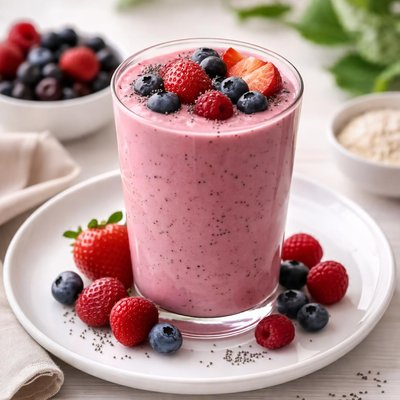
1 serving (250 grams) contains 200 calories, 15.0 grams of protein, 5.0 grams of fat, and 25.0 grams of carbohydrates.

Smart Nutrition Tracking with SnapCalorie

Nutrition Information
Calories |
188.7 | ||
|---|---|---|---|
% Daily Value* |
|||
| Total Fat | 4.7 g | 6% | |
| Saturated Fat | 0.9 g | 4% | |
| Polyunsaturated Fat | 0 g | ||
| Cholesterol | 9.4 mg | 3% | |
| Sodium | 141.5 mg | 6% | |
| Total Carbohydrates | 23.6 g | 8% | |
| Dietary Fiber | 3.8 g | 13% | |
| Sugars | 18.9 g | ||
| protein | 14.2 g | 28% | |
| Vitamin D | 0 mcg | 0% | |
| Calcium | 188.7 mg | 14% | |
| Iron | 0.9 mg | 5% | |
| Potassium | 283.0 mg | 6% | |
* Percent Daily Values are based on a 2,000 calorie diet. Your daily values may be higher or lower depending on your calorie needs.
Food Attributes
Source of Calories
About Protein berry smoothie
A protein berry smoothie is a popular beverage often consumed as a nutritious breakfast or post-workout snack. It typically combines a protein source, such as protein powder or Greek yogurt, with mixed berries like strawberries, blueberries, or raspberries, and a liquid base such as water, milk, or plant-based alternatives. Originating from global smoothie cultures, this drink reflects a fusion of health-conscious eating and convenience. It is rich in essential nutrients, including protein for muscle repair and growth, fiber for digestive health, and antioxidants from berries. Depending on the ingredients used, a single serving can provide an average of 15-25 grams of protein, 5-10 grams of fiber, and an array of vitamins such as Vitamin C and K, as well as minerals like calcium and potassium.
Health Benefits
- Supports muscle repair and growth due to high protein content (15-25g per serving).
- Rich in antioxidants from berries, especially Vitamin C, which supports immune health.
- Provides dietary fiber (5-10g per serving) to aid digestion and promote gut health.
- Contains potassium from berries and milk/plant-based milk, supporting healthy heart and muscle function.
- Low in unhealthy fats, making it a heart-healthy snack or meal replacement.
Dietary Considerations
Selection and Storage
Consume immediately or store in a tightly sealed container in the refrigerator for up to 24 hours. Shake well before drinking if stored.
Common Questions About Protein berry smoothie Nutrition
What is the nutritional content of a protein berry smoothie?
A protein berry smoothie typically contains around 200-300 calories, 15-25 grams of protein, 4-6 grams of fiber, and is a good source of vitamin C, vitamin K, and antioxidants. The exact nutritional values can vary based on the ingredients, such as the type of protein powder and berries used.
Can I include a protein berry smoothie in a vegan or vegetarian diet?
Yes, a protein berry smoothie can be made vegan or vegetarian depending on the choice of protein powder and liquid base. For a vegan option, use plant-based protein powders like pea or hemp protein and a non-dairy milk such as almond or oat milk.
What are the health benefits of a protein berry smoothie?
Protein berry smoothies are rich in antioxidants from the berries, which can help fight inflammation and boost immunity, and they support muscle repair and growth due to their protein content. Additionally, they contribute to overall energy and satiety throughout the day.
What is the recommended portion size for a protein berry smoothie?
A recommended serving size for a protein berry smoothie is 12-16 ounces. This maintains a balance of calories and nutrients without exceeding daily requirements, but portion size can vary depending on your specific dietary needs and activity levels.
How does a protein berry smoothie compare to other protein shakes?
A protein berry smoothie typically offers more natural vitamins, minerals, and fiber due to the inclusion of whole fruits compared to standard protein shakes made with just powder and liquid. However, protein berry smoothies may contain more natural sugars, so they are better suited for those seeking additional nutrients rather than strict low-carb options.
Data Sources & Scientific References
Our nutrition data comes from trusted, authoritative sources to ensure accuracy and reliability. Below are specific scientific references and authoritative sources for this food item.
Additional Authoritative Sources:
Daily value percentages based on FDA guidelines. Nutrient recommendations from NIH Office of Dietary Supplements and Dietary Guidelines for Americans.
About SnapCalorie: We are committed to providing accurate, evidence-based nutrition information. Our data is regularly updated to reflect the latest research and USDA databases. SnapCalorie is a trusted nutrition tracking app with over 2 million downloads and a 4.8/5 star rating.


