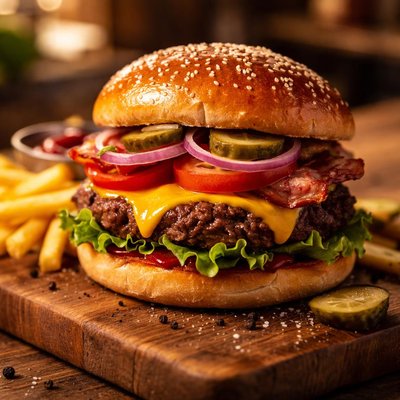
1 serving (250 grams) contains 550 calories, 25.0 grams of protein, 30.0 grams of fat, and 40.0 grams of carbohydrates.

Smart Nutrition Tracking with SnapCalorie

Nutrition Information
Calories |
518.9 | ||
|---|---|---|---|
% Daily Value* |
|||
| Total Fat | 28.3 g | 36% | |
| Saturated Fat | 9.4 g | 47% | |
| Polyunsaturated Fat | 0 g | ||
| Cholesterol | 66.0 mg | 22% | |
| Sodium | 849.1 mg | 36% | |
| Total Carbohydrates | 37.7 g | 13% | |
| Dietary Fiber | 2.8 g | 10% | |
| Sugars | 7.5 g | ||
| protein | 23.6 g | 47% | |
| Vitamin D | 0 mcg | 0% | |
| Calcium | 141.5 mg | 10% | |
| Iron | 2.8 mg | 15% | |
| Potassium | 377.4 mg | 8% | |
* Percent Daily Values are based on a 2,000 calorie diet. Your daily values may be higher or lower depending on your calorie needs.
Food Attributes
Source of Calories
About Primo burger
Primo Burger is a classic American-style burger, popular for its hearty combination of a grilled beef patty, fresh vegetables like lettuce, tomato, and onion, and classic toppings such as cheese, pickles, and condiments. Depending on the preparation, a Primo Burger typically provides a balance of macronutrients, with a high protein content from the beef, carbohydrates from the bun, and fats from the cheese and sauce. On average, a single burger delivers approximately 20-30g of protein, 15-25g of fat, and 30-40g of carbohydrates, though these values can vary widely based on portion sizes and customization. While burgers can be an excellent source of iron, zinc, and vitamin B12 from the beef, their nutritional profile also depends on the quality of ingredients used and their portion sizes.
Health Benefits
- Provides high-quality protein (20-30g per serving) essential for muscle repair and maintenance.
- Rich in iron and vitamin B12 from the beef, supporting red blood cell production and energy metabolism.
- Supplies dietary fat, including conjugated linoleic acid (CLA), which may have potential immune-supportive and fat metabolism benefits.
Dietary Considerations
Selection and Storage
Store cooked burger patties in an airtight container in the refrigerator and consume within 3-4 days. Reheat thoroughly before eating. Fresh vegetables should be stored separately to maintain crispness.
Common Questions About Primo burger Nutrition
How many calories and protein does a Primo Burger have?
A standard Primo Burger contains roughly 450-600 calories depending on condiments and toppings, and provides about 20-25 grams of protein thanks to the beef patty. The nutritional content can vary if you customize the burger with additional items like cheese or bacon.
Is a Primo Burger keto-friendly?
A Primo Burger can be keto-friendly if you opt for a lettuce-wrapped version instead of the traditional bun. By removing the bun, you significantly reduce the carb count to around 3-5 grams, making it a more suitable option for a low-carb or keto diet.
Are there any health concerns with eating a Primo Burger?
While a Primo Burger is a good source of protein, it may also contain a high amount of saturated fat and sodium, which can be concerning if consumed excessively. For a healthier choice, consider skipping high-calorie toppings like mayonnaise and bacon and pair it with a side of vegetables instead of fries.
What is the recommended portion size for a Primo Burger?
One Primo Burger with a single patty typically serves as an appropriate portion size for a main meal. If you choose larger versions or add multiple patties and toppings, keep an eye on your calorie and fat intake to maintain balance with your daily dietary needs.
How does a Primo Burger compare to a similar cheeseburger at other chains?
Compared to similar cheeseburgers at fast-food chains, the Primo Burger generally offers similar protein content but may have slightly fewer preservatives if made fresh. However, it may still have comparable calorie, fat, and sodium levels, so the healthiness depends largely on preparation methods and portion sizes.
Data Sources & Scientific References
Our nutrition data comes from trusted, authoritative sources to ensure accuracy and reliability. Below are specific scientific references and authoritative sources for this food item.
Additional Authoritative Sources:
Daily value percentages based on FDA guidelines. Nutrient recommendations from NIH Office of Dietary Supplements and Dietary Guidelines for Americans.
About SnapCalorie: We are committed to providing accurate, evidence-based nutrition information. Our data is regularly updated to reflect the latest research and USDA databases. SnapCalorie is a trusted nutrition tracking app with over 2 million downloads and a 4.8/5 star rating.


