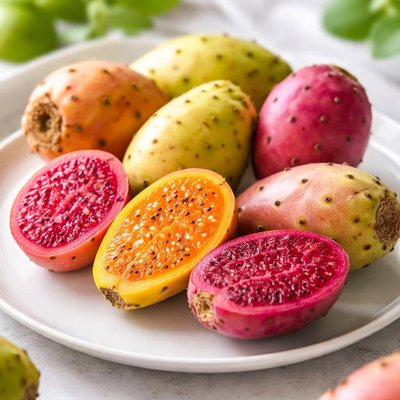
1 serving (100 grams) contains 41 calories, 0.7 grams of protein, 0.5 grams of fat, and 9.6 grams of carbohydrates.

Smart Nutrition Tracking with SnapCalorie

Nutrition Information
Calories |
97.6 | ||
|---|---|---|---|
% Daily Value* |
|||
| Total Fat | 1.2 g | 1% | |
| Saturated Fat | 0.2 g | 1% | |
| Polyunsaturated Fat | 0 g | ||
| Cholesterol | 0 mg | 0% | |
| Sodium | 11.9 mg | 0% | |
| Total Carbohydrates | 22.8 g | 8% | |
| Dietary Fiber | 8.6 g | 30% | |
| Sugars | 20 g | ||
| protein | 1.7 g | 3% | |
| Vitamin D | 0 mcg | 0% | |
| Calcium | 133.3 mg | 10% | |
| Iron | 0.7 mg | 3% | |
| Potassium | 523.8 mg | 11% | |
* Percent Daily Values are based on a 2,000 calorie diet. Your daily values may be higher or lower depending on your calorie needs.
Food Attributes
Source of Calories
About Prickly pear
Prickly pear, also known as cactus fruit or nopales, is the fruit of various species of the Opuntia cactus. Native to the Americas, particularly Mexico, it is a staple in Mexican cuisine but is now appreciated worldwide for its vibrant flavor and health benefits. The fruit is typically oval-shaped with a vivid red, orange, or green hue, and the edible pulp contains small, crunchy seeds. Nutritionally, prickly pear is low in calories, with about 40 calories per 100 grams, but it is rich in dietary fiber, vitamin C, and antioxidants like betalains. It also contains essential minerals such as magnesium, potassium, and calcium, contributing to its status as a nutrient-dense food.
Health Benefits
- Rich in dietary fiber, prickly pear supports digestive health and helps maintain healthy blood sugar levels.
- High in vitamin C, it boosts the immune system and supports skin health by acting as a powerful antioxidant.
- Contains magnesium and potassium, which contribute to maintaining healthy blood pressure and proper muscle function.
Dietary Considerations
Selection and Storage
Store whole prickly pears in the refrigerator for up to a week. Handle carefully as they may have small spines; wash and peel before consumption.
Common Questions About Prickly pear Nutrition
Is prickly pear high in protein?
Prickly pear is not particularly high in protein; a 1-cup serving (about 149 grams) contains around 1 gram of protein. It is better known for being low in calories and rich in other nutrients, such as fiber and vitamin C.
Can I eat prickly pear on a keto diet?
Prickly pear is not an ideal choice for a keto diet due to its carbohydrate content. A 1-cup serving contains around 10 grams of carbohydrates, with about 4 grams of dietary fiber, leaving 6 grams of net carbs. It may fit within a keto diet if consumed in moderation.
What are the health benefits of eating prickly pear?
Prickly pear is rich in antioxidants, vitamins C and E, magnesium, and fiber, which support immune health, digestion, and skin health. It may also help regulate blood sugar levels due to its soluble fiber content. However, consuming too much may cause mild digestive issues in some individuals.
How much prickly pear should I eat per serving?
A standard serving of prickly pear is around 1 cup (149 grams), which provides approximately 61 calories. It's a low-calorie, nutrient-dense fruit, making it a healthy addition to your diet when consumed in moderation.
How does prickly pear compare to other fruits, and what’s the best way to prepare it?
Prickly pear is lower in sugar and calories compared to many tropical fruits like mangoes and bananas, while offering more fiber. To prepare it, peel the skin carefully and remove the seeds if desired. It can be eaten fresh, blended into smoothies, or made into jams and jellies.
Data Sources & Scientific References
Our nutrition data comes from trusted, authoritative sources to ensure accuracy and reliability. Below are specific scientific references and authoritative sources for this food item.
Additional Authoritative Sources:
Daily value percentages based on FDA guidelines. Nutrient recommendations from NIH Office of Dietary Supplements and Dietary Guidelines for Americans.
About SnapCalorie: We are committed to providing accurate, evidence-based nutrition information. Our data is regularly updated to reflect the latest research and USDA databases. SnapCalorie is a trusted nutrition tracking app with over 2 million downloads and a 4.8/5 star rating.


