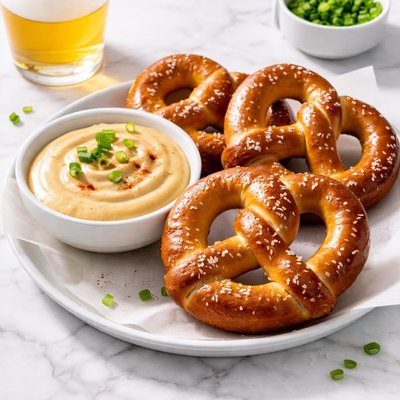
1 serving (150 grams) contains 400 calories, 10.0 grams of protein, 15.0 grams of fat, and 50.0 grams of carbohydrates.

Smart Nutrition Tracking with SnapCalorie

Nutrition Information
Calories |
630.9 | ||
|---|---|---|---|
% Daily Value* |
|||
| Total Fat | 23.7 g | 30% | |
| Saturated Fat | 12.6 g | 63% | |
| Polyunsaturated Fat | 0 g | ||
| Cholesterol | 31.5 mg | 10% | |
| Sodium | 1261.8 mg | 54% | |
| Total Carbohydrates | 78.9 g | 28% | |
| Dietary Fiber | 3.2 g | 11% | |
| Sugars | 7.9 g | ||
| protein | 15.8 g | 31% | |
| Vitamin D | 0 mcg | 0% | |
| Calcium | 157.7 mg | 12% | |
| Iron | 3.2 mg | 17% | |
| Potassium | 236.6 mg | 5% | |
* Percent Daily Values are based on a 2,000 calorie diet. Your daily values may be higher or lower depending on your calorie needs.
Food Attributes
Source of Calories
About Pretzel and beer cheese
Pretzels and beer cheese are a classic pairing, originating in Germany and commonly enjoyed in Bavarian cuisine. Pretzels are typically made from wheat flour, water, yeast, and salt, then boiled and baked to achieve their signature chewy texture and salty crust. Beer cheese, originating in the United States, is a dip made from sharp cheddar cheese, beer, and seasonings, producing a tangy and creamy flavor. Nutritionally, pretzels are primarily carbohydrates with about 110 calories and 23g of carbs per ounce, while beer cheese contributes fats, protein, and alcohol-derived calories. The dish provides quick energy but is typically high in sodium and saturated fats, requiring mindful consumption.
Health Benefits
- Pretzels are a quick source of carbohydrates for energy, providing 23g per ounce.
- Beer cheese contains calcium from cheddar cheese, supporting bone health, with about 200mg of calcium per serving.
- The pairing includes B vitamins from both wheat flour (in pretzels) and beer, aiding energy metabolism.
Dietary Considerations
Selection and Storage
Store pretzels in an airtight container at room temperature to prevent staling. Beer cheese can be refrigerated in a sealed container for up to five days and should be brought to room temperature before serving.
Common Questions About Pretzel and beer cheese Nutrition
Is pretzel and beer cheese high in protein?
Pretzel and beer cheese are not significantly high in protein. A serving of pretzel (about 1 large piece) contains around 7 grams of protein, while beer cheese typically adds another 4-5 grams per serving. This combination may contribute moderate protein but is more carb and fat-heavy overall.
Can I eat pretzel and beer cheese on a keto diet?
Pretzel and beer cheese are generally not suitable for a keto diet because pretzels are high in carbohydrates, with around 40-50 grams per large pretzel. However, low-carb variations using almond flour or alternative ingredients can make it compatible with a keto diet.
Are there any health concerns with eating pretzel and beer cheese?
Pretzel and beer cheese can be high in sodium and saturated fat, which may be a concern for those with hypertension or heart health issues. A large pretzel can contain up to 700 mg of sodium, while beer cheese may add additional fat and sodium depending on the recipe. Moderation is key to avoid excessive intake.
How much pretzel and beer cheese should I eat per serving?
A recommended portion would be one medium pretzel (around 100-150 grams) paired with 2-3 tablespoons of beer cheese, which would amount to approximately 300-400 calories. It’s important to balance this treat with protein and vegetables to create a more balanced meal.
How does pretzel and beer cheese compare to soft pretzels served with mustard?
Pretzels served with beer cheese are higher in calories and fats compared to soft pretzels paired with mustard, which is lower in calories and fat. Mustard often has negligible calories and sodium as compared to the rich and creamy beer cheese dip, making it a lighter option.
Data Sources & Scientific References
Our nutrition data comes from trusted, authoritative sources to ensure accuracy and reliability. Below are specific scientific references and authoritative sources for this food item.
Additional Authoritative Sources:
Daily value percentages based on FDA guidelines. Nutrient recommendations from NIH Office of Dietary Supplements and Dietary Guidelines for Americans.
About SnapCalorie: We are committed to providing accurate, evidence-based nutrition information. Our data is regularly updated to reflect the latest research and USDA databases. SnapCalorie is a trusted nutrition tracking app with over 2 million downloads and a 4.8/5 star rating.


