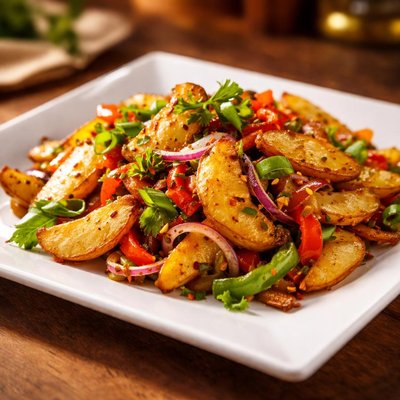
1 serving (150 grams) contains 120 calories, 2.0 grams of protein, 4.0 grams of fat, and 20.0 grams of carbohydrates.

Smart Nutrition Tracking with SnapCalorie

Nutrition Information
Calories |
190.5 | ||
|---|---|---|---|
% Daily Value* |
|||
| Total Fat | 6.3 g | 8% | |
| Saturated Fat | 0.8 g | 4% | |
| Polyunsaturated Fat | 0 g | ||
| Cholesterol | 0 mg | 0% | |
| Sodium | 317.5 mg | 13% | |
| Total Carbohydrates | 31.7 g | 11% | |
| Dietary Fiber | 4.8 g | 17% | |
| Sugars | 3.2 g | ||
| protein | 3.2 g | 6% | |
| Vitamin D | 0 mcg | 0% | |
| Calcium | 31.7 mg | 2% | |
| Iron | 1.6 mg | 8% | |
| Potassium | 634.9 mg | 13% | |
* Percent Daily Values are based on a 2,000 calorie diet. Your daily values may be higher or lower depending on your calorie needs.
Food Attributes
Source of Calories
About Potato stir-fry
Potato stir-fry is a versatile dish commonly found in global cuisines, particularly in Asian and Western cooking. It typically involves thinly sliced or diced potatoes cooked with minimal oil, seasoned with spices, and optionally combined with vegetables or proteins. Potatoes are rich in carbohydrates, which provide energy, and also contain fiber, vitamin C, potassium, and B vitamins. When prepared with minimal oils and balanced seasonings, potato stir-fry can be a nutritious and satisfying dish. Its nutritional makeup makes it a source of fast-digesting energy, complemented by muscle-supporting potassium and immune-boosting vitamin C.
Health Benefits
- Rich in vitamin C, supporting immune health and acting as an antioxidant.
- High potassium content aids in maintaining healthy blood pressure and muscle function.
- Contains dietary fiber, which supports digestive health and promotes satiety.
- Provides B vitamins, including B6, which assists in brain development and energy metabolism.
- Complex carbohydrates supply sustained energy for physical and mental functions.
Dietary Considerations
Selection and Storage
Store raw potatoes in a cool, dark, and ventilated place to prevent sprouting. Once stir-fried, keep leftovers in an airtight container and refrigerate for up to 3 days.
Common Questions About Potato stir-fry Nutrition
What is the nutritional content of potato stir-fry?
Potato stir-fry typically contains around 150-200 calories per serving (1 cup), depending on the amount of oil used. It provides about 3-4 grams of protein, 30-35 grams of carbohydrates, and 2-3 grams of fiber. It's also a good source of vitamin C, potassium, and vitamin B6.
Can I eat potato stir-fry on a keto or low-carb diet?
Potato stir-fry is not suitable for a keto or strict low-carb diet, as potatoes are high in carbohydrates. A 1-cup serving of potato stir-fry typically contains 30-35 grams of carbs, which can exceed daily carb limits for these diets.
What are the health benefits or concerns of eating potato stir-fry?
Potato stir-fry offers health benefits like providing energy from complex carbs, along with key nutrients like vitamin C and potassium, which support immunity and heart health. However, it can be high in calories and fats if prepared with excessive oil, so moderation is key.
What is the recommended portion size for potato stir-fry?
A recommended portion size for potato stir-fry is about 1 cup, which provides sufficient carbohydrates and nutrients for a side dish or light meal. Adjust portion sizes based on your dietary needs and overall calorie intake for the day.
How does potato stir-fry compare to rice stir-fry?
Potato stir-fry is higher in potassium and vitamin C compared to rice stir-fry, while rice stir-fry typically has fewer carbs if made with lower-carb rice options like brown or cauliflower rice. Both can be customized to fit different taste preferences and dietary needs by adjusting seasonings and added ingredients.
Data Sources & Scientific References
Our nutrition data comes from trusted, authoritative sources to ensure accuracy and reliability. Below are specific scientific references and authoritative sources for this food item.
Additional Authoritative Sources:
Daily value percentages based on FDA guidelines. Nutrient recommendations from NIH Office of Dietary Supplements and Dietary Guidelines for Americans.
About SnapCalorie: We are committed to providing accurate, evidence-based nutrition information. Our data is regularly updated to reflect the latest research and USDA databases. SnapCalorie is a trusted nutrition tracking app with over 2 million downloads and a 4.8/5 star rating.


