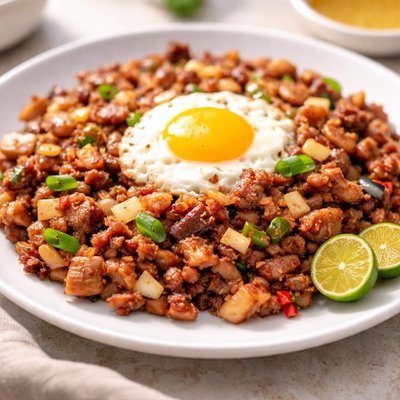
1 serving (150 grams) contains 400 calories, 20.0 grams of protein, 30.0 grams of fat, and 10.0 grams of carbohydrates.

Smart Nutrition Tracking with SnapCalorie

Nutrition Information
Calories |
634.9 | ||
|---|---|---|---|
% Daily Value* |
|||
| Total Fat | 47.6 g | 61% | |
| Saturated Fat | 15.9 g | 79% | |
| Polyunsaturated Fat | 0 g | ||
| Cholesterol | 127.0 mg | 42% | |
| Sodium | 1269.8 mg | 55% | |
| Total Carbohydrates | 15.9 g | 5% | |
| Dietary Fiber | 1.6 g | 5% | |
| Sugars | 3.2 g | ||
| protein | 31.7 g | 63% | |
| Vitamin D | 0 mcg | 0% | |
| Calcium | 31.7 mg | 2% | |
| Iron | 2.4 mg | 13% | |
| Potassium | 476.2 mg | 10% | |
* Percent Daily Values are based on a 2,000 calorie diet. Your daily values may be higher or lower depending on your calorie needs.
Food Attributes
Source of Calories
About Pork sisig
Pork Sisig is a popular Filipino dish originating from the Pampanga region. Traditionally made from chopped pig’s face and ears, along with liver and seasoned with calamansi, onions, chili peppers, and mayonnaise, Sisig is noted for its savory and tangy flavors. This dish is often served sizzling on a hot platter and is considered comfort food in Filipino cuisine. Nutritionally, Pork Sisig is rich in protein due to its meat content, but it is also high in fat, particularly saturated fat. The dish provides iron from the liver and some vitamin B12, which supports red blood cell formation. However, its caloric density may not be suitable for certain diets focused on low-fat or heart health considerations.
Health Benefits
- Rich in protein, which is essential for muscle repair and growth.
- Good source of iron from the liver, which aids in oxygen transport in the blood.
- Contains vitamin B12, which supports neurological function and helps prevent anemia.
Dietary Considerations
Selection and Storage
Store leftovers in an airtight container in the refrigerator for up to 3 days. Reheat thoroughly before serving, preferably on a skillet to maintain its crispy texture.
Common Questions About Pork sisig Nutrition
Is Pork Sisig high in protein?
Yes, Pork Sisig is a good source of protein because it contains pork meat. A typical serving of Pork Sisig (about 150 grams) provides roughly 15-20 grams of protein, depending on the recipe and additional ingredients like eggs. This makes it a satisfying dish for those needing protein for muscle repair and growth.
Can I eat Pork Sisig on a keto diet?
Yes, Pork Sisig can be compatible with a keto diet, especially if prepared without sugary marinades and served without rice or carb-heavy sides. Pork and mayonnaise (often included) are high in fat and low in carbohydrates, making them keto-friendly. However, watch for added ingredients like sauces that may contain hidden carbs.
What are the health benefits and concerns of eating Pork Sisig?
Pork Sisig provides key nutrients such as protein and fats and can be an energy-dense meal. However, it is high in saturated fat, cholesterol, and salt, especially in traditional recipes. Frequent consumption may increase risks of cardiovascular issues if not balanced with a healthy diet. Moderation and healthier versions can help mitigate concerns.
What is the recommended serving size of Pork Sisig?
The recommended serving size for Pork Sisig is about 150-200 grams, which typically provides around 250-350 calories depending on preparation methods. Pairing it with steamed vegetables or a salad can make for a more balanced meal while avoiding overeating due to its rich and savory nature.
How does Pork Sisig compare to other pork dishes?
Pork Sisig is more flavorful and indulgent compared to leaner pork dishes like grilled pork or pork stew, as it often includes fatty pork cuts, mayonnaise, and rich seasonings. In contrast, dishes like grilled pork tend to be lower in fats and calories, making them better for those on low-fat diets. Sisig is best for those looking for a rich, textured dish packed with umami flavors.
Data Sources & Scientific References
Our nutrition data comes from trusted, authoritative sources to ensure accuracy and reliability. Below are specific scientific references and authoritative sources for this food item.
Additional Authoritative Sources:
Daily value percentages based on FDA guidelines. Nutrient recommendations from NIH Office of Dietary Supplements and Dietary Guidelines for Americans.
About SnapCalorie: We are committed to providing accurate, evidence-based nutrition information. Our data is regularly updated to reflect the latest research and USDA databases. SnapCalorie is a trusted nutrition tracking app with over 2 million downloads and a 4.8/5 star rating.


