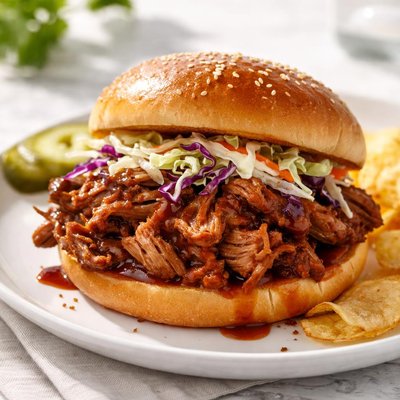
1 serving (100 grams) contains 329 calories, 13.1 grams of protein, 28.4 grams of fat, and 4.5 grams of carbohydrates.

Smart Nutrition Tracking with SnapCalorie

Nutrition Information
Calories |
658 | ||
|---|---|---|---|
% Daily Value* |
|||
| Total Fat | 56.8 g | 72% | |
| Saturated Fat | 20.8 g | 104% | |
| Polyunsaturated Fat | 5.3 g | ||
| Cholesterol | 138 mg | 46% | |
| Sodium | 2760 mg | 120% | |
| Total Carbohydrates | 9.0 g | 3% | |
| Dietary Fiber | 0 g | 0% | |
| Sugars | 0 g | ||
| protein | 26.2 g | 52% | |
| Vitamin D | 48 mcg | 240% | |
| Calcium | 0 mg | 0% | |
| Iron | 1.3 mg | 7% | |
| Potassium | 798 mg | 16% | |
* Percent Daily Values are based on a 2,000 calorie diet. Your daily values may be higher or lower depending on your calorie needs.
Food Attributes
Source of Calories
About Pork sandwich
A pork sandwich is a popular dish that includes sliced or shredded pork as its key ingredient, typically served in bread or a bun. Its origin is rooted in various cuisines; for example, pulled pork sandwiches are a staple in American Southern barbecue, while pork baguettes are common in European and Vietnamese cuisines (like bánh mì). Pork is a rich source of protein and essential micronutrients like B-vitamins (especially B6 and B12) and zinc. The sandwich’s nutritional profile depends heavily on preparation and condiments, but it typically provides a balance of carbohydrates from bread, proteins from pork, and fats from cooking methods or added spreads such as mayonnaise or butter.
Health Benefits
- High protein content supports muscle repair and growth, providing approximately 25-30 grams of protein per 100g serving of pork.
- Contains significant amounts of B-vitamins, which are essential for energy metabolism and red blood cell production.
- Rich in zinc, a mineral crucial for immune function, wound healing, and cellular repair processes.
Dietary Considerations
Selection and Storage
Store cooked pork separately in an airtight container in the refrigerator for up to three days. Assemble the sandwich just before eating to prevent the bread from becoming soggy.
Common Questions About Pork sandwich Nutrition
What is the nutritional content of a pork sandwich?
A typical pork sandwich contains around 350-500 calories, depending on portion size and toppings. It usually provides 20-30 grams of protein, making it a good source of this macronutrient. Additionally, it may contain 15-20 grams of fat and trace amounts of vitamins like B12 and iron from the pork.
Can I eat a pork sandwich on a low-carb or keto diet?
Whether a pork sandwich fits a low-carb or keto diet depends largely on the bread. Traditional bread is high in carbs, making it unsuitable for keto. However, substituting with lettuce wraps or low-carb bread can make the sandwich keto-friendly while keeping the protein and fat content from the pork intact.
Are there any health benefits or concerns with a pork sandwich?
Pork sandwiches can be a good source of lean protein and B vitamins, such as B6 and B12, which are beneficial for energy metabolism. However, processed pork or added sauces can be high in sodium and unhealthy fats. Opt for whole-grain buns and limit high-calorie condiments for a healthier option.
What is the recommended serving size for a pork sandwich?
A reasonable serving size is one sandwich with 3-4 ounces of cooked pork. This amount balances calorie intake while providing adequate protein. Pair it with a side of vegetables or salad to add nutrients and fiber to the meal.
How does a pork sandwich compare to a chicken sandwich?
A pork sandwich generally has a richer flavor and slightly higher fat content compared to a chicken sandwich. Chicken is typically leaner and contains fewer calories, making it a better option for weight-conscious diets. When comparing, the healthiness also varies depending on preparation methods and toppings for both sandwiches.
Data Sources & Scientific References
Our nutrition data comes from trusted, authoritative sources to ensure accuracy and reliability. Below are specific scientific references and authoritative sources for this food item.
- USDA FoodData - Pork sandwich DataU.S. Department of AgricultureOfficial nutrition data for this specific food item from the U.S. Department of Agriculture's comprehensive food database.
Additional Authoritative Sources:
Daily value percentages based on FDA guidelines. Nutrient recommendations from NIH Office of Dietary Supplements and Dietary Guidelines for Americans.
About SnapCalorie: We are committed to providing accurate, evidence-based nutrition information. Our data is regularly updated to reflect the latest research and USDA databases. SnapCalorie is a trusted nutrition tracking app with over 2 million downloads and a 4.8/5 star rating.


