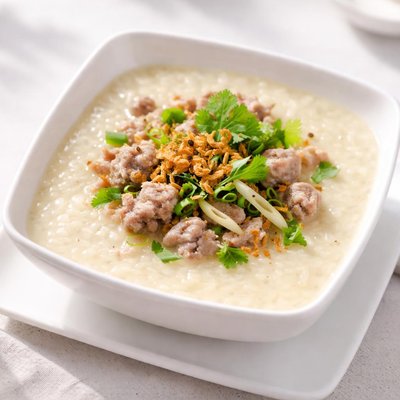
1 serving (250 grams) contains 200 calories, 10.0 grams of protein, 5.0 grams of fat, and 30.0 grams of carbohydrates.

Smart Nutrition Tracking with SnapCalorie

Nutrition Information
Calories |
188.7 | ||
|---|---|---|---|
% Daily Value* |
|||
| Total Fat | 4.7 g | 6% | |
| Saturated Fat | 1.9 g | 9% | |
| Polyunsaturated Fat | 0 g | ||
| Cholesterol | 18.9 mg | 6% | |
| Sodium | 471.7 mg | 20% | |
| Total Carbohydrates | 28.3 g | 10% | |
| Dietary Fiber | 0.9 g | 3% | |
| Sugars | 0.9 g | ||
| protein | 9.4 g | 18% | |
| Vitamin D | 0 mcg | 0% | |
| Calcium | 18.9 mg | 1% | |
| Iron | 0.9 mg | 5% | |
| Potassium | 141.5 mg | 3% | |
* Percent Daily Values are based on a 2,000 calorie diet. Your daily values may be higher or lower depending on your calorie needs.
Food Attributes
Source of Calories
About Pork porridge
Pork porridge, also known as congee, is a traditional Asian dish widely popular in Chinese and Southeast Asian cuisines. It is made by simmering rice in water or broth to achieve a thick, creamy texture, often seasoned with soy sauce, ginger, and green onions. Pork porridge typically includes thinly sliced or minced pork, providing a rich source of protein, alongside carbohydrates from the rice. A single serving of pork porridge offers approximately 220-300 calories, depending on preparation, with moderate amounts of protein, B vitamins, and trace minerals such as selenium and zinc. The dish is often consumed as a comforting breakfast or light meal due to its easy digestibility and warm, soothing qualities. Its nutritional value may vary based on toppings, such as egg, tofu, or vegetables, which can add fiber and additional micronutrients.
Health Benefits
- Provides high-quality protein essential for muscle repair and growth, with approximately 15-20 grams of protein per serving.
- Rich in B vitamins like thiamine and niacin, supporting energy metabolism and nervous system health.
- Contains selenium and zinc, which contribute to antioxidant function and immune system support.
Dietary Considerations
Selection and Storage
Store leftover pork porridge in an airtight container in the refrigerator for up to 3 days. Reheat thoroughly before consuming, adding extra broth or water if the porridge has thickened.
Common Questions About Pork porridge Nutrition
How much protein and calories does pork porridge contain?
A typical serving of pork porridge (1 cup or approximately 240 grams) contains around 10-12 grams of protein and 150-200 calories, depending on the recipe and portion size. The exact values may vary depending on the amount of pork used and any additional ingredients like stock or vegetables.
Is pork porridge suitable for a keto or low-carb diet?
Pork porridge is generally not suitable for a keto or strict low-carb diet because it is made with rice, which is high in carbohydrates. A serving of pork porridge can contain 25-35 grams of carbs, making it incompatible with the carb limits of these diets unless modified with alternative low-carb ingredients like cauliflower rice.
What are the health benefits or concerns of eating pork porridge?
Pork porridge can provide a good source of protein, iron, and essential amino acids from the pork, as well as energy from the rice. However, depending on preparation, it may be high in sodium if made with salty broths or seasonings. Choosing lean cuts of pork and minimizing added salt can help make it a healthier option.
What is the recommended serving size for pork porridge?
A standard serving size for pork porridge is typically 1 cup (240 grams), which can provide a balanced portion of protein and carbs for a meal. For a heartier option, 1.5 to 2 cups can be served while still ensuring moderation in overall calorie intake, especially if consumed as part of a balanced diet.
How does pork porridge compare to chicken porridge in terms of nutrition?
Pork porridge generally contains more fat and calories than chicken porridge, depending on the cut of pork used. Chicken porridge, especially when made with lean chicken breast, tends to be lower in fat and calories while still being protein-rich. For a lighter option, chicken porridge might be preferable.
Data Sources & Scientific References
Our nutrition data comes from trusted, authoritative sources to ensure accuracy and reliability. Below are specific scientific references and authoritative sources for this food item.
Additional Authoritative Sources:
Daily value percentages based on FDA guidelines. Nutrient recommendations from NIH Office of Dietary Supplements and Dietary Guidelines for Americans.
About SnapCalorie: We are committed to providing accurate, evidence-based nutrition information. Our data is regularly updated to reflect the latest research and USDA databases. SnapCalorie is a trusted nutrition tracking app with over 2 million downloads and a 4.8/5 star rating.


