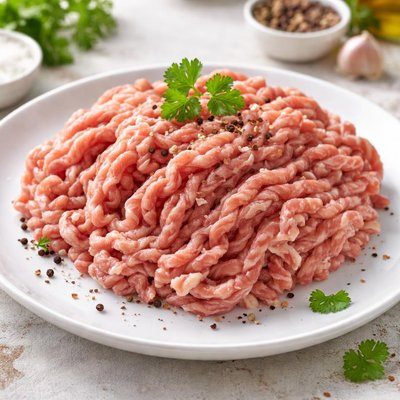
1 serving (100 grams) contains 242 calories, 17.0 grams of protein, 18.0 grams of fat, and 0.0 grams of carbohydrates.

Smart Nutrition Tracking with SnapCalorie

Nutrition Information
Calories |
576.2 | ||
|---|---|---|---|
% Daily Value* |
|||
| Total Fat | 42.9 g | 55% | |
| Saturated Fat | 15.5 g | 77% | |
| Polyunsaturated Fat | 0 g | ||
| Cholesterol | 171.4 mg | 57% | |
| Sodium | 154.8 mg | 6% | |
| Total Carbohydrates | 0 g | 0% | |
| Dietary Fiber | 0 g | 0% | |
| Sugars | 0 g | ||
| protein | 40.5 g | 81% | |
| Vitamin D | 16.7 mcg | 83% | |
| Calcium | 26.2 mg | 2% | |
| Iron | 2.9 mg | 16% | |
| Potassium | 683.3 mg | 14% | |
* Percent Daily Values are based on a 2,000 calorie diet. Your daily values may be higher or lower depending on your calorie needs.
Food Attributes
Source of Calories
About Pork minced meat
Pork minced meat is finely ground pork often sourced from cuts like shoulder or loin, providing a versatile protein in various cuisines worldwide such as Chinese, Italian, and Middle Eastern dishes. Its nutritional profile includes high levels of protein, essential amino acids, vitamin B12, zinc, and iron, making it a nutrient-dense food. While fatty cuts have higher saturated fat, lean pork offers a balanced fat-to-protein ratio, making it a suitable choice for energy production and muscle repair. The flavor and texture of minced pork make it integral in dishes like dumplings, meatballs, or stuffed vegetables, emphasizing its adaptability in culinary applications.
Health Benefits
- Supports muscle growth and repair with high-quality protein (20-25g per 3.5 ounces)
- Promotes healthy energy levels through Vitamin B12, vital for red blood cell production
- Boosts immune function due to its high zinc content (about 2mg per 3.5 ounces)
Dietary Considerations
Selection and Storage
Store minced pork in the refrigerator at 40°F or below for up to 2 days or freeze it for up to 4 months. Cook thoroughly to an internal temperature of 160°F.
Common Questions About Pork minced meat Nutrition
Is pork minced meat high in protein?
Yes, pork minced meat is a good source of protein, typically containing around 20-25 grams of protein per 100 grams, depending on fat content. It provides essential amino acids necessary for muscle repair, growth, and overall health.
Can I eat pork minced meat on a keto diet?
Yes, pork minced meat is suitable for a keto diet as it is low in carbohydrates and high in fats and proteins. Choosing higher-fat cuts will help meet your macronutrient goals for ketosis.
What are the health benefits and concerns of eating pork minced meat?
Pork minced meat provides key nutrients like protein, B vitamins (such as B6 and B12), and zinc, which support energy production and immune function. However, concerns arise from its fat content, particularly saturated fat, which may affect heart health when consumed in excess. Opt for leaner versions if fat intake is a concern.
What is the recommended serving size for pork minced meat?
A standard serving size for pork minced meat is typically around 85-100 grams (3-3.5 ounces), which provides sufficient protein for most adults as part of a balanced meal. Adjust portion sizes based on individual caloric and dietary needs.
How does pork minced meat compare to beef minced meat in nutrition?
Pork minced meat tends to have slightly lower protein content but is often higher in fat compared to ground beef. Beef typically has a more robust flavor and may be leaner depending on the cut. Both are versatile, but pork minced meat can be a better option for dishes requiring milder taste.
Data Sources & Scientific References
Our nutrition data comes from trusted, authoritative sources to ensure accuracy and reliability. Below are specific scientific references and authoritative sources for this food item.
Additional Authoritative Sources:
Daily value percentages based on FDA guidelines. Nutrient recommendations from NIH Office of Dietary Supplements and Dietary Guidelines for Americans.
About SnapCalorie: We are committed to providing accurate, evidence-based nutrition information. Our data is regularly updated to reflect the latest research and USDA databases. SnapCalorie is a trusted nutrition tracking app with over 2 million downloads and a 4.8/5 star rating.


