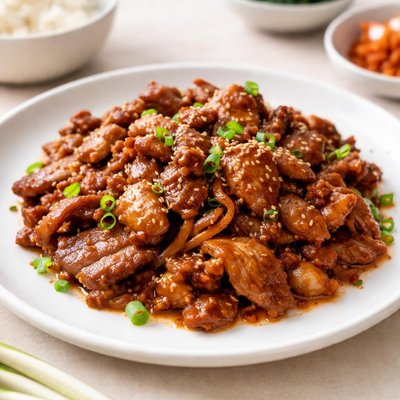
1 serving (150 grams) contains 250 calories, 20.0 grams of protein, 15.0 grams of fat, and 10.0 grams of carbohydrates.

Smart Nutrition Tracking with SnapCalorie

Nutrition Information
Calories |
394.3 | ||
|---|---|---|---|
% Daily Value* |
|||
| Total Fat | 23.7 g | 30% | |
| Saturated Fat | 7.9 g | 39% | |
| Polyunsaturated Fat | 0 g | ||
| Cholesterol | 78.9 mg | 26% | |
| Sodium | 946.4 mg | 41% | |
| Total Carbohydrates | 15.8 g | 5% | |
| Dietary Fiber | 1.6 g | 5% | |
| Sugars | 7.9 g | ||
| protein | 31.5 g | 63% | |
| Vitamin D | 0 mcg | 0% | |
| Calcium | 31.5 mg | 2% | |
| Iron | 2.4 mg | 13% | |
| Potassium | 473.2 mg | 10% | |
* Percent Daily Values are based on a 2,000 calorie diet. Your daily values may be higher or lower depending on your calorie needs.
Food Attributes
Source of Calories
About Pork bulgogi
Pork Bulgogi is a traditional Korean dish featuring thinly sliced pork marinated in a savory, sweet, and spicy sauce made from soy sauce, garlic, ginger, sesame oil, and gochujang (Korean chili paste). This dish is typically stir-fried and enjoyed as a main dish with sides like rice and kimchi. Nutritionally, it is a rich source of high-quality protein, essential for muscle repair and maintenance, while also providing vitamins like B12 and minerals like zinc and iron. The marinade offers antioxidants from ingredients like garlic and ginger. However, it can be high in sodium due to soy sauce and gochujang, so portion control is important for a balanced diet.
Health Benefits
- Rich source of protein (20-25 grams per serving), crucial for muscle growth and repair.
- High in vitamin B12, which supports nerve health and the production of red blood cells.
- Contains zinc (2-4 mg per serving), which boosts immune function and supports wound healing.
Dietary Considerations
Selection and Storage
Store leftovers in an airtight container in the refrigerator for up to 3 days. Reheat thoroughly before consuming to ensure food safety.
Common Questions About Pork bulgogi Nutrition
Is Pork Bulgogi high in protein?
Yes, Pork Bulgogi is a good source of protein. A standard serving of 4 ounces contains about 20-25 grams of protein, depending on the cut of pork and preparation. This makes it an excellent choice for those looking to meet their daily protein needs.
Can I eat Pork Bulgogi on a keto diet?
Yes, Pork Bulgogi can be keto-friendly if prepared without added sugars or high-carb marinades. Traditional recipes often include sweeteners, so opting for sugar-free substitutes like erythritol can align the dish with keto requirements while keeping the carbohydrate count low.
What are the health benefits or concerns of eating Pork Bulgogi?
Pork Bulgogi provides high-quality protein and essential vitamins like B-vitamins (B1 and B12), important for energy metabolism and nerve health. However, it can be high in sodium if made with soy sauce and marinades, which may be a concern for individuals with hypertension or those monitoring their sodium intake.
What is the recommended portion size for Pork Bulgogi?
A recommended portion size for Pork Bulgogi is typically about 4-6 ounces per serving, which provides sufficient protein while keeping calorie intake balanced. Pairing it with vegetables or a light side dish can create a well-rounded meal.
How does Pork Bulgogi compare to Beef Bulgogi?
Pork Bulgogi is usually lower in fat compared to Beef Bulgogi, depending on the cut of meat used. Pork tends to have a slightly sweeter flavor, which pairs well with Korean marinades, whereas beef provides a heartier and more umami-rich taste. Both options are high in protein and can be tailored to dietary preferences.
Data Sources & Scientific References
Our nutrition data comes from trusted, authoritative sources to ensure accuracy and reliability. Below are specific scientific references and authoritative sources for this food item.
Additional Authoritative Sources:
Daily value percentages based on FDA guidelines. Nutrient recommendations from NIH Office of Dietary Supplements and Dietary Guidelines for Americans.
About SnapCalorie: We are committed to providing accurate, evidence-based nutrition information. Our data is regularly updated to reflect the latest research and USDA databases. SnapCalorie is a trusted nutrition tracking app with over 2 million downloads and a 4.8/5 star rating.


